
 EN

A sleeve can meet a bore-size check and still leave its seating relationship unresolved. Before approving a sample, separate three questions: is the bore the required size, is its form acceptable, and does the specified face or outside feature meet its requirement relative to the drawing datum?
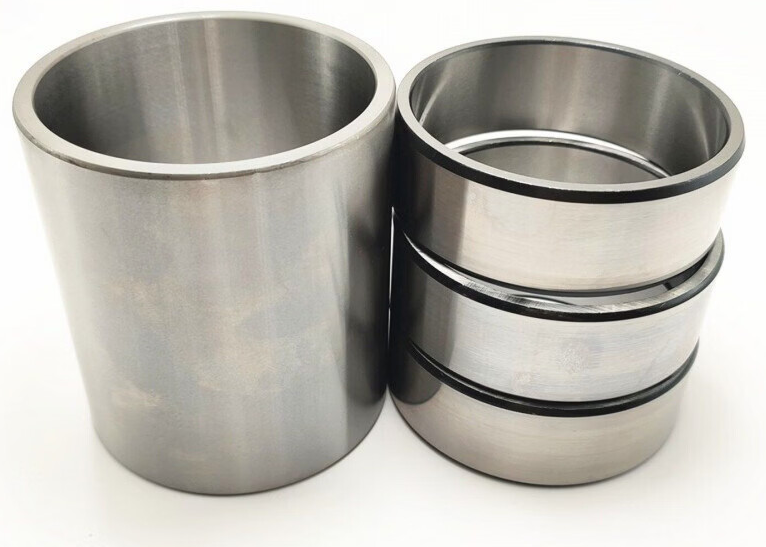
Which surface locates the sleeve?
Start with the mating arrangement, not the easiest surface to hold. Ask the drawing owner to identify the functional bore region, axial seating face and any outside locating feature. Mark reliefs or interrupted regions separately. A bore used only for clearance should not acquire the same acceptance job as a bore that establishes location.
The open end in a photograph does not establish the full internal depth, an unseen shoulder or an open opposite end. Resolve those features with a section view before choosing a measurement setup. Do not infer a sealing interface from the dark bands in these examples.
Keep size, form and datum-related checks separate
A diameter reading does not describe the complete bore cross-section. Mitutoyo explains that diameter-based evaluation can understate some roundness errors and cannot recover the actual cross-sectional shape. Where form is controlled, agree a method appropriate to that specific callout rather than relabeling a size result as a roundness result.
Runout is a different question: KEYENCE describes it as variation evaluated during rotation about a specified datum axis. If the drawing controls a sleeve surface to that axis, record how the reference is established. A bore-size report by itself does not demonstrate that datum-related requirement.
| Acceptance question | Agreement needed before sample review |
|---|---|
| Bore size | Controlled region, required size limits, access and governing method. |
| Bore form | Actual form callout, evaluation coverage and reporting method. |
| Seating or rotating relationship | Specified geometric control, datum reference and locating setup. |
Do not add every geometric control to every sleeve. The design owner should select the requirements that serve the assembly. The table separates evidence questions; it is not a universal tolerance or inspection package.
Record the holding and finished condition
Mitutoyo identifies unsuitable holding of ring-shaped parts as a possible source of distortion. For a sleeve that may be sensitive to restraint, agree whether acceptance applies free, supported or in a specified fixture. Record the contact locations and restraint condition so another inspection site can reproduce the intended setup.
Also identify the required process state. If the drawing specifies a later treatment or finish, say which measurements govern the delivered condition and which are only intermediate checks. This is an inspection-planning question, not evidence that these photographed examples received a particular treatment.
Resolve a disagreement before releasing the lot
When buyer and supplier results differ, compare the drawing revision, feature region, datum setup, restraint and process state before discussing a numerical offset. Keep size, form and relationship results in separate report fields. Agree the reference method and disposition authority; do not replace an unresolved geometric requirement with a visual sample approval.
For a defined steel offer, review the existing 1215 steel CNC turned shaft and sleeve product scope. Its confirmed specifications and commercial terms do not identify the material or performance of the additional photograph above. Other drawing-defined requirements belong in a separate scope review, not an assumed extension of that offer.
See custom CNC machining parts for the commercial parent, or the dimensional inspection RFQ guide for broader characteristic planning. Use Contact Zhengna Technology to begin a text inquiry with the part number, revision, quantity and unresolved acceptance questions; arrange any drawing exchange separately.
Technical references: Mitutoyo: roundness evaluation methods; KEYENCE: runout tolerance. These support general measurement distinctions, not Zhengna Technology equipment, tolerance capability or sample test results. Published by Zhengna Technology.