
 EN
EN
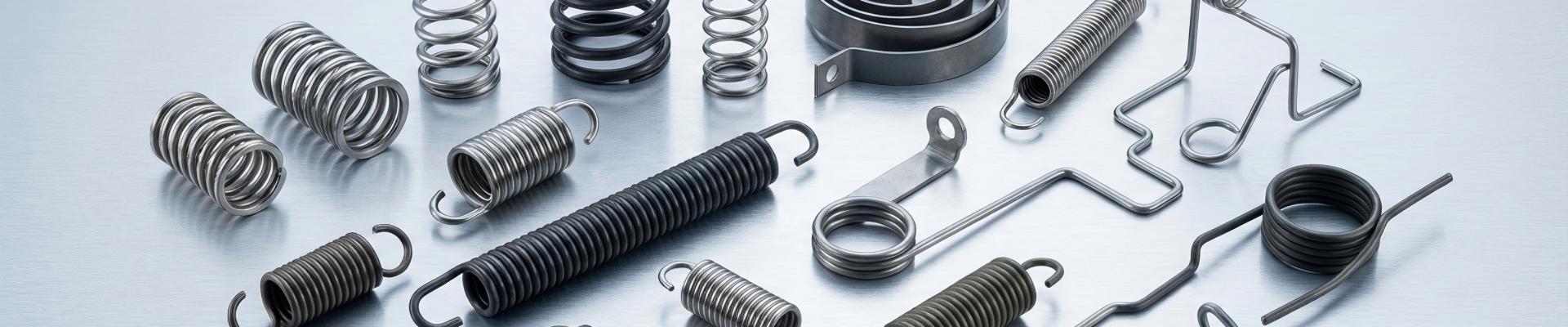
Role: commercial/conversion page. This page helps buyers frame a made-to-drawing custom spring project and reach the correct RFQ path. All materials, dimensions, load targets, spring rates, treatments, inspection plans, quantities, MOQ and lead times remain project-specific.
Custom Springs Project Review
Zhengna Technology reviews custom compression, extension and torsion spring projects around the released drawing, assembly interfaces, operating points, spring geometry, material and finish authority, validation needs, production quantity and delivery scope. The purpose of the review is to identify controlled inputs and open assumptions before quotation.
Start with the spring's function and the mechanism state that matters. A useful RFQ does more than name a spring type: it defines the reference geometry, force-position or moment-angle points, preload, working travel, limiting position, environment, life expectation and the evidence required for release.
Spring project inputs to prepare
- Function and interfaces: spring job, action direction, mating features, available envelope and failure consequence.
- Controlled files: released 2D drawing, useful 3D model, revision and governing-file rule.
- Operating points: force at defined height or length, or moment at defined angle, using stated datums and spring state.
- Movement: installed preload, normal working travel and limiting assembly or service position.
- Geometry: body dimensions, wire or strip section, end/hook/leg form, orientation and critical interfaces.
- Material and finish authority: approved requirement, permitted proposal route and any environmental or compatibility restrictions.
- Validation: dimensional, load, rate, fatigue, relaxation, fit or other project-specific evidence and acceptance owner.
- Commercial scope: prototype, batch and annual quantities, packaging, delivery destination and required documentation.
The custom spring load and working-height RFQ guide explains how to express compression force-height, extension load-length and torsion moment-angle requirements without relying on an ambiguous single rate.
Compression, extension and torsion inputs are different
For a compression spring, define the height datum, load direction and force at the controlled height or heights. State the installed height, normal working stroke and required clearance from the limiting condition according to the project design.
For an extension spring, define the length datum and attachment geometry. State initial tension when it is a controlled requirement, then give the load at specified lengths and the permitted working and limiting extension.
For a torsion spring, identify the viewing direction, winding direction, fixed and moving legs, zero-angle reference and moment at controlled angles. The assembly drawing should make leg orientation and movement unambiguous.
Material and treatment need a named authority
If the buyer controls the material, treatment or finish, state the designation and specification revision. If a proposal is permitted, define the functional properties, service environment, prohibited substances or processes, compatibility constraints and approval responsibility. A supplier proposal is not an automatic design change.
Temperature, moisture, chemicals, debris, cleaning, corrosion exposure, electrical or magnetic restrictions and contact with mating materials may affect the review. The exact route cannot be inferred from a product photograph or a generic material name.
Inspection evidence follows the release decision
Identify which characteristics release the prototype, first article and production lot. Define the spring state, fixture, datum, loading direction, controlled point, instrument capability, tolerance, sampling and record requirement. A load-tester reading without the agreed setup and spring state does not establish project conformity.
Fatigue and relaxation evidence require their own operating points, cycle or dwell condition, environment, sample basis and acceptance rule. Review the spring supplier audit and sample-validation guide for that separate buyer decision.
From technical review to RFQ
Use the quality-control page to understand the inspection context, then use the contact page to identify the spring type, controlled revision, operating points, quantity and required evidence. Controlled drawings and confidential project records should move only through an approved transfer route.
Zhengna Technology does not apply one public tolerance, load capability, fatigue-life result, MOQ or delivery promise to every spring. Feasibility, process scope, inspection and timing are reviewed against the actual geometry, material authority, operating condition, quantity and evidence plan.
Frequently asked questions
What is needed for a custom spring quotation?
Provide the spring function, controlled drawing or interface definition, reference datums, load-position or moment-angle points, preload, travel, material/finish authority, environment, quantity, inspection evidence and delivery destination.
Can Zhengna Technology confirm one universal spring tolerance?
No. Feasibility and measurement depend on spring type, geometry, material, treatment, operating point, quantity, fixture and acceptance method. Requirements are reviewed for the specific project.
Does a spring rate define the complete requirement?
No. Define the controlled range and operating points, together with datums and spring state. Extension initial tension, torsion moment-angle behaviour and nonlinear response require additional inputs.
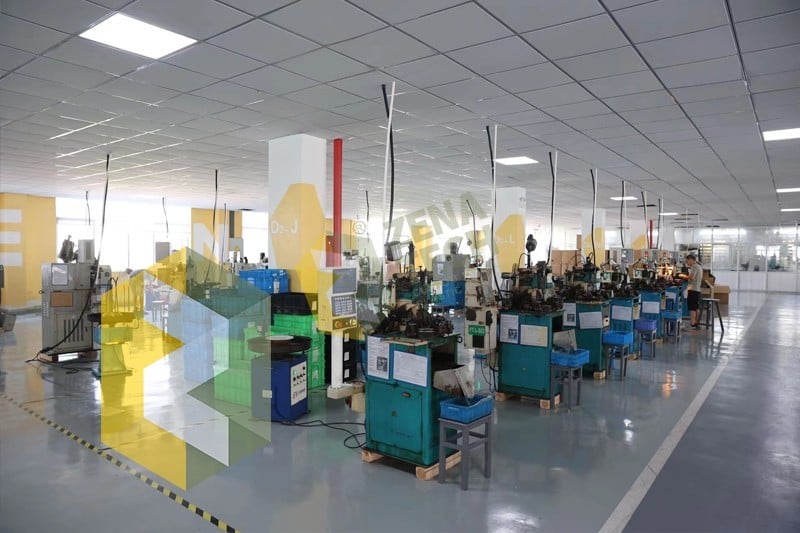
Does the workshop image prove a performance result?
No. It shows visible process context only and does not prove project material, dimensions, load, rate, fatigue life, treatment, inspection result or approval.
Are MOQ and lead time fixed?
No. They depend on the reviewed technical package, material and process scope, tooling or validation needs, quantity and delivery requirements.
