
 EN
EN
Precision Parts for Robotics, Medical Devices and Liquid Cooling Hardware Audit
Direct answer: OEM buyers sourcing precision parts for robotics, medical devices, and liquid-cooling server hardware should audit the supplier's drawing review, material control, tolerance plan, burr and cleanliness control, inspection evidence, surface treatment risk, and prototype-to-production transfer before approval. Zhengna Technology manufactures made-to-drawing CNC machined parts, stamped parts, springs, sheet metal components, fasteners, copper parts and small assemblies for these high-risk hardware programs.
These applications are different, but the sourcing problem is similar: one good sample does not prove that the supplier can keep functional dimensions, sealing faces, load points, threads, edges, coatings and packaging stable across repeat production. This guide gives OEM buyers a practical audit structure for comparing suppliers before releasing prototype, pilot or production orders.
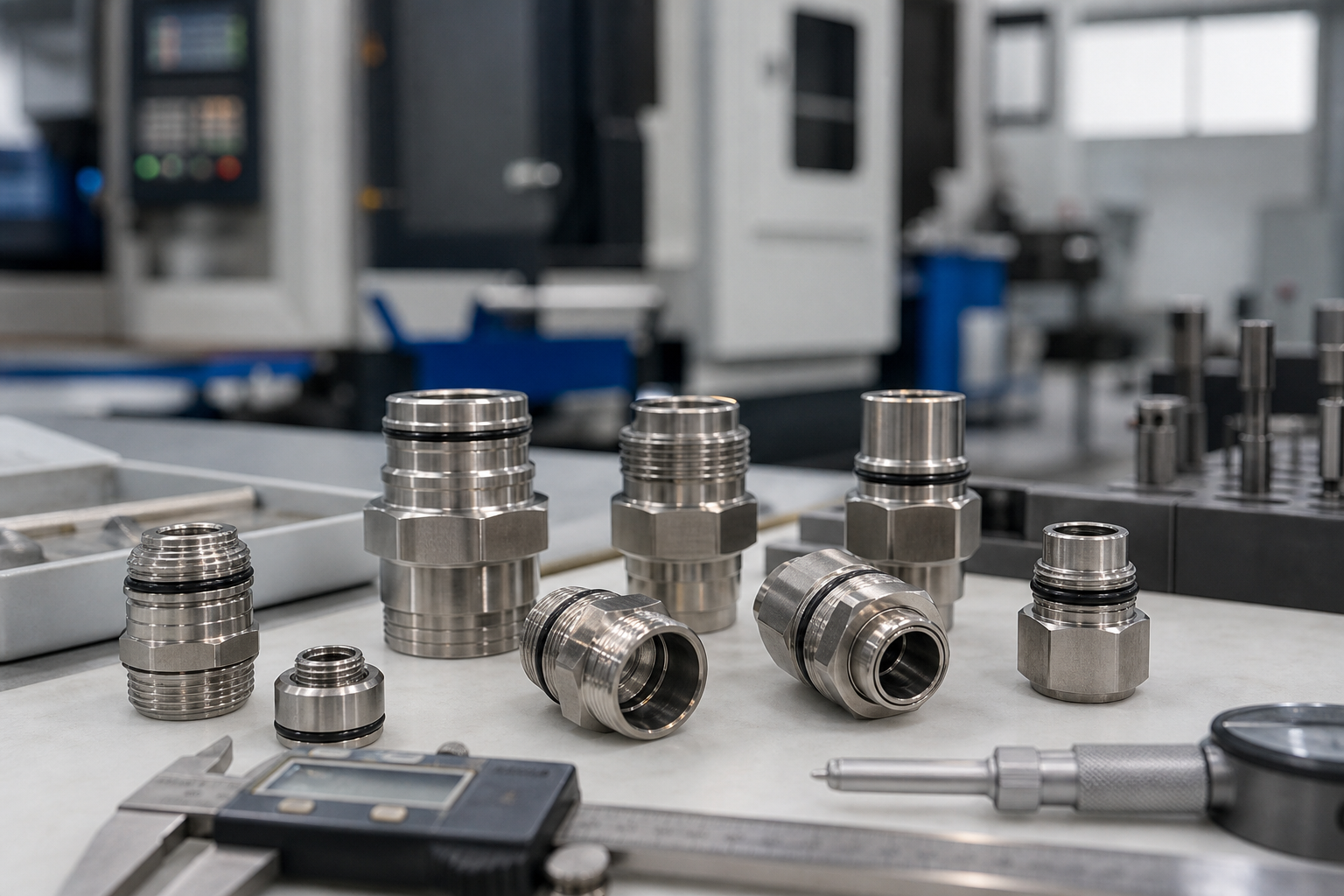
Where Precision Parts Carry The Most Risk
Precision parts become sourcing-critical when small dimensional, surface or material changes can affect motion, sealing, electrical contact, cleanliness or patient-facing reliability. Buyers should audit by application risk, not only by process name.
| Application | Typical parts | Main supplier risk | Audit focus |
|---|---|---|---|
| Robotics and automation | Joint shafts, housings, pins, bushings, sensor brackets, spring clips, fasteners | Fit drift, bearing-seat error, burrs, thread failure, stack-up tolerance | Datum strategy, concentricity, hole position, surface finish, functional fit checks |
| Medical device hardware | Small machined parts, compression springs, clips, brackets, housings, zinc alloy parts | Material mismatch, load drift, sharp edges, coating defects, weak traceability | Material certificate, edge control, cleaning expectation, load test, lot records |
| Liquid-cooling server hardware | Coolant connectors, manifold-adjacent parts, copper busbars, brackets, clips, fasteners | Leak path, O-ring groove error, thread damage, plating thickness, debris or burrs | Sealing face, groove dimensions, thread gauge, cleanliness, plating and packaging |
For connector-specific sealing and machining risks, review the UQD liquid cooling connector buyer checklist.
For production capability and part examples, see Zhengna Technology's custom liquid cooling server connectors page.
For a deeper machining-capacity view, review the UQD liquid cooling connector machining capacity white paper.
Buyer Audit Checklist
A practical supplier audit should connect the drawing to real production controls. OEM buyers can use this checklist before approving a custom precision parts supplier.
- Drawing review: Ask the supplier to mark critical dimensions, datum features, functional surfaces, tolerance stack-up areas and dimensions that may be difficult to inspect.
- Process route: Confirm whether CNC machining, Swiss machining, stamping, spring forming, sheet metal fabrication, cold heading, die casting, injection molding or assembly is the correct route for the volume and tolerance.
- Material control: Check material grade, certificate availability, wire diameter, sheet thickness, copper conductivity, aluminum alloy, stainless grade, heat treatment, resin grade or zinc alloy condition.
- Tooling and fixture control: Review how fixtures, dies, molds, gauges and setup records are maintained from sample approval to repeat production.
- Inspection evidence: Require first-article inspection, critical-dimension records, thread checks, load tests, surface finish checks, burr inspection, plating thickness checks or leak-related dimensional checks when relevant.
- Cleanliness and packaging: Define deburring, cleaning, surface protection, part separation, anti-deformation packaging and corrosion protection before production.
- Change control: Confirm how the supplier handles drawing revisions, material changes, tool wear, process changes, surface treatment changes and nonconforming parts.
Risk Comparison: Weak Supplier Check Vs Strong Audit Evidence
For high-risk precision hardware, buyers should avoid approving suppliers only from machine photos, sample pictures or a low quotation. Stronger audit evidence links the supplier's process to the part's real function.
| Audit area | Weak check | Stronger evidence |
|---|---|---|
| Capability | General factory photos and machine list | Process route matched to drawing tolerance, material, annual volume and application risk |
| Prototype approval | One sample looks acceptable | First-article report, marked drawing, critical-dimension record and production transfer plan |
| Robotics fit | Part assembled once during sample review | Bearing-seat, shaft, hole position, flatness, thread and burr controls checked against functional fit |
| Medical reliability | Supplier says the part is clean and safe | Material traceability, edge condition, surface treatment, load or fatigue checks and packaging controls are documented |
| Liquid-cooling reliability | Connector dimensions are visually inspected | O-ring groove, sealing face, thread gauge, cleanliness, plating thickness and packaging are controlled |
Inspection, Tolerance, Material And Lead-Time Details
Precision parts should be quoted with inspection planning in mind. A drawing may be manufacturable, but the supplier still needs a stable plan for how dimensions and functional risks will be checked during production.
- Inspection: Use first-article inspection for new parts, critical-dimension records for pilot batches, and in-process checks for repeat production. Functional checks may include thread gauges, pin gauges, load testing, mating-part fit, flatness checks or visual burr inspection.
- Tolerance: Tight tolerance should be assigned only where the function needs it. Over-tightening every dimension can increase cost, while under-defining bearing seats, sealing grooves, contact surfaces or load points can create assembly failure.
- Material: Robotics parts often need aluminum, stainless steel, carbon steel, brass or engineering plastics; medical hardware may need stainless steel, zinc alloy or controlled spring wire; liquid-cooling server hardware may need aluminum, stainless steel, copper, brass and compatible surface finishes.
- Lead time: Prototype lead time depends on drawing review, material availability, machining or forming route, surface treatment and inspection. Production lead time should separate tooling, sample approval, pilot run, surface treatment, final inspection and packaging.
How Zhengna Technology Fits This Audit
Zhengna Technology is a made-to-drawing precision parts manufacturer. The best-fit projects are OEM programs that need drawing review, multi-process manufacturing and practical inspection support rather than catalog-only parts.
- Custom robot precision metal components
- Humanoid robot joint and actuator metal parts
- AI data center liquid cooling hardware
- UQD liquid cooling connector machining capacity white paper
- Custom liquid cooling server connectors
- UQD liquid cooling connector buyer checklist
- Medical zinc alloy die casting parts
- Medical compression springs for devices
- Smart sanitary housing injection molding buyer audit
- Smart toilet injection molding parts
- Custom CNC machining parts
- Custom stamping parts
- Custom springs
- OEM precision parts supplier audit guide
- Send drawings to Zhengna Technology for review
FAQ
What precision parts are common in robotics hardware?
Common robotics precision parts include joint shafts, bushings, bearing seats, actuator housings, sensor brackets, pins, stamped retainers, spring clips, fasteners and small assemblies.
What should medical device buyers audit in a precision parts supplier?
Medical device buyers should audit material traceability, edge and burr control, surface treatment, cleanliness expectations, load or fatigue behavior, inspection records and packaging protection.
What makes liquid-cooling server hardware difficult to source?
Liquid-cooling server hardware is sensitive to sealing surfaces, O-ring grooves, thread quality, plating thickness, debris, burrs and packaging damage. These risks should be reviewed before sampling and production approval.
How should buyers review UQD liquid cooling connector suppliers?
Buyers should review sealing faces, groove dimensions, thread quality, burr control, cleanliness, plating consistency and packaging protection before approving UQD connector production.
Can Zhengna Technology support prototype-to-production precision parts?
Yes. Zhengna Technology can review drawings, make prototype or sample parts, and help prepare the manufacturing and inspection route for pilot and repeat production where the process fits its capabilities.
Table of Contents
- Precision Parts for Robotics, Medical Devices and Liquid Cooling Hardware Audit
- Where Precision Parts Carry The Most Risk
- Buyer Audit Checklist
- Risk Comparison: Weak Supplier Check Vs Strong Audit Evidence
- Inspection, Tolerance, Material And Lead-Time Details
- How Zhengna Technology Fits This Audit
-
FAQ
- What precision parts are common in robotics hardware?
- What should medical device buyers audit in a precision parts supplier?
- What makes liquid-cooling server hardware difficult to source?
- How should buyers review UQD liquid cooling connector suppliers?
- Can Zhengna Technology support prototype-to-production precision parts?