
 EN
EN
AI Data Center Power Distribution Metal Hardware White Paper
Direct answer: AI data center power distribution metal hardware includes the custom copper busbars, high-current terminals, grounding bars, stamped copper contacts, CNC copper and brass lugs, brackets, shielding covers, spacers and fasteners that move power safely through dense AI server and rack infrastructure. A reliable OEM sourcing review should connect electrical function, material conductivity, contact surface, plating, edge safety, dimensional stack-up, inspection and packaging before quotation.
This Zhengna Technology white paper is written for AI infrastructure OEM buyers, electrical hardware engineers, sourcing teams and supplier-quality teams. It complements the existing AI data center liquid cooling white paper by covering the power side of the same infrastructure trend.
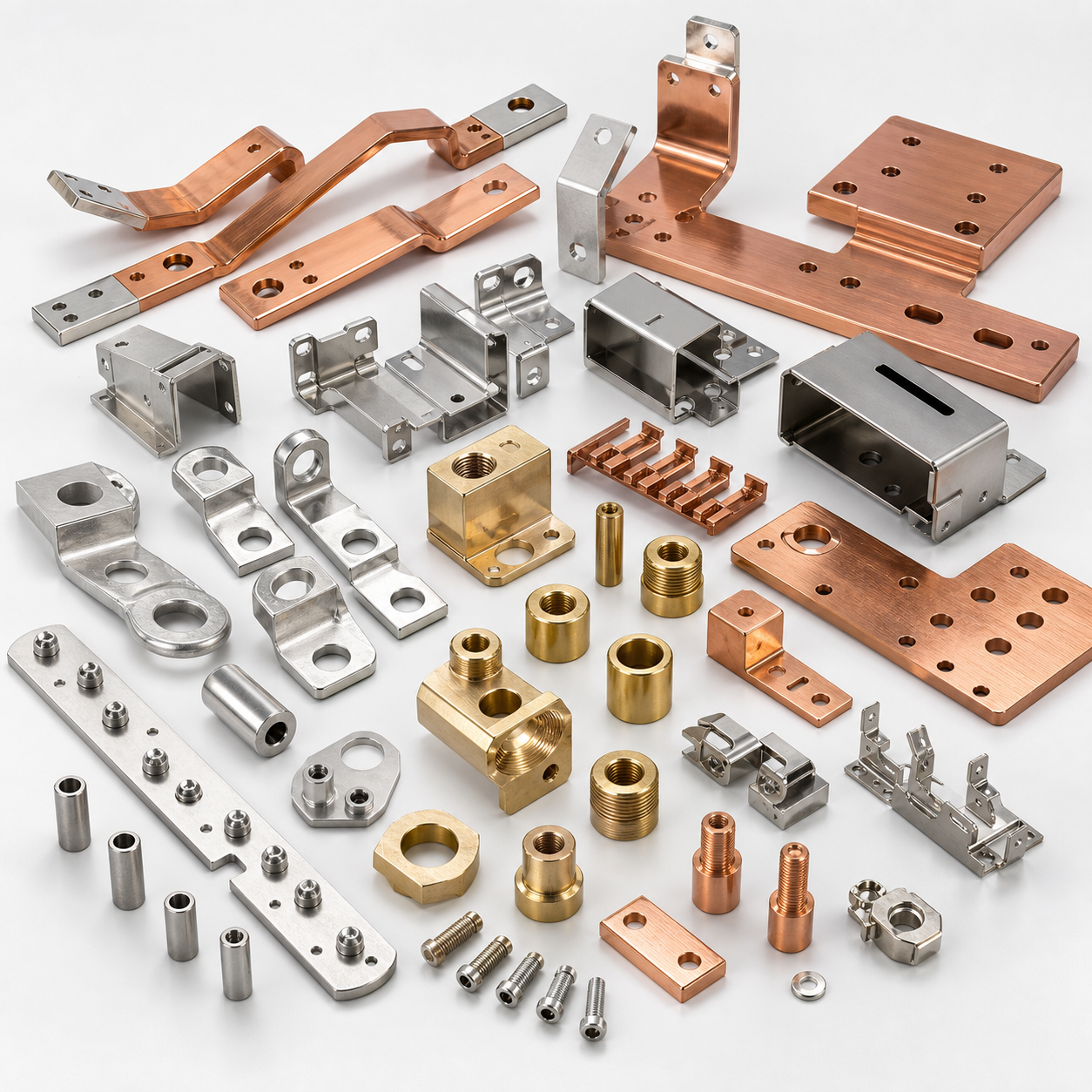
View the related AI data center power distribution metal hardware product page.
Watch The YouTube White Paper Explainer
Watch the AI Data Center Power Distribution Metal Hardware white paper explainer on YouTube. The video summarizes the same buyer guidance as the PDF and links back to this Zhengna Technology website resource.
Why AI Data Center Power Distribution Hardware Matters
AI data centers are usually discussed through chips, cooling and electricity demand. For a hardware buyer, the practical question is more specific: can the physical metal components carry current, resist heat, maintain contact quality, protect insulation, ground the system and remain inspectable after plating, bending and assembly?
Higher rack power density compresses conductor space. Copper busbars, terminals and grounding parts must often fit around server power modules, battery or energy-storage interfaces, rack-level distribution units, liquid-cooling hardware, sensors, shields and serviceable covers. A small burr, plated-hole change, bend-angle drift or scratched contact face can become a larger assembly or reliability issue.
Zhengna Technology should not position this topic as a complete electrical-system design service. The stronger and more credible position is made-to-drawing precision metal hardware: CNC machining, stamping, sheet metal, copper and brass part production, fasteners, surface treatment, assembly and inspection for buyers that already have system requirements or drawings.
Component Families Covered
| Component family | Typical function | Main sourcing risk |
|---|---|---|
| Copper busbars | Carry high current between power modules, rack equipment, energy-storage interfaces or distribution assemblies | Conductivity, temperature rise, hole position, bend geometry, plating, edge radius and packaging protection |
| Power terminals and lugs | Create repeatable bolted, clamped or inserted electrical connections | Contact-surface quality, thread fit, torque behavior, burrs, plating and mating-hardware compatibility |
| Stamped copper contacts | Provide compact conductive paths in connector, module or switchgear-adjacent hardware | Burr direction, flatness, springback, plating coverage, contact pressure and surface contamination |
| Grounding bars and plates | Support protective bonding, grounding and EMI control | Hole alignment, coating compatibility, flatness, corrosion behavior and contact surface cleanliness |
| Sheet metal brackets and shields | Mount power hardware, protect cables and support EMI shielding or mechanical separation | Bend angle, edge safety, vibration, cable clearance, grounding continuity and finish damage |
| Fasteners, spacers and standoffs | Retain busbars, covers, terminals, brackets and insulating supports | Thread quality, coating, torque behavior, mixed-material contact and traceability |
Material And Finish Selection
| Material or finish | Best-fit use | Buyer note |
|---|---|---|
| Copper and copper alloy | Busbars, terminals, grounding parts, conductive inserts and high-current contact hardware | Review conductivity, hardness, thickness, oxidation, burr control, bend radius and packaging protection. |
| Brass | Machined terminals, threaded contacts, spacers and conductive inserts | Review thread strength, plating, machinability, galvanic compatibility and mating surface requirements. |
| Tin plating | Common protective conductive finish for copper busbars and terminals | Review thickness, coverage, storage condition, solder/contact compatibility and the effect on holes or slots. |
| Nickel or silver plating | Higher-reliability contact surfaces when specified by the buyer | Review adhesion, thickness, cost, contact performance and whether masking is required. |
| Stainless steel | Brackets, fasteners, shields, supports and corrosion-resistant hardware | Review edge quality, passivation, galling risk and mixed-metal contact behavior. |
| Aluminum | Lightweight supports, covers or bus structures only when specified by the design | Review surface treatment, galvanic corrosion, joint design and conductivity assumptions. |
Manufacturing Route Comparison
| Route | Where it fits | Quality focus |
|---|---|---|
| CNC machining | Power lugs, terminals, threaded contacts, copper blocks, brass inserts and precision spacers | Hole position, thread quality, contact face, burr removal, chamfer and surface finish |
| Stamping | Copper contacts, busbar blanks, shields, grounding clips, brackets and retention parts | Burr direction, flatness, springback, edge radius, plating and progressive die stability |
| Bending and forming | 3D busbars, brackets, cable retainers and grounding plates | Bend radius, bend angle, crack prevention, conductor cross-section and fixture repeatability |
| Sheet metal fabrication | Covers, shields, rack-adjacent supports, mounting plates and cable-protection hardware | Flatness, bend sequence, hole alignment, edge safety and vibration resistance |
| Fastener and spacer production | Custom screws, standoffs, threaded pins, nuts and insulating-support hardware | Thread fit, coating, torque behavior, material compatibility and lot control |
| Assembly and packaging | Busbar kits, terminal sets, bracket kits and mixed hardware packs | Stack-up, mating surfaces, scratch protection, traceability and shipment protection |
Critical Quality And Inspection Checklist
- Electrical contact surfaces: flatness, surface finish, scratches, contamination, plating condition and storage protection.
- Thermal and current path: conductor thickness, cross-section, bend geometry, hole pattern and contact-pressure consistency.
- Edge safety: burr direction, edge radius, chamfer and prevention of insulation or cable damage.
- Dimensional stack-up: hole position, slot width, flatness, bend angle, standoff height and assembly clearance.
- Surface treatment: tin, nickel, silver, passivation or other coating thickness where it affects fit and contact.
- Grounding and shielding: continuity surfaces, coating masks, fastener locations and corrosion-resistant contact strategy.
- Packaging: protection for plated copper, polished contact faces, threads, thin stamped parts and mixed small hardware.
DFM Questions Before Quotation
| DFM question | Why it matters |
|---|---|
| Which surfaces carry current or provide grounding? | These surfaces may need controlled flatness, plating, masking, scratch protection and cleaning. |
| Which holes define assembly alignment or torque joints? | Hole drift can change contact pressure, thermal behavior and installation repeatability. |
| Will plating change a functional hole, slot, thread or contact surface? | Coating thickness can affect fit, torque, contact and inspection results. |
| What edge radius is required near cables, insulators or service areas? | Sharp burrs and rough edges can damage insulation or create field-service risk. |
| Can the prototype geometry scale into stamping or repeatable bending? | Prototype CNC parts may need tooling, forming fixtures or geometry optimization for volume production. |
Application Areas Inside AI Infrastructure
Power distribution metal hardware can appear across rack-level distribution, server power shelves, accelerator modules, UPS or energy-storage interfaces, cable-management hardware, grounding systems, liquid-cooling support structures and EMI shielding. Each application may use similar metalworking processes but different inspection priorities.
| Application area | Typical parts | Buyer priority |
|---|---|---|
| Server and accelerator power modules | Busbars, terminals, brackets, spacers and shields | Compact geometry, contact quality, heat rise, stack-up and serviceability |
| Rack power distribution | Grounding bars, mounting plates, copper links and fastener kits | Hole alignment, conductor size, continuity, corrosion control and packaging |
| Energy-storage or UPS interfaces | Copper bars, high-current terminals, grounding plates and covers | Current path, plating, torque behavior, edge safety and traceability |
| Liquid-cooling adjacent hardware | Brackets, shields, grounding clips and cable supports | Clearance around tubes, sensors, power cables and service access |
| EMI and grounding systems | Shielding covers, grounding plates, spring contacts and conductive brackets | Contact surfaces, coating masks, flatness and assembly repeatability |
Failure Modes A Supplier Review Should Prevent
| Failure mode | Possible manufacturing cause | Prevention point |
|---|---|---|
| Excessive heat at contact area | Poor contact flatness, plating damage, burrs, hole drift or inadequate contact pressure | Define contact surfaces and inspect mating geometry after finishing |
| Assembly interference | Bend angle drift, slot variation, coating buildup or missing edge radius | Review stack-up, plating thickness and fixture control before pilot batch |
| Insulation or cable damage | Sharp burrs, rough edges or uncontrolled punched features | Specify burr direction, edge radius and cable-clearance inspection |
| Grounding inconsistency | Paint or coating over contact surface, hole mismatch or surface contamination | Define masked areas, grounding faces and cleaning/packaging rules |
| Field corrosion or storage damage | Wrong finish, poor packaging, mixed material contact or humid storage | Review finish, material compatibility, packaging and transport protection |
Supplier Audit Checklist
- Can the supplier identify which surfaces are electrical contact, grounding, insulation-clearance or purely structural?
- Can copper, brass, stainless steel, aluminum, plating and fasteners be managed as one assembly package?
- Can the supplier inspect contact faces, hole patterns, bend geometry, edge radius and coating thickness after finishing?
- Can stamped copper parts be deburred and packaged without damaging contact surfaces?
- Can prototype CNC or laser-cut parts be reviewed for stamping, bending or production fixture feasibility?
- Can inspection records and material certificates follow prototype, pilot and production batches?
Prototype-To-Production Roadmap
- Concept prototype: confirm package space, conductor path, hole pattern, clearance and installation access.
- Engineering validation: confirm contact surfaces, bend geometry, plating, edge safety and mating hardware.
- Pilot batch: measure repeatability, surface treatment, packaging protection and inspection records.
- Production planning: review stamping, bending fixtures, machining optimization, fasteners and assembly kits.
- Stable supply: lock material, finish, inspection rhythm, packaging standard and revision communication.
Zhengna Technology Capability Fit
Zhengna Technology is a good fit for made-to-drawing power distribution metal hardware when a buyer needs multiple metalworking routes under one supplier review. Relevant capabilities include copper and brass component manufacturing, CNC machining, Swiss-type machining, stamping, sheet metal fabrication, fasteners, springs, surface treatment coordination, assembly and inspection.
Related Zhengna Technology capability pages:
- Custom copper busbar
- EV charging gun terminals
- Custom CNC machining parts
- Custom stamping parts
- Custom sheet metal parts
- Quality control
- AI data center liquid cooling hardware white paper
RFQ Checklist For AI Data Center Power Distribution Hardware
- 2D drawings, 3D files, revision level and critical-to-function dimensions.
- Material grade, conductivity or current notes, hardness and surface-treatment requirements.
- Plating type, coating thickness, masked areas, contact faces and storage requirements.
- Hole pattern, slot tolerance, bend geometry, flatness, edge radius and burr-direction requirements.
- Insulation clearance, grounding, torque, washer, spacer and mating-surface information when available.
- Prototype quantity, pilot-batch quantity, annual volume and target production timing.
- Inspection report, material certificate, traceability, packaging and shipment protection expectations.
FAQ
What AI data center power distribution metal hardware can Zhengna Technology manufacture?
Zhengna Technology can manufacture made-to-drawing copper busbars, tin-plated terminals, stamped copper contacts, grounding bars, CNC machined brass or copper lugs, brackets, shields, spacers, fasteners and small assemblies.
How is this topic different from the liquid cooling hardware white paper?
The liquid cooling white paper focuses on thermal and coolant-interface hardware. This white paper focuses on electrical and conductive hardware such as busbars, terminals, grounding parts and power-module mounting components.
Which dimensions should buyers control first?
Buyers should define contact-surface flatness, hole and slot position, bend geometry, edge radius, burr direction, plating thickness, conductor thickness, grounding points and assembly stack-up.
Which materials and finishes are common?
Common options include copper and copper alloy for conductivity, brass for machined terminals, stainless steel for brackets and fasteners, tin plating for copper contacts, and nickel or silver plating when the buyer specifies higher contact requirements.
Can prototype busbars become production parts?
Yes. Prototype CNC or laser-cut samples can move toward production when the buyer reviews conductor geometry, stamping or bending feasibility, plating, burr control, fixtures, inspection and packaging protection.
What should be included in an RFQ?
Include drawings, 3D files, material grade, conductivity or current notes, plating, hole pattern, bend geometry, edge requirements, volume, packaging, mating hardware and inspection records.
Table of Contents
-
AI Data Center Power Distribution Metal Hardware White Paper
- Watch The YouTube White Paper Explainer
- Why AI Data Center Power Distribution Hardware Matters
- Component Families Covered
- Material And Finish Selection
- Manufacturing Route Comparison
- Critical Quality And Inspection Checklist
- DFM Questions Before Quotation
- Application Areas Inside AI Infrastructure
- Failure Modes A Supplier Review Should Prevent
- Supplier Audit Checklist
- Prototype-To-Production Roadmap
- Zhengna Technology Capability Fit
- RFQ Checklist For AI Data Center Power Distribution Hardware
- FAQ