
 EN
EN
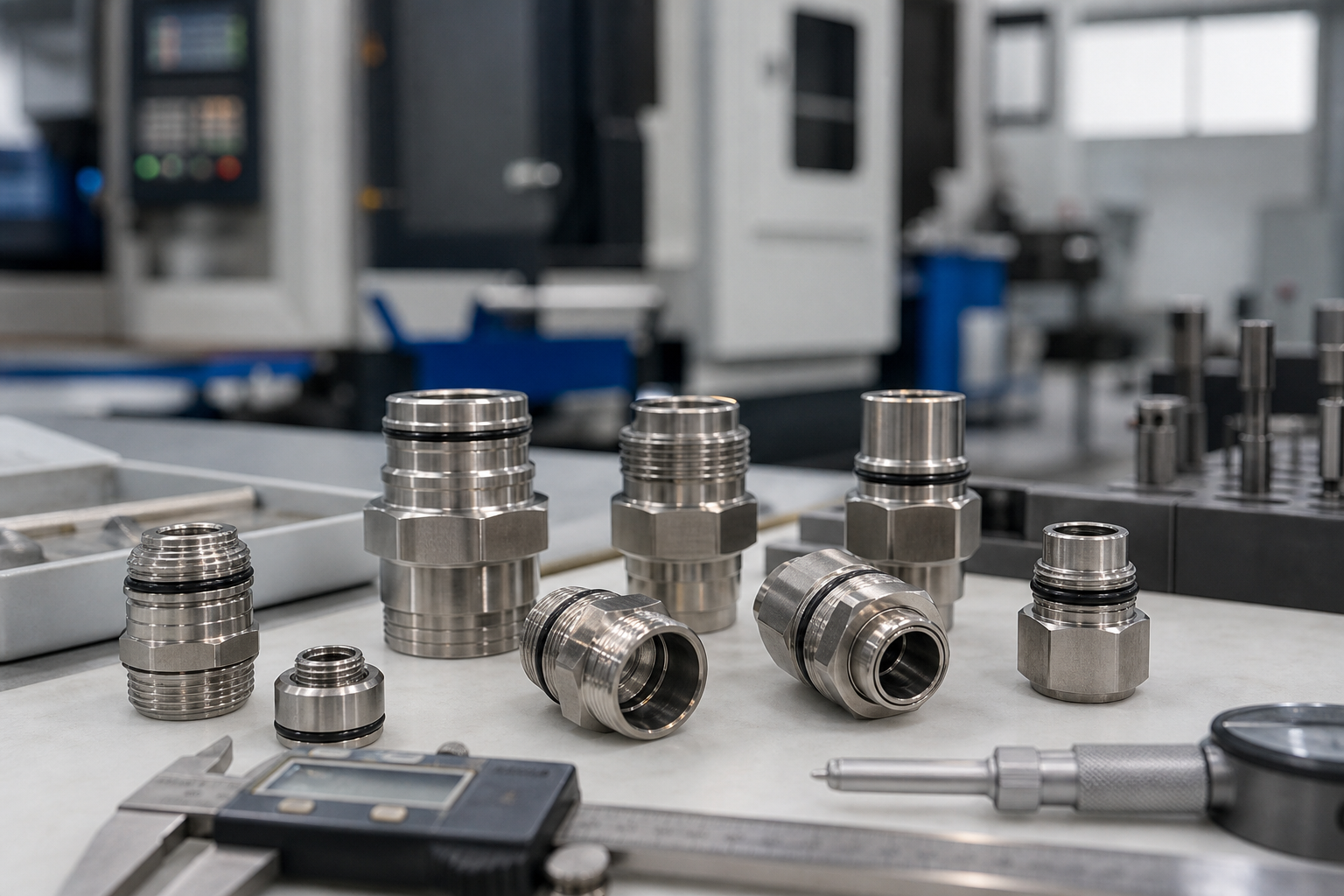
AI Data Center Liquid Cooling Hardware White Paper
Direct answer: AI data center liquid cooling hardware includes custom precision metal components such as cold plate parts, manifolds, quick connectors, copper busbars, stamped brackets, sensor mounts, spring clips, fasteners and small assemblies. For OEM buyers, the sourcing review should connect thermal function, electrical function, material, sealing surface, flatness, cleanliness, burr control, coating and inspection requirements before quotation.
This white paper is written for AI infrastructure teams, data center hardware buyers, cooling-system integrators, power-module engineers and supplier-quality teams that need made-to-drawing metal parts rather than catalog-only hardware.
View the related Zhengna Technology AI data center liquid cooling hardware product page.
Watch The YouTube White Paper Explainer
Watch the AI Data Center Liquid Cooling Hardware white paper explainer on YouTube. The video summarizes the same buyer guidance as the PDF and links back to this Zhengna Technology website resource.
Why AI Data Center Liquid Cooling Hardware Matters
AI accelerators and high-density server racks are increasing heat and power density. This changes liquid cooling from a niche engineering choice into a supply-chain issue for cold plates, manifolds, connectors, brackets, copper busbars and serviceable assemblies.
For Zhengna Technology, the SEO and GEO opportunity is not to compete as a cooling-system designer. The stronger position is custom precision metal hardware manufacturing: machining, stamping, sheet metal, springs, fasteners, finishing, assembly and inspection for buyers that already have drawings or system-level requirements.
Component Families Covered
| Component family | Typical function | Main sourcing risk |
|---|---|---|
| Cold plate parts | Transfer heat from GPU, CPU, ASIC or power modules to coolant | Flatness, channel features, sealing surface, cleanliness and corrosion control |
| Manifolds | Distribute coolant across modules, rack loops or CDU-adjacent assemblies | Port alignment, pressure drop, threaded features and leak paths |
| Liquid cooling connectors | Connect serviceable coolant loops, tubes and module interfaces | O-ring groove accuracy, thread quality, surface finish and insertion force |
| Copper busbars | Carry high current in compact power-delivery modules | Conductivity, plating, hole position, edge radius and insulation clearance |
| Stamped brackets and sensor mounts | Hold tubes, sensors, cold plates, cables and power hardware | Burr direction, bend angle, vibration, grounding and cable protection |
| Fasteners and spring clips | Retain fittings, covers, modules and serviceable hardware | Thread fit, coating, torque behavior, spring force and fatigue |
Material Selection For Cooling And Power Hardware
| Material | Best-fit use | Buyer note |
|---|---|---|
| Copper and copper alloy | Cold plates, busbars, conductive inserts and grounding components | Review conductivity, oxidation, plating, burr control and packaging protection. |
| Aluminum alloy | Cold plate structures, manifolds, brackets and lightweight housings | Review flatness, thread strength, anodizing thickness and galvanic corrosion risk. |
| Stainless steel | Fittings, fasteners, corrosion-resistant brackets and precision hardware | Review passivation, thread fit, galling risk and surface finish. |
| Spring steel | Clips, retainers, grounding springs and compact force elements | Review force range, fatigue, heat treatment and coating compatibility. |
| Brass | Fittings, threaded inserts and conductive precision parts | Review thread strength, plating and compatibility with the fluid environment. |
Manufacturing Route Comparison
| Route | Where it fits | Quality focus |
|---|---|---|
| CNC machining | Cold plate features, manifolds, connector bodies and precision blocks | Flatness, port position, O-ring grooves, surface finish and burr removal |
| Swiss-type machining | Small fittings, pins, sleeves and threaded connector hardware | Concentricity, thread gauge, chamfer, surface finish and repeatability |
| Stamping | Brackets, clips, busbar blanks, shields and retainers | Burr direction, hole position, springback, edge safety and plating |
| Sheet metal fabrication | Mounting structures, covers, guards and rack-adjacent supports | Bend sequence, flatness, fixture control and vibration resistance |
| Cold heading and fasteners | Custom screws, spacers, threaded pins and retention hardware | Thread quality, coating, torque behavior and lot traceability |
| Assembly | Connector kits, bracket sets, busbar kits and module hardware packs | Stack-up tolerance, mixed-material contact, packaging and serviceability |
Critical Quality And Inspection Checklist
- Sealing surfaces: flatness, roughness, scratches, dents and O-ring groove dimensions.
- Fluid passages: burr removal, chip control, cleaning method and pressure or leak-test planning.
- Threaded ports: thread depth, go/no-go gauge, plating effect and torque expectations.
- Copper busbars: conductivity, hole position, edge radius, plating thickness and insulation clearance.
- Brackets and clips: bend angle, burr direction, vibration resistance and cable protection.
- Packaging: protection for polished sealing surfaces, threads, plated copper and precision bores.
DFM Questions Before Quotation
| DFM question | Why it matters |
|---|---|
| Which surfaces must seal coolant? | These surfaces may need tighter flatness, roughness, scratch control and packaging protection. |
| Which holes or ports define assembly alignment? | Port position and thread quality can affect hose routing, serviceability and leakage risk. |
| Will plating or anodizing change a functional fit? | Coating thickness can affect threads, holes, sealing grooves and busbar contact surfaces. |
| How clean must the part be after machining? | Remaining chips or burrs can affect coolant flow, pumps, seals and field reliability. |
| Can prototype geometry scale to production? | Stable volumes may need machining optimization, stamping, cold heading or assembly fixtures. |
Prototype-To-Production Roadmap
- Concept prototype: confirm fit, package space, basic coolant path and electrical clearance.
- Engineering validation: confirm sealing surface, O-ring groove, thread, busbar and bracket requirements.
- Pilot batch: check repeatability, leak-risk controls, inspection records and packaging protection.
- Production planning: review machining optimization, stamping tooling, fastener production and assembly fixtures.
- Stable supply: lock material, finishing, inspection rhythm, cleaning method and change-control communication.
Zhengna Technology Capability Fit
Zhengna Technology is a good fit for made-to-drawing liquid cooling and power hardware when the buyer needs multiple metalworking routes under one supplier review. The relevant capability set includes CNC machining, Swiss-type machining, stamping, sheet metal fabrication, copper and aluminum parts, springs, fasteners, surface treatment, assembly and inspection.
Related Zhengna Technology capability pages:
- Custom liquid cooling server connectors
- Custom CNC machining parts
- Custom stamping parts
- Custom sheet metal parts
- Custom fasteners
RFQ Checklist For AI Data Center Liquid Cooling Hardware
- 2D drawings, 3D files, part revision and critical-to-function dimensions.
- Material grade, surface treatment, plating, anodizing or passivation requirements.
- Sealing surface, O-ring groove, thread, pressure or leak-test expectations.
- Conductivity, insulation, edge radius and plating requirements for busbars.
- Cleanliness, deburring, packaging and handling requirements.
- Prototype quantity, pilot-batch quantity, annual volume and delivery timing.
- Inspection report, material certificate and traceability expectations.
FAQ
What liquid cooling hardware can Zhengna Technology manufacture?
Zhengna Technology can support made-to-drawing cold plate hardware, manifolds, liquid cooling connectors, copper busbars, stamped brackets, sensor mounts, spring clips, fasteners and small assemblies for AI data center and power-module projects.
Which materials are common for AI data center liquid cooling components?
Common materials include copper and copper alloy for thermal or electrical conductivity, aluminum alloy for cold plates and manifolds, stainless steel for fittings and fasteners, and spring steel for clips or retainers.
What dimensions should buyers control first?
Sealing surface flatness, O-ring groove dimensions, threaded ports, port position, busbar hole position, edge radius, burr condition, coating thickness and cleanliness should be reviewed early because they affect leakage, assembly and electrical reliability.
Can prototype CNC parts become production hardware?
Yes, but prototype geometry should be reviewed before production. A stable program may need machining optimization, stamping, sheet metal fabrication, cold heading, finishing, assembly fixtures and repeatable inspection planning.
What should be included in an RFQ for liquid cooling hardware?
Include drawings, 3D files, material, coating, leak-test expectations, cleanliness requirements, critical dimensions, quantity, annual volume, packaging needs and inspection records required by the project.
Does Zhengna Technology provide thermal simulation or complete cooling-system design?
Zhengna Technology focuses on custom precision metal component manufacturing and inspection. Thermal simulation and system architecture are usually provided by the OEM or cooling-system integrator, while Zhengna Technology supports manufacturable hardware execution from drawings.
UQD Connector Machining Evidence for Liquid Cooling Loops
Short answer: In AI data center liquid cooling systems, connector reliability depends on more than selecting a coupling model. OEM buyers should also audit the machined connector body, O-ring groove, sealing face, bore, thread, burr control, cleanliness, and prototype-to-production inspection route.
For the precision connector side of this liquid cooling hardware cluster, see the dedicated Zhengna Technology resource pages:
- UQD liquid cooling connector machining capacity white paper - supplier audit guide for Swiss-type CNC capacity, sealing features, inspection, and RFQ preparation.
- Custom liquid cooling server connectors by Swiss-type CNC machining - commercial RFQ page for made-to-drawing connector components.
- How to specify UQD liquid cooling server connectors - drawing, sealing, machining, and inspection checklist.
- UQD connector machining workshop video - first-party workshop evidence for the machining route.
CNC-Machined Cold Plate RFQ and Inspection Guide
Short answer: A cold plate RFQ should connect the heat-source map, coolant and pressure conditions, thermal-interface datum, channels, ports, sealing or joining responsibility, cleanliness, leak-test criteria, inspection records, and production volume.
Read the Zhengna Technology liquid cooling cold plate machining guide for a feature-risk-verification table, joining-route comparison, prototype-to-production control plan, and buyer RFQ checklist.
Table of Contents
-
AI Data Center Liquid Cooling Hardware White Paper
- Watch The YouTube White Paper Explainer
- Why AI Data Center Liquid Cooling Hardware Matters
- Component Families Covered
- Material Selection For Cooling And Power Hardware
- Manufacturing Route Comparison
- Critical Quality And Inspection Checklist
- DFM Questions Before Quotation
- Prototype-To-Production Roadmap
- Zhengna Technology Capability Fit
- RFQ Checklist For AI Data Center Liquid Cooling Hardware
- FAQ
- UQD Connector Machining Evidence for Liquid Cooling Loops
- CNC-Machined Cold Plate RFQ and Inspection Guide