
 EN
EN
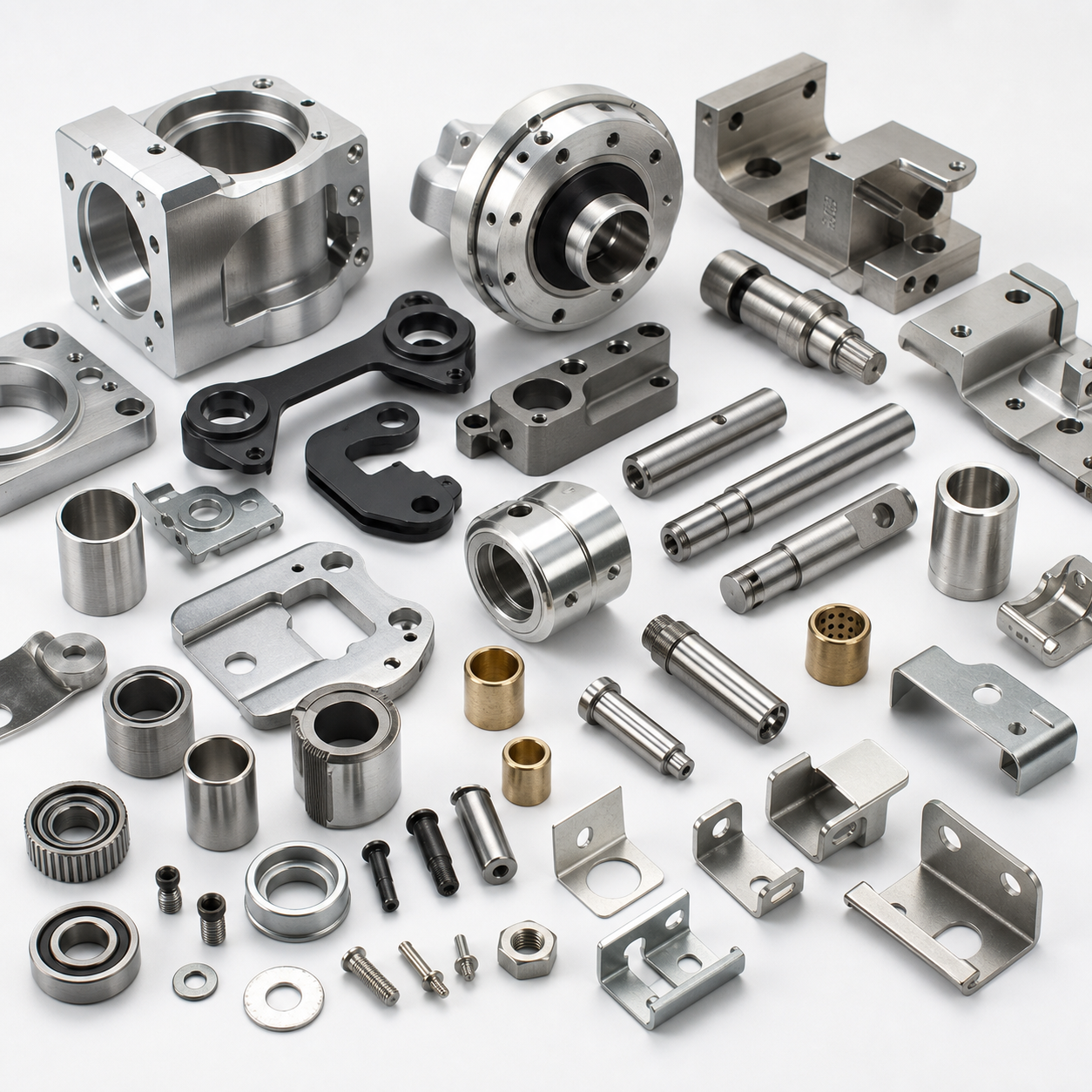
Robot Precision Metal Components White Paper
Direct answer: Robot precision metal components are custom CNC machined, stamped, formed, spring, fastener and assembled metal parts used in robot joints, grippers, actuator modules, sensor brackets, cable protection systems and compact motion assemblies. A reliable sourcing review should connect the part function, material, tolerance, surface treatment, inspection method and production route before quotation.
This expanded white paper page is written for robotics OEM buyers, mechanical engineers, sourcing teams and supplier-quality engineers who need made-to-drawing robot hardware rather than catalog parts. It summarizes how Zhengna Technology reviews robot precision metal components for manufacturability, repeatability and inspection readiness.
View the related Zhengna Technology robot precision metal components product page.
Watch The YouTube White Paper Explainer
Watch the Robot Precision Metal Components white paper explainer on YouTube. The video summarizes the same buyer guidance as the PDF and links back to the Zhengna Technology website resource.
Why This Topic Matters For Robotics OEM Buyers
Industrial robot demand continues to grow, and hardware supply chains are becoming more important as automation, humanoid robots and physical AI projects move from prototypes toward repeatable production. The International Federation of Robotics reported that 542,000 industrial robots were installed in 2024, more than double the number from ten years earlier. That demand creates pressure on precision component supply, inspection consistency and production planning.
For robot hardware, the risk is rarely only whether a supplier can make one good sample. The harder question is whether the same supplier can keep motion-related dimensions, hole positions, burr conditions, coating thickness, spring force, threaded features and packaging protection stable when drawings change or volumes increase.
Useful external context: IFR World Robotics 2025 report summary.
Component Families Covered
Robot precision metal components include both high-visibility motion parts and small supporting parts that can still affect assembly reliability. A project may need several manufacturing routes at the same time.
| Component family | Typical robot use | Main sourcing concern |
|---|---|---|
| CNC machined joint housings | Actuator modules, bearing seats, compact structural blocks | Datum control, bore accuracy, flatness, surface finish and repeatable inspection |
| Shafts, pins and sleeves | Rotating joints, hinges, bushings, guide mechanisms | Diameter control, concentricity, hardness, plating thickness and wear surface quality |
| Stamped brackets and covers | Sensor mounts, cable guards, grounding tabs, light structural supports | Burr direction, hole position, bend angle, springback and edge safety |
| Spring clips and wire forms | Retention, grounding, cable management and compact force functions | Material temper, force window, fatigue risk and plating compatibility |
| Fasteners and cold-headed parts | Assembly locking, spacing, threaded interfaces and modular fastening | Thread fit, head geometry, coating, lot traceability and torque behavior |
| Small assemblies | Pre-assembled brackets, hinge sets, sensor carriers and hardware kits | Assembly sequence, mixed-process tolerance stack-up and packaging damage prevention |
Material Selection For Robot Metal Parts
Material choice should follow the function of the part, not only cost or availability. Robot components often need a balance of strength, weight, wear resistance, conductivity, corrosion resistance and surface finish.
| Material group | Where it fits | Buyer note |
|---|---|---|
| Aluminum alloy | Joint housings, brackets, lightweight machined structures | Good for weight reduction, but anodizing and coating thickness should be considered in functional holes and bearing interfaces. |
| Stainless steel | Shafts, pins, clips, hygienic or corrosion-resistant parts | Good corrosion resistance, but machining, deburring and spring forming must be planned for the selected grade. |
| Carbon steel and alloy steel | Strength-critical shafts, pins, brackets and fasteners | Heat treatment, plating and hydrogen embrittlement risk should be reviewed when strength and coating are both required. |
| Brass and copper alloy | Conductive parts, bushings, terminals and grounding hardware | Useful for conductivity and wear behavior, but material softness can affect thread strength and packaging requirements. |
| Spring steel | Spring clips, wire forms, retaining parts and elastic contact features | Force range, fatigue life, bend radius and coating process should be defined before tooling. |
Choosing The Manufacturing Route
The best manufacturing route changes as a robotics project moves from prototype to production. Early designs often need CNC flexibility, while stable volumes may benefit from stamping, forming, cold heading or combined assemblies.
| Route | Best use | Common risk | How to reduce risk |
|---|---|---|---|
| CNC machining | Prototype housings, shafts, sleeves and precise blocks | Cost can remain high if the design is not simplified for production | Review datum strategy, tool access, feature depth and inspection priorities early |
| Metal stamping | Brackets, clips, shields, grounding tabs and covers | Burrs, springback and hole-position drift can affect assembly | Define burr direction, bend angle tolerance, flatness and critical holes on the drawing |
| Sheet metal fabrication | Low-to-mid volume frames, covers, guards and mounting structures | Welding distortion or bend sequence can move datums | Agree on inspection datums, flatness control and fixture approach |
| Cold heading and fastener production | Custom screws, pins, spacers and threaded parts | Thread fit or coating can change assembly behavior | Confirm thread gauge, material grade, coating thickness and torque expectations |
| Spring forming | Spring clips, wire forms, retainers and force elements | Force variation and fatigue can create field reliability problems | Specify force test points, material temper, heat treatment and sample approval method |
Critical Tolerance And Function Review
Robot hardware should be reviewed around critical-to-function dimensions. A general tolerance block is not enough when a part controls motion, sensor position or actuator alignment.
- Bearing seats and shaft diameters should have clear tolerance, roundness or fit requirements when they affect smooth movement.
- Sensor bracket datums should be linked to the optical, magnetic or electrical function of the sensor.
- Threaded holes should be checked after coating when plating or anodizing could affect fit.
- Stamped parts should define burr direction, edge safety and whether a formed edge touches a cable or moving part.
- Assemblies should be inspected at the assembled condition, not only as separate loose parts.
- Packaging should protect polished shafts, thin brackets, precision bores and coated surfaces from transport damage.
DFM Questions Before Quotation
A good quotation review should catch manufacturing risk before price negotiation. For robot precision metal components, Zhengna Technology prefers to review drawings, 3D files, function notes and quality expectations together.
| DFM question | Why it matters |
|---|---|
| Which dimensions affect robot motion or sensor alignment? | These dimensions should become inspection priorities and may need tighter process control. |
| Can any deep pocket, sharp corner or thin wall be simplified? | Small geometry changes can reduce machining time, deformation and tool wear. |
| Will coating, anodizing or plating change a functional fit? | Surface treatment can affect holes, threads, sliding surfaces, grounding and bearing interfaces. |
| Is the prototype geometry suitable for production? | Early CNC geometry may need redesign for stamping, die casting, cold heading or assembly. |
| Can the part be measured reliably in production? | If a feature cannot be measured consistently, the drawing may need clearer datums or inspection notes. |
| How should the part be packaged? | Robot hardware often includes polished, coated or thin features that can be damaged before assembly. |
Quality Control And Inspection Planning
Inspection planning should match the part risk. A simple visual check may be enough for a non-critical cover, but a robot joint housing, shaft or sensor bracket may need dimensional reports, gauge checks and process records.
- Incoming material checks help confirm grade, thickness, temper, surface condition and traceability.
- First-article inspection should confirm the drawing, datum interpretation, critical dimensions and surface requirements before batch production.
- In-process inspection should focus on dimensions likely to drift because of tool wear, heat, springback or fixture movement.
- Final inspection should include dimensions, surface finish, burr control, coating appearance, thread fit and packaging condition when relevant.
- For assemblies, the inspection plan should include functional fit or assembled-position checks when separate part inspection is not enough.
Zhengna Technology supports made-to-drawing manufacturing projects through CNC machining, stamping, sheet metal fabrication, custom springs, fasteners, finishing, assembly and inspection. The strongest fit is an OEM project where drawings, function notes and inspection priorities can be reviewed together before quotation.
Prototype To Production Roadmap
Robot projects often change quickly in the first stage. A practical sourcing plan should avoid locking the buyer into a costly prototype method if a lower-cost production method will be needed later.
- Concept sample: CNC machining or sheet metal fabrication is useful for fit checks and early motion testing.
- Engineering validation: Critical dimensions, material, coating and inspection methods should be reviewed with the drawing.
- Pilot batch: The supplier should confirm repeatability, packaging, assembly fit and documentation.
- Production route review: If volumes increase, evaluate stamping, tooling, cold heading, die casting or assembly fixture options.
- Stable supply: Lock material, process flow, inspection records, packaging and change-control communication.
Internal Zhengna Technology Capability Links
Robot metal hardware usually connects several Zhengna Technology service clusters. These internal pages are useful when a buyer wants to compare process routes:
- Custom CNC machining parts for housings, shafts, sleeves and precision machined blocks.
- Custom stamping parts for brackets, clips, covers, shields and grounding parts.
- Custom sheet metal parts for formed frames, guards and mounting structures.
- Custom springs for spring clips, retaining features and compact force components.
- Custom fasteners for screws, spacers, nuts, pins and fastening hardware.
RFQ Checklist For Robot Precision Metal Components
For a faster and more accurate quote, prepare the project package around function and risk, not only around part geometry.
- 2D drawing with material, surface finish, tolerance and inspection notes.
- 3D file for geometry review and tool-access planning.
- Function notes explaining whether the part controls motion, alignment, grounding, cable routing, load or appearance.
- Critical-to-function dimensions and any dimensions that changed during prototype testing.
- Expected quantity, annual volume, pilot-batch plan and target production stage.
- Surface treatment requirements such as anodizing, plating, passivation, blackening, painting or coating.
- Inspection expectations such as first-article report, dimensional report, material certificate, gauge check or packaging check.
- Packaging needs for polished shafts, thin brackets, coated surfaces, precision bores or assembly kits.
FAQ
What robot precision metal parts can Zhengna Technology make?
Zhengna Technology can manufacture CNC machined joint housings, shafts, pins, bushings, sleeves, stamped brackets, sensor mounts, spring clips, fasteners and small robot hardware assemblies from buyer drawings.
Which manufacturing processes are usually used for robot metal components?
Robot metal components often use CNC milling, CNC turning, Swiss machining, sheet metal fabrication, metal stamping, cold heading, spring forming, surface finishing and small assembly. The correct route depends on geometry, material, volume, tolerance and functional risk.
Should robotics OEM buyers start with CNC machining?
Many robotics programs start with CNC machined prototypes because design changes are frequent. For higher volume, stamping, sheet metal fabrication, die casting, cold heading or combined assemblies may reduce cost when geometry and demand become stable.
What tolerances should be controlled first?
Bearing seats, shaft diameters, threaded locations, sensor datums, cable clearance, mounting hole position, flatness and coated functional surfaces should be reviewed first because they can affect motion, alignment, assembly and service life.
What should be included in a robot hardware RFQ?
Include 2D drawings, 3D files, material, function notes, tolerance priorities, surface finish, quantity, annual volume, inspection requirements, packaging needs and any critical-to-function dimensions.
Can one supplier handle both prototype and production robot hardware?
A supplier can support both stages when it has flexible CNC capability for early samples, process planning for production, and inspection records that can follow the part from prototype approval to stable batch manufacturing.
Table of Contents
-
Robot Precision Metal Components White Paper
- Watch The YouTube White Paper Explainer
- Why This Topic Matters For Robotics OEM Buyers
- Component Families Covered
- Material Selection For Robot Metal Parts
- Choosing The Manufacturing Route
- Critical Tolerance And Function Review
- DFM Questions Before Quotation
- Quality Control And Inspection Planning
- Prototype To Production Roadmap
- Internal Zhengna Technology Capability Links
- RFQ Checklist For Robot Precision Metal Components
- FAQ