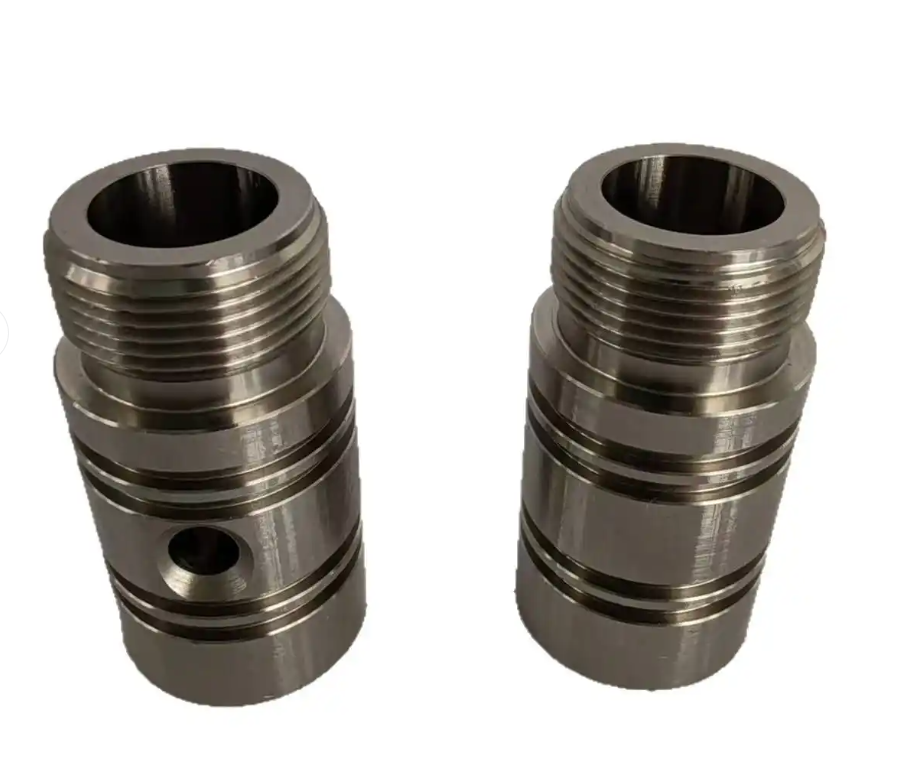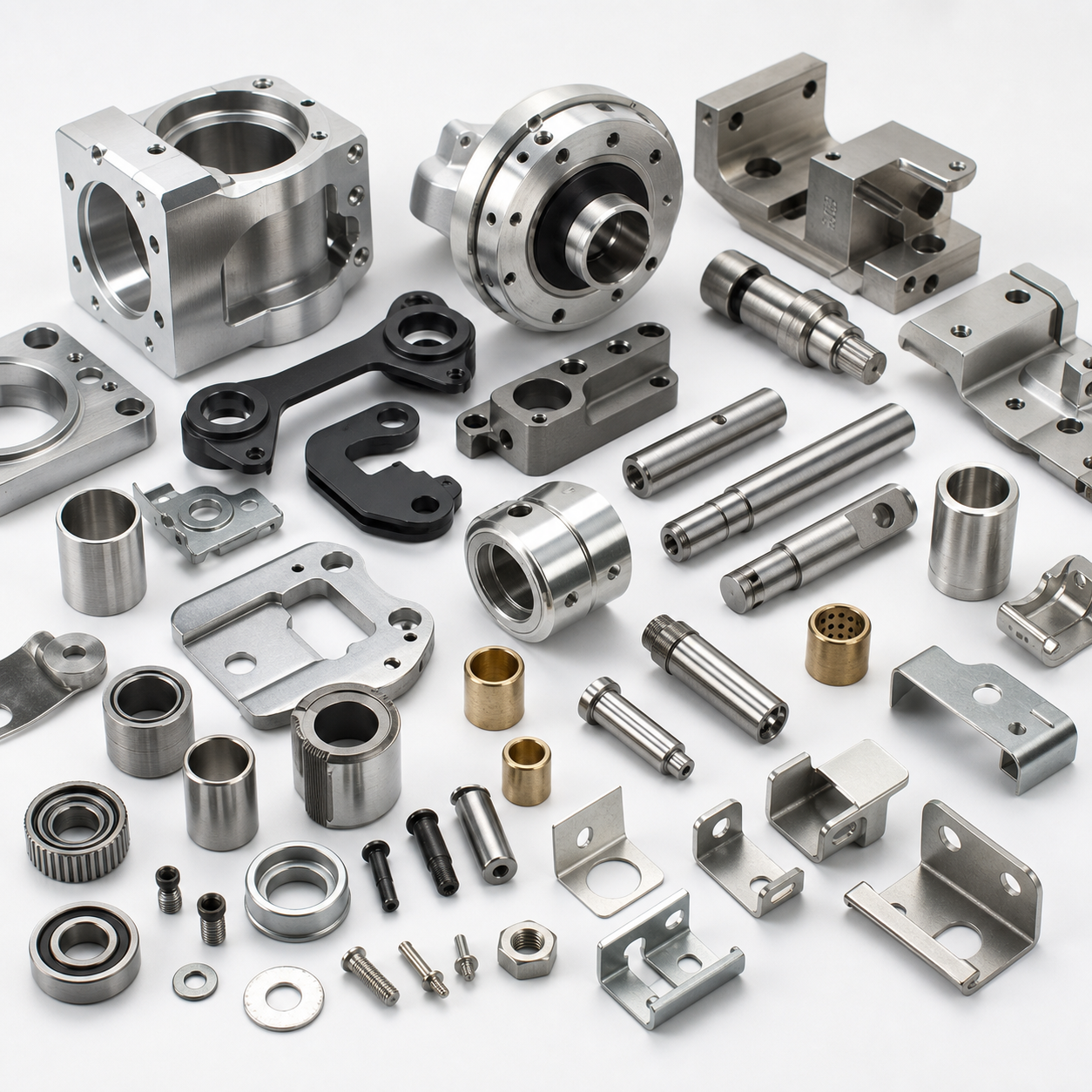
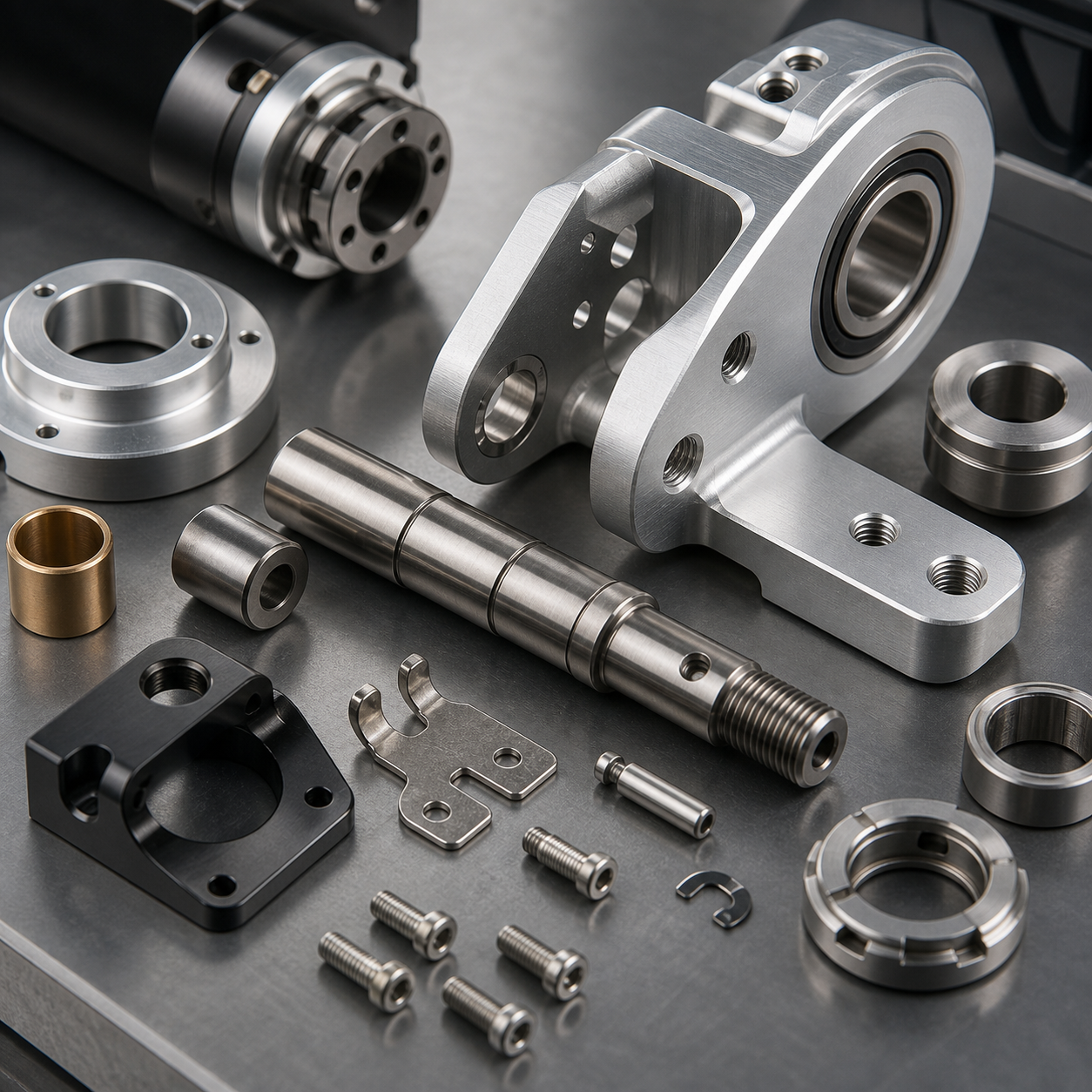
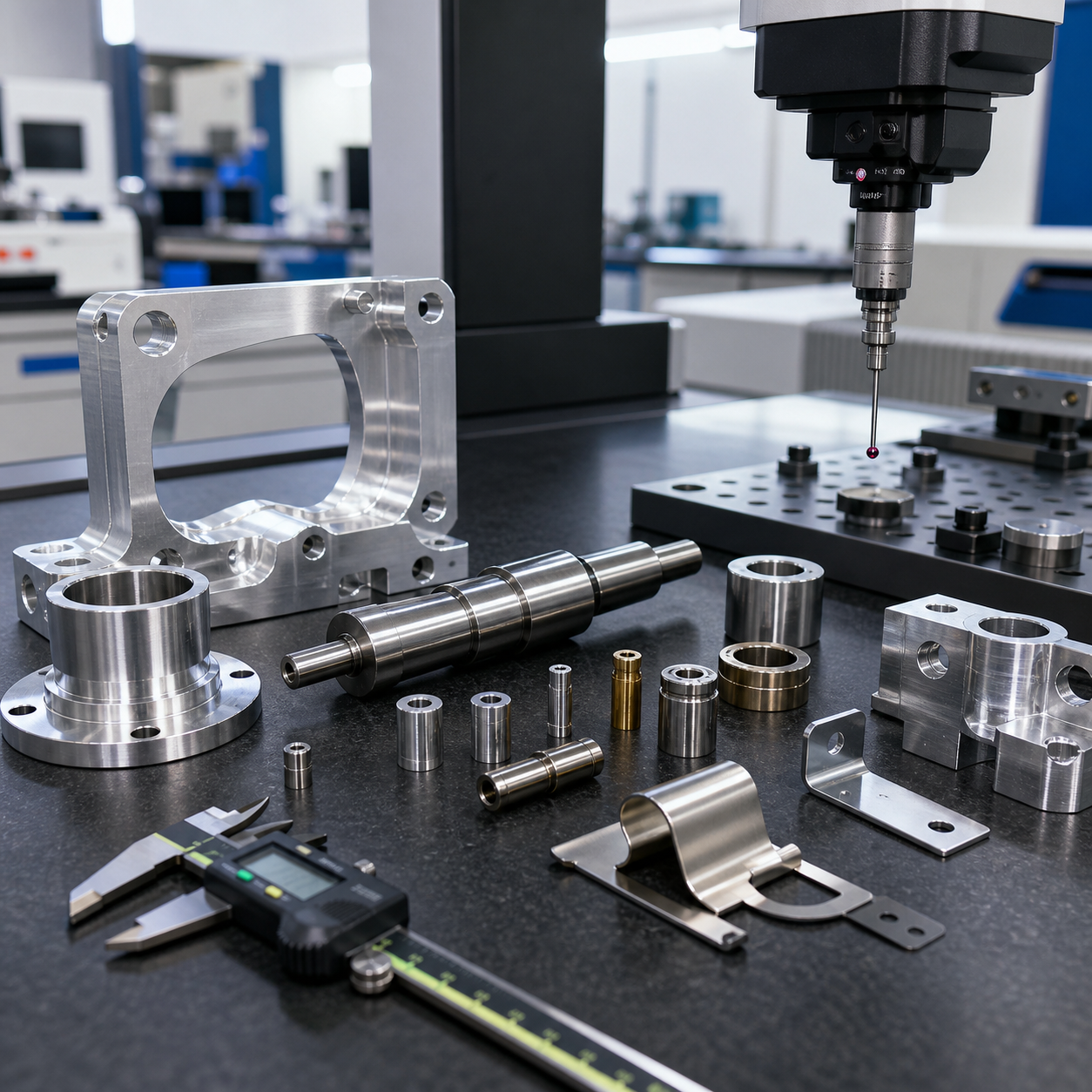
Zhengna Technology manufactures custom robot precision metal components including CNC machined joint hardware, shafts, pins, stamped brackets, spring clips, fasteners, and small assemblies.
Direct answer: Zhengna Technology manufactures custom robot precision metal components for humanoid robots, industrial robots, automation equipment, and intelligent motion assemblies. Typical parts include CNC machined joint housings, shafts, pins, bushings, stamped brackets, spring clips, fasteners, sensor mounts, and small metal assemblies made from buyer drawings.
As robotics and physical AI move from prototypes toward production, OEM buyers need metal parts that balance lightweight structure, repeatable fit, surface finish, burr control, bearing-seat stability, and inspection traceability. Zhengna Technology supports made-to-drawing robot hardware through CNC machining, stamping, sheet metal fabrication, springs, fasteners, surface treatment, and assembly support.
| Component type | Typical process | Buyer risk to control |
|---|---|---|
| Joint housings and actuator brackets | CNC milling, drilling, tapping, deburring, anodizing or passivation | Bearing-seat fit, flatness, wall thickness, thread strength, surface defects |
| Shafts, pins, bushings, and sleeves | CNC turning, Swiss-type machining, grinding when required, plating | Concentricity, diameter tolerance, hardness, wear surface, burrs |
| Stamped brackets and sensor mounts | Stamping, bending, laser cutting, tapping, surface finishing | Bend angle, hole position, edge condition, coating thickness, assembly fit |
| Spring clips, retainers, and small fasteners | Stamping, wire forming, cold heading, threading, heat treatment, coating | Spring force, fatigue risk, thread fit, corrosion resistance, packaging deformation |
| Robot subassemblies | Multi-process parts, fasteners, rivets, welding or fitted assembly | Stack-up tolerance, functional fit, lot traceability, inspection records |
Robot components often sit inside compact motion systems where small dimensional changes can affect bearing alignment, actuator load, sensor position, cable routing, or end-effector repeatability. A reliable manufacturing review should check material choice, machining allowance, bend radius, thread depth, burr direction, surface treatment thickness, and inspection access before tooling or batch production.
Zhengna Technology can review robot component drawings and recommend the process route according to volume, tolerance, material, surface finish, and assembly function.
Direct answer: Robot precision metal components should be specified by load, motion interface, weight target, corrosion environment, electrical function, and production volume. A good RFQ should not only name the material; it should explain the part function and the failure mode the material must prevent.
| Material family | Common robot part use | Manufacturing notes |
|---|---|---|
| Aluminum alloy | Joint housings, lightweight brackets, actuator covers, sensor mounts | Good for weight reduction; review wall thickness, flatness, thread strength, anodizing thickness, and deformation risk. |
| Stainless steel | Shafts, pins, bushings, wear interfaces, exposed fasteners, corrosion-sensitive hardware | Useful for corrosion and strength; review passivation, burr removal, galling risk, and surface finish. |
| Carbon steel or alloy steel | Pivot pins, load-bearing shafts, structural brackets, high-strength fasteners | May need heat treatment, plating, hardness control, and clear inspection points for wear surfaces. |
| Brass or copper alloy | Electrical contacts, grounding parts, cable hardware, threaded inserts | Review conductivity, plating, thread fit, burr control, and contamination prevention. |
| Spring steel and stainless spring wire | Retainers, clips, return springs, preload features, compact mechanisms | Control spring force, fatigue risk, stress relief, coating, and packaging deformation. |
Robot hardware often has more than one critical function. A bracket may locate a sensor, carry load, route a cable, and hold an assembly datum at the same time. For this reason, inspection should focus on functional dimensions instead of only general drawing tolerances.
Many robot programs begin with low-volume prototypes and then change quickly after motion testing. Zhengna Technology can support a route that starts with CNC machined prototypes and then evaluates whether stamping, die casting, sheet metal fabrication, cold heading, or multi-process assembly can reduce cost at production volume.
| Stage | Typical buyer goal | Recommended manufacturing focus |
|---|---|---|
| Prototype | Verify geometry, motion fit, sensor position, and assembly concept | CNC machining, flexible fixtures, quick inspection report, clear revision control. |
| Pilot batch | Test repeatability, finish, packaging, and functional fit in small volume | Define critical dimensions, inspection frequency, surface treatment, and first-article records. |
| Pre-production | Reduce cost and stabilize the process route | Evaluate stamping, tooling, die casting, cold heading, or combined assemblies where volume justifies it. |
| Mass production | Hold quality, traceability, delivery stability, and lot consistency | Use incoming material checks, in-process inspection, final inspection, packaging standard, and batch records. |
For the fastest engineering review, send drawings and the application context together. If the part belongs to a robot joint, gripper, actuator housing, sensor bracket, cable guide, end-effector, or mobile robot module, include that function in the RFQ notes. This helps Zhengna Technology check whether the manufacturing plan should prioritize strength, light weight, sliding performance, conductivity, corrosion resistance, or dimensional repeatability.
Zhengna Technology can manufacture CNC machined joint housings, shafts, pins, bushings, sleeves, stamped brackets, sensor mounts, spring clips, fasteners, and custom robot hardware assemblies from buyer drawings.
Prototype robot hardware often uses CNC machining, while production parts may combine CNC machining, stamping, sheet metal fabrication, die casting, springs, fasteners, surface treatment, and assembly depending on volume and geometry.
Buyers should define drawings, material, tolerance, surface finish, bearing or shaft interfaces, thread requirements, inspection points, prototype quantity, production volume, and packaging needs.
Yes. Zhengna Technology can support made-to-drawing humanoid robot and industrial robot metal components, especially CNC machined parts, stamped brackets, shafts, pins, clips, fasteners, and small assemblies.

 EN
EN