
 EN
EN
How to Specify UQD Liquid Cooling Server Connectors: Machining, Sealing, and Inspection Checklist
Short answer: A reliable UQD liquid cooling server connector specification should define the connection interface, sealing method, internal flow path, material, surface finish, burr limits, and inspection points before sampling. Zhengna Technology manufactures custom liquid cooling connector bodies and precision fittings by drawing-based CNC machining for server and data center cooling hardware.
Why UQD liquid cooling connector specifications need more than an outside diameter
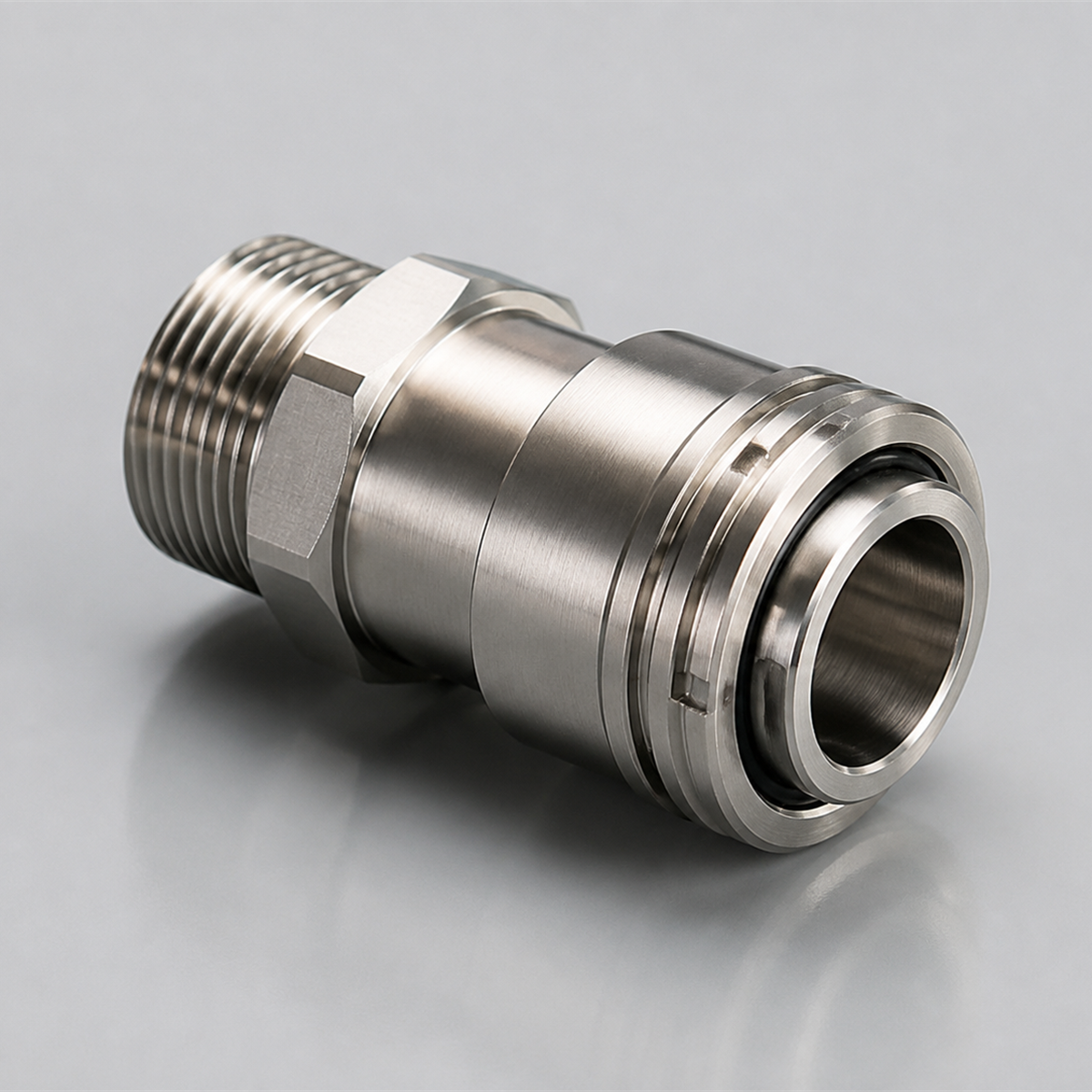
UQD liquid cooling connectors are used in compact thermal-management assemblies where leakage, burrs, poor thread fit, or inconsistent sealing geometry can create assembly and reliability risk. For OEM buyers, the drawing should not only define the connector size. It should also define how the part seals, how coolant flows through the bore, how the connector is assembled, and which dimensions must be inspected before shipment.
For custom projects, Zhengna Technology treats these connectors as precision machined parts rather than generic catalog fittings. The practical goal is to manufacture the connector according to the buyer's drawing, material requirement, inspection plan, and application environment.
Buyer checklist for a custom UQD liquid cooling connector drawing
| Specification area | What the buyer should define | Why it affects manufacturing risk |
|---|---|---|
| Connection interface | Thread type, barb geometry, quick-connect body interface, wrench flats, assembly direction | Prevents mismatch with manifolds, cold plates, hoses, or rack-level cooling assemblies |
| Sealing method | O-ring groove size, sealing face, chamfer, groove edge break, surface finish | Controls leakage risk and repeatable assembly compression |
| Internal flow path | Bore diameter, step bore, cross hole, transition radius, burr allowance | Maintains coolant flow and reduces particle or turbulence concerns |
| Material | Stainless steel, brass, aluminum, copper alloy, or drawing-specified material | Balances corrosion resistance, strength, machinability, weight, and cost |
| Inspection points | Critical thread, bore, groove, concentricity, sealing face, and appearance requirements | Turns the drawing into measurable acceptance criteria before shipment |
Machining features Zhengna Technology checks before quoting
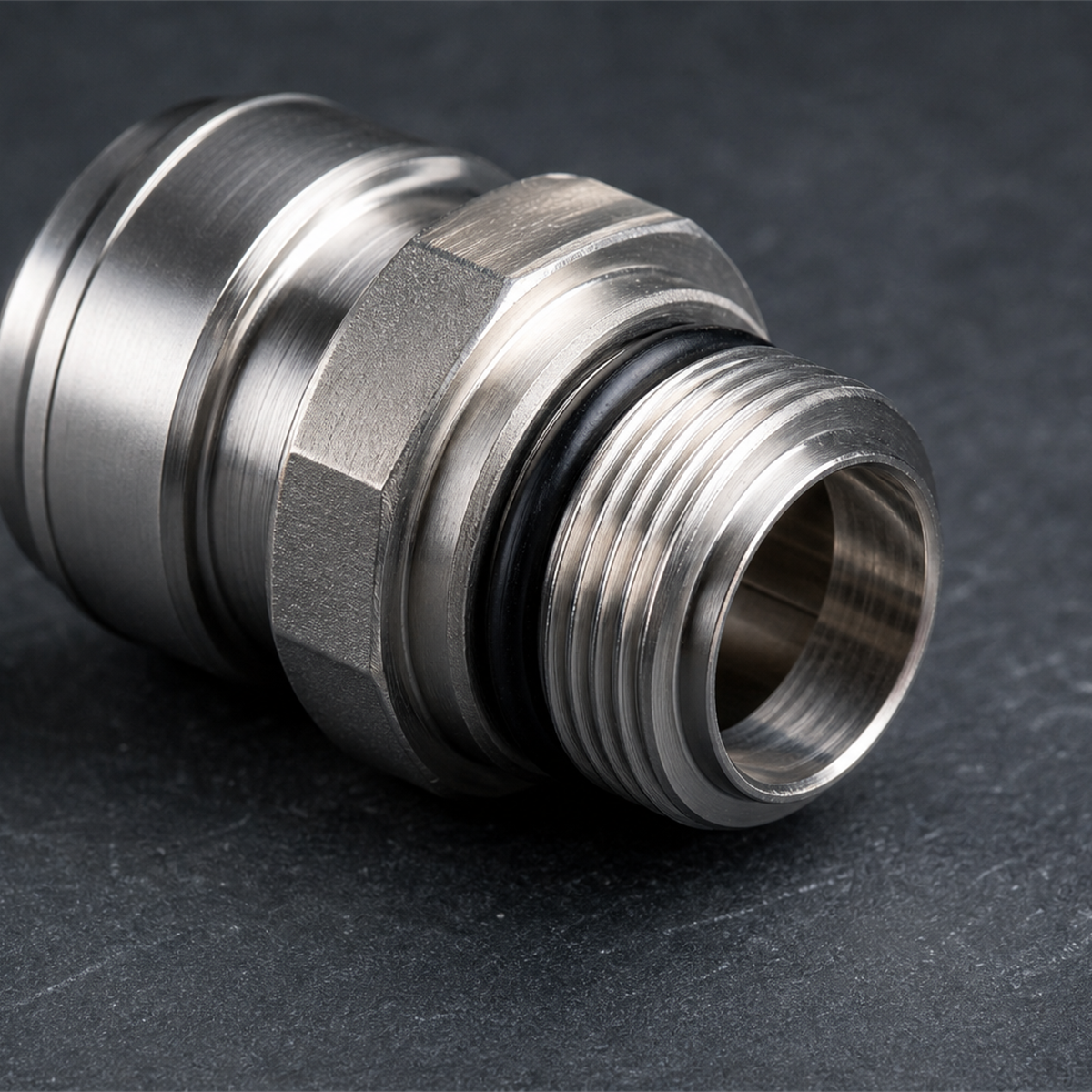
Before quoting a custom liquid cooling connector, Zhengna Technology reviews the drawing for feature concentration, tool access, wall thickness, burr-sensitive edges, sealing surfaces, and inspection feasibility. This is important because liquid cooling parts often combine small bores, threads, grooves, flats, and sealing geometry in a compact body.
- Threads: confirm thread standard, go/no-go gauge requirement, and whether the thread is close to a sealing feature.
- O-ring grooves: confirm groove width, groove depth, corner radius, edge break, and whether the groove can be measured consistently.
- Internal bores: confirm bore diameter, depth, step transitions, cross holes, and burr-removal method.
- Sealing faces: confirm the required surface finish and whether a secondary operation or special tool path is needed.
- Material choice: confirm whether stainless steel, brass, aluminum, or another alloy fits the coolant, assembly load, and cost target.
Inspection evidence that helps reduce sourcing risk
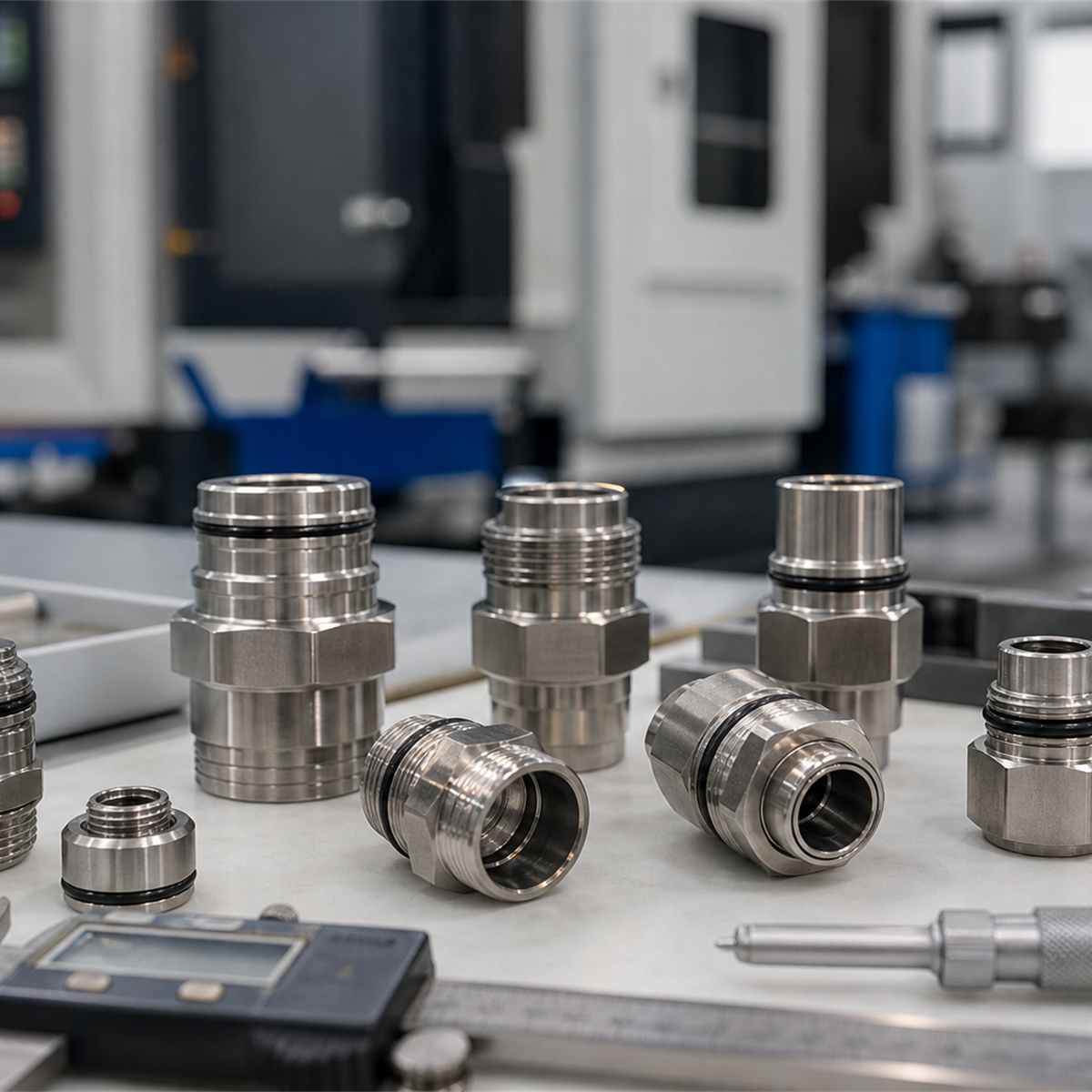
For UQD liquid cooling connector sourcing, inspection should focus on the features that affect assembly and leakage risk. A useful inspection plan can include first article inspection, thread gauges, bore checks, O-ring groove measurement, visual burr checks, and packaging/cleanliness requirements when the buyer requests them.
What to send when requesting a quote
To quote a custom connector accurately, send a 2D drawing or 3D file, material requirement, annual quantity, prototype quantity, critical dimensions, surface treatment requirement, coolant or environment note if available, and any leak-test, cleaning, or packaging requirement. If the design is still early, Zhengna Technology can review the manufacturability questions before sample production.
FAQ
Can Zhengna Technology manufacture UQD liquid cooling connectors from our own drawing?
Yes. Zhengna Technology focuses on custom manufacturing. The connector geometry, material, sealing features, and inspection points can be made according to the buyer's drawing and project requirements.
Are these connectors standard catalog parts?
No. This article discusses custom machined connector bodies and fittings for liquid cooling server applications. For fixed catalog fittings, buyers should compare catalog dimensions. For custom hardware, the drawing and inspection plan are the key documents.
Which process is suitable for small liquid cooling connector bodies?
Swiss-type CNC machining or precision CNC turning is often suitable when the part has compact geometry, threads, grooves, bores, and sealing features. The final route depends on the drawing, material, tolerance, and batch quantity.
What is the main sourcing risk for liquid cooling connector parts?
The main risk is not only dimensional error. Burrs, poor O-ring groove control, inconsistent threads, weak sealing face finish, material mismatch, and inadequate inspection can all affect assembly reliability.
Related product page: Custom Liquid Cooling Server Connectors by Zhengna Technology.
Table of Contents
- How to Specify UQD Liquid Cooling Server Connectors: Machining, Sealing, and Inspection Checklist
- Why UQD liquid cooling connector specifications need more than an outside diameter
- Buyer checklist for a custom UQD liquid cooling connector drawing
- Machining features Zhengna Technology checks before quoting
- Inspection evidence that helps reduce sourcing risk
- What to send when requesting a quote
- FAQ