
 EN
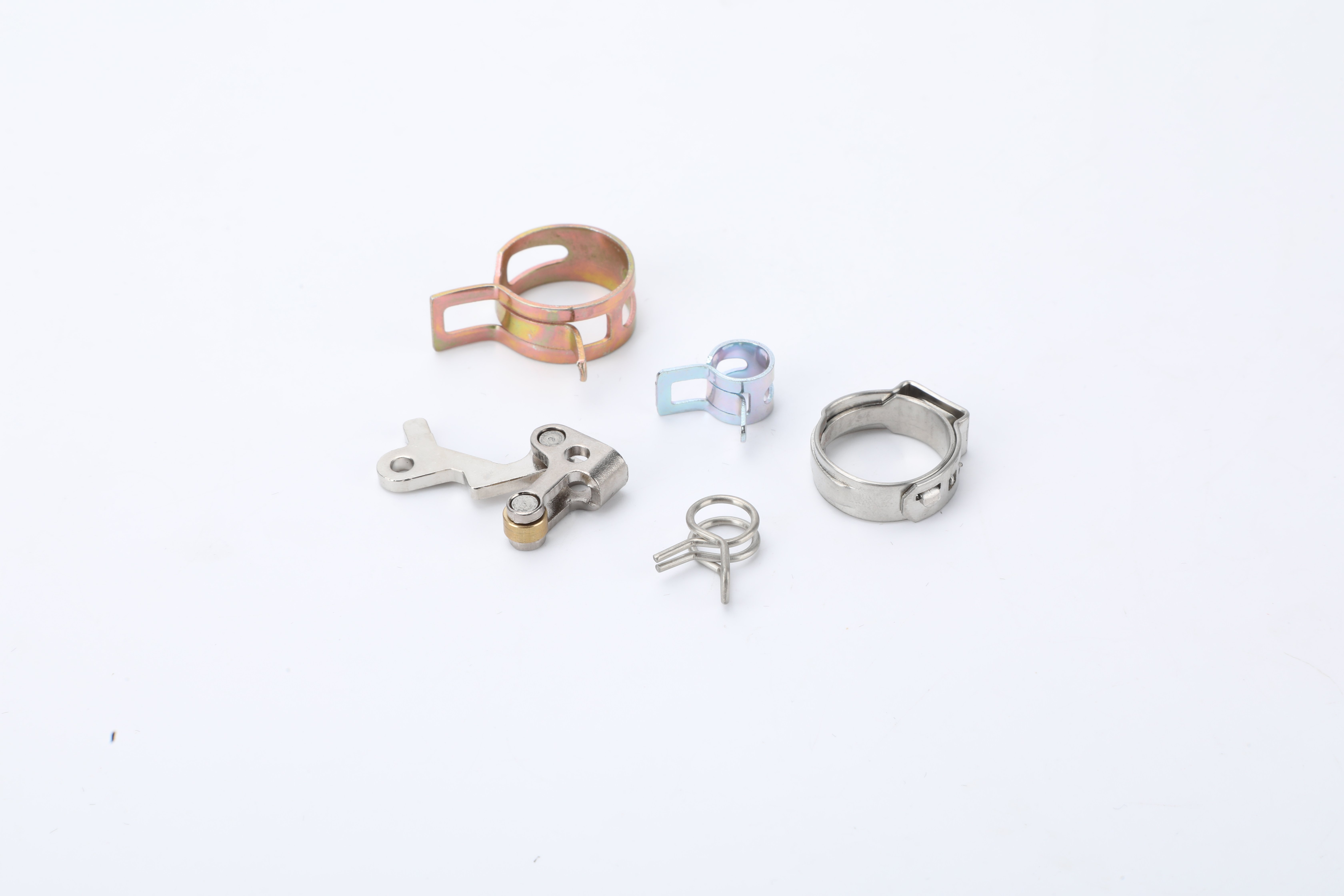
Electric vehicle battery systems demand exceptional reliability at extreme speeds and power levels. The connectors that link battery cells to charging and distribution systems must perform flawlessly under continuous thermal and electrical stress. At the heart of these critical connections lies an often-overlooked component: precision stamping parts. These meticulously engineered components form the contact surfaces, terminals, and structural frames that enable high-speed power transfer in EV battery connectors. Without properly manufactured precision stamping parts, even the best connector designs fail to deliver consistent performance, safety, or longevity.

The evolution of EV battery technology has intensified the demands on precision stamping parts in connector applications. As battery voltages climb and charging speeds accelerate, the precision stamping parts inside connectors must withstand higher current densities while maintaining micron-level dimensional accuracy. This creates an engineering paradox: manufacturers must deliver precision stamping parts that are both extremely thin for space efficiency and remarkably durable for extended service life. The article explores why precision stamping parts represent the critical link between battery performance potential and real-world reliability, examining material science, manufacturing excellence, and application-critical design principles.
Why Precision Stamping Parts Define EV Connector Performance
The Role of Material and Surface Integrity
Precision stamping parts for EV battery connectors must overcome challenges that standard stamping processes cannot address alone. The materials selected for precision stamping parts directly influence electrical conductivity, thermal dissipation, and corrosion resistance. Copper alloys dominate the industry, but the specific composition and hardness of precision stamping parts affect how they maintain contact pressure over thousands of mating cycles. Surface contamination, microscopic burrs, or uncontrolled hardness variations in poorly manufactured precision stamping parts create resistance hotspots that generate excess heat and accelerate connector degradation.
The manufacturing process for precision stamping parts must preserve material properties while achieving dimensional tolerances often measured in tenths of a millimeter. High-precision stamping techniques apply calculated force through hardened dies to shape the material, but the quality of precision stamping parts depends critically on die design, lubrication control, and progressive stamping sequences. Each stage of producing precision stamping parts introduces risk if not executed with industrial discipline. Annealing schedules, surface finishing treatments, and final inspection protocols separate world-class precision stamping parts from components that merely look similar under casual examination.
Dimensional Consistency and Contact Reliability
High-speed EV charging systems push current through connector contacts at rates that demand exceptional precision. Precision stamping parts that drift even slightly outside specified dimensions create variable contact resistance across a connector's contact array. When multiple precision stamping parts in a single connector exhibit dimensional scatter, the current distribution becomes unequal, forcing some precision stamping parts to carry disproportionate load. This accelerates wear in already-stressed precision stamping parts and triggers premature connector failure.
The contact pressure between mating precision stamping parts must remain stable throughout the connector's service life. Precision stamping parts that lack sufficient springback or exhibit stress-relaxation behavior fail to maintain the contact force required for reliable power transfer. Advanced precision stamping parts incorporate calculated spring geometry and material selection to deliver consistent contact pressure despite thousands of insertion cycles, thermal fluctuations, and vibration exposure. This level of performance demands precision stamping parts manufactured to tolerance stacks that account for cumulative variation across entire connector assemblies.
Manufacturing Excellence in Precision Stamping Parts Production
Advanced Stamping Technology and Process Control
Producing reliable precision stamping parts for EV connectors requires stamping press systems with closed-loop force monitoring and position feedback. Progressive die tooling for precision stamping parts sequences multiple forming operations to gradually achieve the final geometry while managing material flow and strain hardening. Each stage of precision stamping parts production must maintain strict control over blanking clearance, forming force, and material annealing between operations. Modern precision stamping parts facilities integrate vision inspection systems that verify dimensional accuracy, surface finish, and freedom from defects on every precision stamping parts component produced.
The precision stamping parts industry has adopted statistical process control methods to track variation across production runs and predict component performance. Heat treatment cycles for precision stamping parts must deliver consistent hardness within narrow ranges, as over-hardened precision stamping parts become brittle while under-hardened precision stamping parts cannot maintain contact pressure. Advanced precision stamping parts manufacturers employ finite element analysis during die design to predict material flow, springback behavior, and residual stress patterns in finished precision stamping parts. This computational approach enables engineers to optimize die geometry before expensive tooling fabrication, reducing the iteration cycles required to achieve production-ready precision stamping parts.
Quality Assurance for Mission-Critical Applications
Quality systems for precision stamping parts in automotive applications demand traceability and statistical evidence of conformance. Every batch of precision stamping parts undergoes dimensional sampling, hardness verification, and electrical continuity testing. Advanced precision stamping parts suppliers implement 100% automated optical inspection that captures dimensional data for statistical trending, enabling early detection of process drift before precision stamping parts fall outside specification. Destructive testing on sample precision stamping parts verifies tensile strength, fatigue performance, and contact resistance characteristics.
Automotive-grade precision stamping parts suppliers maintain documentation systems that link every precision stamping parts component to the die used in production, the batch of raw material, and the heat treatment cycle applied. This traceability allows manufacturers to trace field failures back to specific precision stamping parts batches and implement corrective actions with surgical precision. The cost of implementing such rigorous quality systems in precision stamping parts manufacturing is substantial, but represents essential investment in connector reliability and vehicle safety.
Application-Specific Design Considerations for Precision Stamping Parts
Current Path Optimization Through Precision Stamping Parts Geometry
EV battery connectors often employ multiple precision stamping parts contacts arranged in parallel to distribute high currents safely. The geometry of individual precision stamping parts significantly affects current distribution across the contact array. Precision stamping parts with optimized thickness, width, and contact surface area ensure that current flows evenly across all contacts, preventing hotspots and excessive heating. Engineers designing precision stamping parts for EV applications use computational modeling to predict current density distributions and adjust precision stamping parts dimensions accordingly.
The contact surface profile of precision stamping parts must balance competing demands. Extremely smooth precision stamping parts contacts offer low initial resistance but may degrade faster as surface asperities flatten under load. Textured surface finishes on precision stamping parts promote long-term contact stability by maintaining contact pressure as minor wear occurs. Precision stamping parts manufacturers work closely with connector designers to optimize these surface characteristics for specific current levels and mating cycle expectations.
Thermal Management Through Precision Stamping Parts Selection
High-speed charging generates substantial heat within EV battery connectors, requiring precision stamping parts with excellent thermal conductivity. Copper-based precision stamping parts excel at dissipating heat away from contact interfaces, but adding alloying elements for hardness or corrosion resistance can reduce thermal performance. Precision stamping parts engineers must balance electrical and thermal requirements, sometimes selecting materials or geometries that optimize thermal pathways through the connector. Thicker precision stamping parts or those with extended lead dimensions improve heat dissipation, but increase material cost and connector size.
The thermal expansion behavior of precision stamping parts relative to surrounding connector materials influences long-term reliability. Coefficient of thermal expansion mismatches between precision stamping parts and housing materials can generate internal stress during thermal cycling. Carefully selected precision stamping parts materials and designs accommodate these expansion differences without creating fatigue-prone stress concentrations. This thermal management consideration often receives insufficient attention during connector design, yet dramatically affects precision stamping parts longevity in real-world EV charging scenarios.
FAQ
What makes precision stamping parts different from standard stamped components?
Precision stamping parts achieve dimensional accuracy, surface finish, and material property consistency that standard stamping cannot match. Precision stamping parts employ progressive dies with tighter tolerances, advanced lubrication systems, and carefully controlled forming forces. Each precision stamping parts component undergoes comprehensive inspection, while standard stamped parts typically receive only visual sorting. For high-speed EV battery connectors, the additional cost of precision stamping parts is justified by superior performance and extended service life.
How often should precision stamping parts be replaced in EV connectors?
Quality precision stamping parts designed for EV battery connectors should remain functional throughout the vehicle's operational life, typically 200,000 miles or more. Precision stamping parts degradation occurs gradually as contact surfaces wear and material fatigue develops over thousands of charge cycles. The durability of precision stamping parts depends on manufacturing quality, material selection, thermal management, and current levels experienced during operation. Regular inspection of precision stamping parts contacts helps identify wear patterns before performance degrades critically.
Can precision stamping parts withstand next-generation high-power charging systems?
Current precision stamping parts designs work effectively for charging systems up to approximately 500 kW, with emerging applications pushing toward 1 megawatt. Advancing precision stamping parts technology requires innovations in material science, thermal management, and manufacturing processes. New copper alloys and composite materials show promise for next-generation precision stamping parts, but their producibility at scale remains under development. Equipment manufacturers are investing in precision stamping parts production capability to support the transition to higher-power EV charging infrastructure.