
A formed contact can match its loose-part drawing and still sit in the wrong position after assembly. Before accepting a spring-contact sample, define the unloaded geometry, the installed working position and the evidence needed at each stage. Do not replace these separate questions with a visual check or a generic spring-force value.
The electrical contact product page shows actual formed-contact examples supplied by Zhengna Technology. The mixed shapes in the approved photograph are not one common specification. Their exact material, finish, dimensions, force and electrical ratings remain drawing-defined.
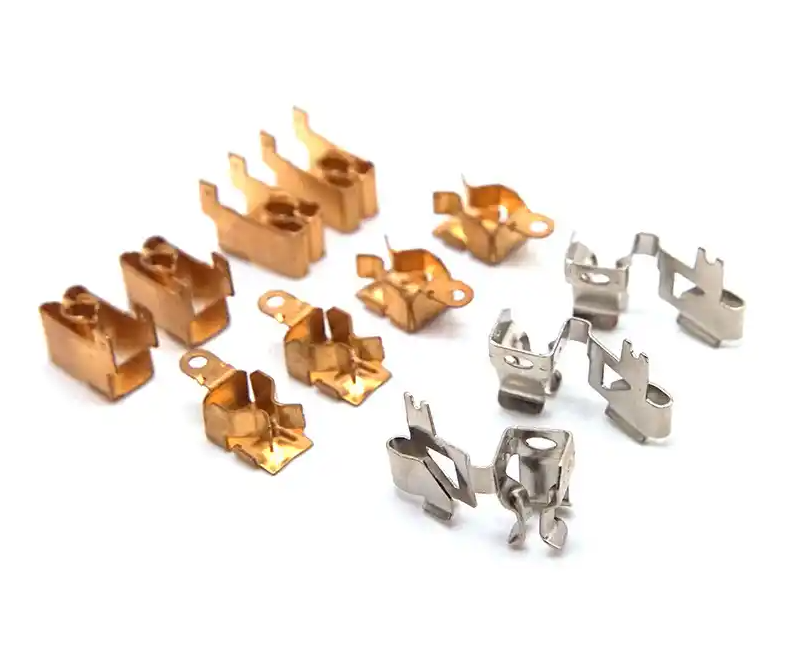
Mark the fixed region, the mating surface and the intended direction of movement on the assembly drawing. Identify which surfaces locate the contact and which features are allowed to move. A hole or flat tab visible in a photograph does not establish the mounting method.
Use a common reference for the unloaded and installed positions. Otherwise, two measurements can use different mounting planes or contact points while appearing to describe the same height. Include the relevant mating-part geometry and its permitted position range rather than providing only a loose-contact outline.
The free position describes the contact without the assembly load. The working position describes the intended installed condition. If the design has a movement limit, identify it separately and state the governing drawing or application specification. Do not treat a mechanical stop as the normal operating position unless the design expressly says so.
As a terminology reference, Harwin documents free, working and minimum heights separately for its S7071-46R contact. That named product illustrates why the states need separate definitions. Its heights, material, finish, force, current and durability specifications are not requirements or verified capabilities for Zhengna Technology's pictured parts.
| Record | Condition to define | What it cannot establish alone |
|---|---|---|
| Loose-part geometry | Drawing revision, datums, unloaded position, critical formed features and edge condition | Correct installed position or electrical performance |
| Mechanical working condition | Mounting reference, mating-part position, movement direction and any required force measurement method | Electrical acceptance under an unspecified load or environment |
| Electrical validation, if required | Approved assembly, contact interface, test conditions, method, limits and responsible party | Approval of a different material, finish or mating configuration |
If force evidence is required, agree the loading direction, displacement or installed position, fixture, measurement sequence and acceptance limits before sampling. Those inputs define the requested test; they do not show that the photographed samples have already passed it. Specify any repeated-operation or environmental requirement separately, with its method and acceptance authority.
State whether the supplier is delivering a loose contact, a mounted contact or a validated assembly. A dimensional sample approval should not silently become an approval of current capacity, contact resistance, cycle life or the complete assembly. Name the party responsible for the mating design and any functional validation.
For quotation, send the controlled part and mating drawings, material grade and condition, finish and functional zones, quantities, working-position definition and required records. If these are not yet settled, identify the open decisions rather than substituting values from a different contact catalogue.
Review the custom stamping parts commercial parent for the broader manufacturing enquiry. Send the drawing revision and unresolved interface or acceptance questions through Contact/RFQ. Agree how drawings will be reviewed separately; the text enquiry form is not proof of an attachment or validated assembly service.

 EN