
 EN
EN

PCB Standoff Selection and RFQ Guide
Select a PCB standoff by the board interface, installed-height definition, mating feature, assembly route, load case, inspection method, and supply presentation. Tape-and-reel is a supply format, not automatic proof of reflow suitability. The buyer and supplier must connect every term on the RFQ to controlled geometry and validation evidence.
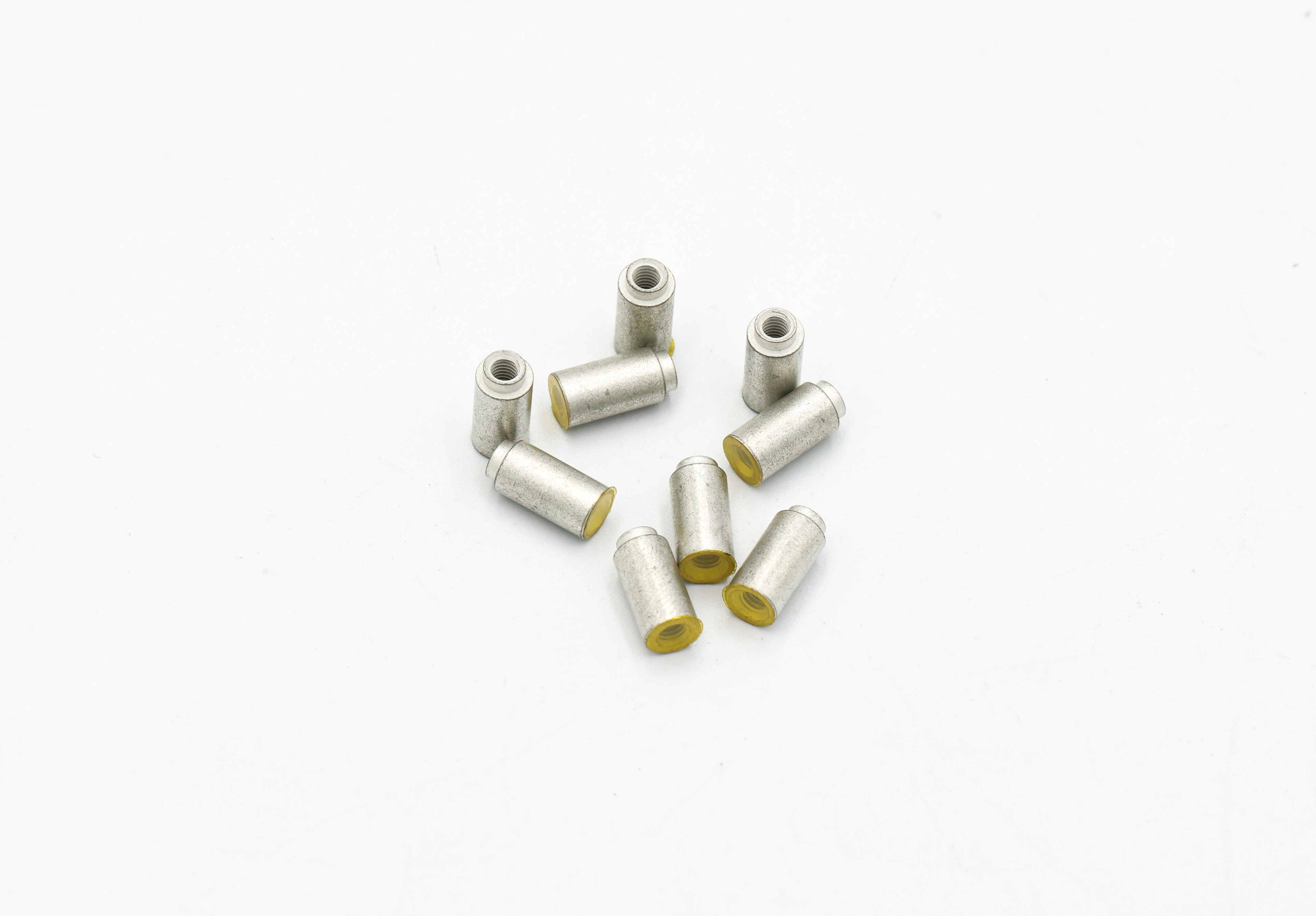
Start with the attachment architecture
The same installed-height target can be reached through different attachment architectures, and each creates different risks. A soldered base depends on pad and process design. An inserted or press-retained feature depends on hole, material, interference, and installation control. A swaged, riveted, screwed, or clipped arrangement needs its own access, stack, and validation logic. Do not choose a route from a website image.
| Architecture question | RFQ input | Validation question |
|---|---|---|
| How is the part attached to the PCB or structure? | Board-side geometry, hole or pad, mating parts, and assembly sequence | Which result proves acceptable attachment without board damage or misalignment? |
| What defines installed height? | Named reference faces, free or assembled condition, and tolerance scheme | Can the measurement reproduce the intended datum and force condition? |
| What uses the upper interface? | Thread, pin, shoulder, snap, boss, or other drawing-defined feature | Which gauge, mating check, engagement, and access are required? |
| What loads reach the part? | Installation torque, pull, push, side load, vibration, shock, and service condition | Which component or assembly test represents the actual failure mode? |
| How is the part presented? | Loose, tray, tube, strip, or tape-and-reel plus automation needs | Can equipment pick, orient, place, and verify the part without damage or reversal? |
Use SMT language only after the joint is defined
“SMT standoff” or “surface-mount threaded standoff” can describe a useful buyer intent, but it is not a complete specification. The project should define the base geometry, PCB land or pad, material and finish, solder system, flux and cleaning conditions, thermal profile, component mass and heat flow, placement orientation, coplanarity, joint acceptance, and rework boundary.
A component supplied in tape-and-reel may be intended for automated placement, but packaging alone does not establish solderability, wetting, joint strength, thermal compatibility, or reflow survival. Those claims require part-specific and process-specific evidence.
| Decision | Evidence needed before approval | Unsafe shortcut |
|---|---|---|
| Base and PCB land fit | Released component drawing, board layout, solder-joint design, and assembly review | Assuming that a visible flange matches any PCB pad |
| Material and finish | Approved specification and required records | Inferring metal or plating from color |
| Thermal process | Agreed profile, materials, solder system, board context, and validation result | Calling tape-and-reel packaging “reflow rated” |
| Joint inspection | Visible criteria and any dimensional, optical, X-ray, pull, torque, or other approved method | Treating visual appearance as universal strength proof |
| Rework | Access, heat exposure, board protection, and acceptance plan | Assuming the part can be reheated without qualification |
Specify threads as an assembly interface
A thread callout should identify the governing standard, size, class or fit, useful engagement, start and relief condition, finish allowance, gauge rule, and mating fastener. The design should also consider tool access, driver clearance, bottoming risk, cross-thread risk, debris, and whether the installation torque can be applied without transferring harmful load into the PCB or joint.
Thread acceptance and assembly torque are related but not identical. A thread may pass its specified gauge while the complete stack still needs validation for clamp load, rotation, pullout, board deflection, vibration, or repeated service.
Define installed height from functional datums
Installed height is often the feature that links mechanical packaging to board alignment. State which two surfaces create the height, whether solder thickness or insertion depth contributes, whether the value is measured before or after assembly, and which fixture or datum method represents the design. Avoid building a tolerance stack from nominal overall length when the real reference surfaces are different.
- Mark the board-side seating or joint reference.
- Mark the upper support or mating reference.
- Define any shoulder, step, stand-off gap, or seating condition.
- State whether measurement force can change the result.
- Review how board thickness, pad, solder, fastener, or mating-part variation enters the stack.
Tape-and-reel is an engineering package
Automated presentation deserves its own drawing or controlled specification. The component can be correct while the line still fails because of orientation, unstable pickup, pocket clearance, cover behavior, part movement, snagging, electrostatic handling, label mismatch, or insufficient leader and trailer.
| Packaging field | Buyer question | Incoming or line-side evidence |
|---|---|---|
| Orientation | Which face and rotational position must reach the placement tool? | Approved sample, drawing, photograph, or machine trial |
| Pickup surface | Is there a stable, accessible area for the selected nozzle? | Placement review with the real component and equipment |
| Pocket and pitch | Does the part move, tilt, jam, abrade, or escape? | Packaging drawing and sampled pocket-fit check |
| Cover and peel | What cover system and peel behavior are required? | Project-defined packaging test or supplier record |
| Leader, trailer, and splice | What does the feeder and line standard require? | Incoming check against the controlled packaging specification |
| Reel and label | Which reel, quantity, lot, revision, and traceability fields are required? | Label and lot-linkage verification before release |
The approved photograph proves that the pictured standoffs were supplied in tape-and-reel. It does not provide the dimensions or acceptance values listed above; buyers must send or approve those records for their own program.
Build inspection around failure modes
- Dimensional fit: verify reference faces, installed-height inputs, base geometry, concentricity or position where functional, and board or mating clearance.
- Thread or retention: use the specified gauge or mating method and define finish allowance, useful engagement, and reaction rules.
- Surface and edge condition: identify the zones that affect soldering, insertion, seating, pickup, board protection, or cleanliness.
- Packaging presentation: verify orientation, pocket fit, pickup, labels, lot identity, and handling using the approved presentation.
- Assembly function: assign solder, pull, push, torque, vibration, thermal, environmental, or system tests to the responsible party and method.
Do not use “100% inspection” as a substitute for a defined method or stable process. The RFQ should state which characteristics are critical, which records accompany samples or lots, and how changes trigger review.
Supplier-comparison and RFQ checklist
| Compare quotations on | Look for | Red flag |
|---|---|---|
| Scope and assumptions | Explicit drawing, revision, quantities, interfaces, exclusions, and responsible processes | A price that silently assumes a different attachment or finish |
| Manufacturing and secondary route | A route tied to geometry and evidence, with subcontracted or buyer-owned steps identified | Claims inferred from a similar-looking catalog part |
| Inspection | Drawing-linked methods, gauges, fixtures, sampling, and reaction plan | Generic “strict quality control” without feature-level evidence |
| Packaging | Controlled orientation, pickup, pocket, reel, label, quantity, and approval sample | Tape-and-reel stated without a packaging definition |
| Change control | Rules for drawing, material, finish, process, tool, sub-supplier, and packaging changes | Uncontrolled substitution after sample approval |
- released 2D drawing, revision, units, and governing file;
- 3D model and board/mating context where useful;
- attachment architecture and assembly sequence;
- installed-height definition and tolerance chain;
- thread or retention feature and approved inspection method;
- material, finish, solder system, and thermal requirements only when controlled;
- prototype, pilot, order, and forecast quantities;
- packaging presentation and automation interface;
- sample approval, functional validation, records, traceability, and change control.
For quotation scope, review the custom PCB standoff commercial page, the broader PCB hardware parent, adjacent PCB nut example, quality-control approach, and Zhengna Technology RFQ path.
Reference and authorship boundary
Published by Zhengna Technology on 2026-07-20. Public component-maker documents from PEM and Keystone Electronics were used only to confirm common market language around surface-mount standoffs, spacers, and tape-and-reel presentation. Those sources do not endorse Zhengna Technology, approve this pictured part, or prove a buyer-specific material, finish, thread, reflow profile, packaging dimension, or performance result.
Questions buyers ask
What is the first decision when selecting a PCB standoff?
Define the attachment job and functional interfaces: board-side method, installed height, mating feature, assembly sequence, access, loads, environment, and validation owner. A product-family label comes after those decisions.
Is an SMT standoff simply any standoff supplied in tape-and-reel?
No. Tape-and-reel supports automated presentation. SMT suitability also requires an approved base and pad design, material and finish, solder process, thermal profile, cleanliness, coplanarity, inspection, and assembly validation.
Which tape-and-reel details belong in an RFQ?
Define carrier and cover requirements, pitch, pocket fit, orientation, pickup surface, leader and trailer, splice policy, reel and label needs, quantity per reel, and the acceptance sample or drawing.
How should thread and installed height be inspected?
Use the released drawing to define the datum surfaces, measurement method, thread standard and gauge, engagement condition, finish allowance, sampling, and any assembled functional check.
What evidence should a supplier provide before production?
Agree identified samples, drawing-linked dimensions, thread or mating results, visual criteria, packaging samples, and any required material, finish, solderability, traceability, or process records.