
 EN
EN

CNC Machine Capability vs Process Capability: What Buyers Should Define Before an RFQ
Direct answer: a machine list, one conforming sample and a final inspection report do not answer the same question. A CNC buyer should define the exact characteristic and tolerance, then separate short-term machine performance, longer-run process capability, measurement-process capability and lot acceptance. Only after those boundaries are agreed does a capability index or inspection record have a useful meaning.
This guide helps sourcing engineers and supplier-quality teams prepare that request before quotation. It does not publish a universal Cmk, Cpk, tolerance or defect rate for Zhengna Technology. Those results belong to a named part, characteristic, process state, measurement method and study period.
Primary role: authority/decision. Buyer job: turn a vague request such as “provide Cpk” into a characteristic-specific evidence plan that can be reviewed, quoted and released.
Five Evidence Layers That Should Not Be Combined
| Evidence layer | Question it answers | What it does not prove | Buyer input needed |
|---|---|---|---|
| Equipment availability | Is a relevant machine or supporting resource present and available for review? | Capability index, transferable tolerance claim, stable output or approved production route | Part geometry, material, size, feature access and expected volume |
| Short-term machine performance | How does one defined machine-and-process state perform over a controlled short run? | Long-term stability across tools, lots, operators, maintenance states or environmental change | Measured characteristic, study conditions, observation order and exclusion rules |
| Process capability or performance | How does the process behave against specification limits over the agreed production window? | Measurement-system adequacy or acceptance of every future lot | Stable process definition, data window, distribution treatment and required index or decision rule |
| Measurement-process capability | Can the selected measurement process support the specific measurement task? | That the manufacturing process itself is capable | Feature, tolerance, instrument, fixture, resolution, uncertainty and environment |
| Lot inspection and acceptance | Did the inspected parts or sample meet the agreed lot rule? | Long-term process capability, unless a separate valid study supports that conclusion | Sampling or 100-percent rule, report format, traceability and reaction plan |
Why an Equipment Count Is Not a Capability Result
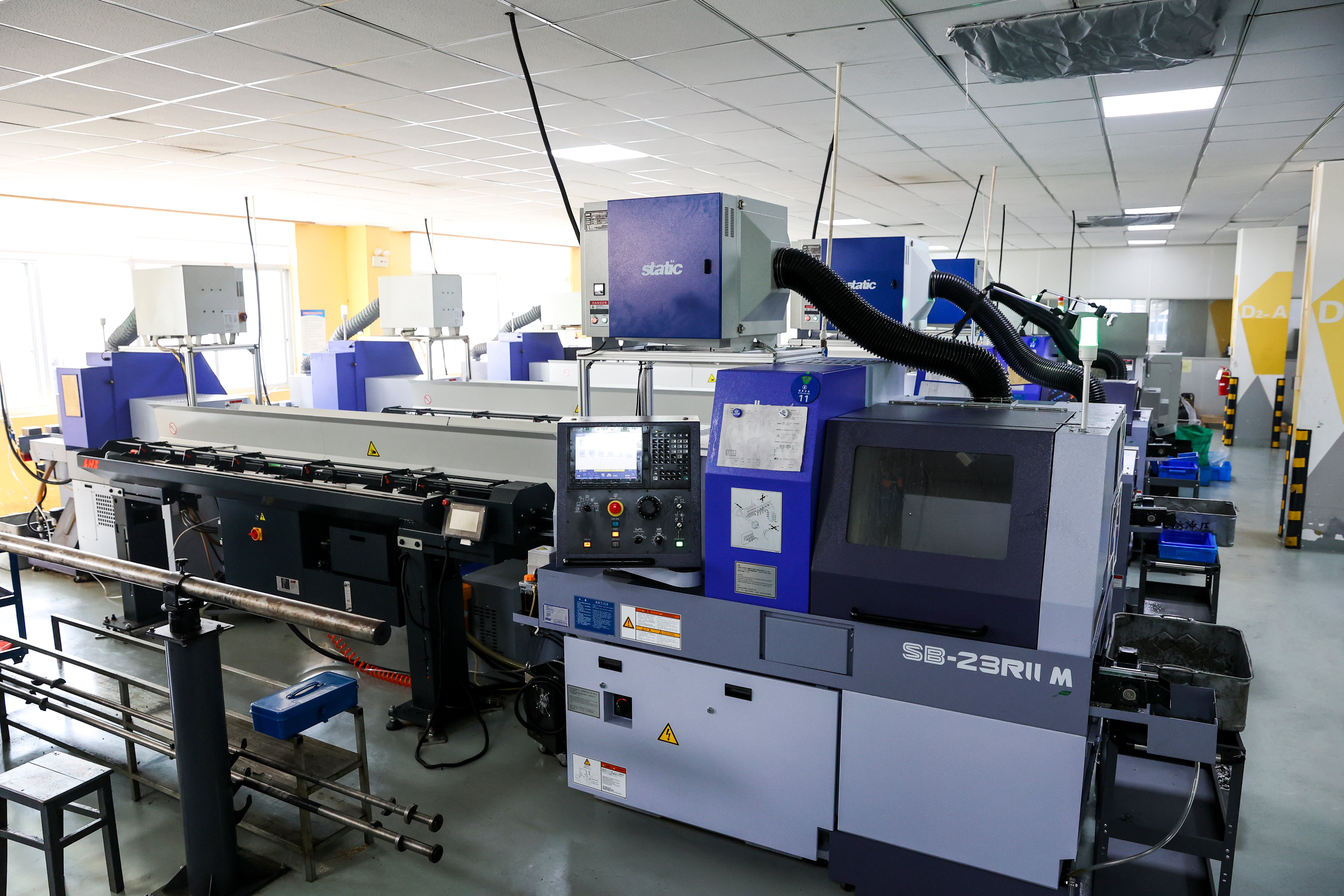
As of July 2026, the owner-confirmed in-house turning resources include 33 Swiss-type CNC lathes, 40 CNC lathes, five separately counted CNC-lathe gantry handling systems and 15 automatic lathes. Representative Swiss-type models include STAR SB-20RG and SB-20JE. The disclosed overall turning envelope is up to 36 mm in bar or machining diameter and up to 400 mm in machining length, subject to drawing review.
Those dated facts support equipment and route screening. They do not establish that every machine accepts the full envelope, that every part family follows the same route, or that a tolerance can be held without a part-specific study. Geometry, material condition, tool access, workholding, heat treatment, inspection method and production volume can change the result.
A useful RFQ therefore asks which machine group is proposed, why that route fits the drawing, which feature will be studied, what process state will be frozen and which changes would require the study to be repeated.
Define the Characteristic Before Asking for Cmk or Cpk
“Provide Cpk for the part” is incomplete. Capability is evaluated against a measurable product characteristic and its specification limits. A drawing may contain dozens of dimensions, but only a smaller set may control fit, sealing, movement, alignment, thread function or assembly risk.
For each requested characteristic, identify:
- the drawing revision, datum system and exact feature;
- the nominal value, upper and lower specification limits, and any geometric modifier;
- the production state, including operation sequence and whether heat treatment, grinding, plating or cleaning occurs before measurement;
- the machine group, tooling and workholding state that must remain controlled;
- the measurement method, fixture, resolution, environment and correlation requirement;
- the required short-term or longer-run study and the decision rule; and
- the response if the study fails or the process state changes.
Separate Short-Term Machine Performance from Longer-Run Process Evidence
ISO 22514-3:2020 describes short-term machine performance studies using consecutively produced parts under repeatability conditions. Its published scope says the methods are not suitable when fewer than 30 observations are produced and identifies conditions, such as tool-wear patterns or autocorrelation, that can make the method unsuitable.
That is different from a longer-run process question. ISO 22514-2:2026 addresses capability and performance for time-dependent process models, including processes that may not remain in statistical control. The correct method depends on the data and the real production behavior; an index copied from an unrelated characteristic or sample does not transfer automatically.
The RFQ should state whether the buyer wants a short-term machine study, a longer-run process study, ongoing control evidence or a lot-release report. If more than one is required, list them as separate deliverables.
Validate the Measurement Task Before Interpreting the Result
ISO 22514-7:2021 treats measurement-process capability as a specific validation task. This matters because an apparently precise capability result can be misleading when the gauge, fixture, resolution, method, temperature or operator effect is not suitable for the tolerance being evaluated.
The measurement request should name the actual feature and state of the part. A bore measured before heat treatment is not interchangeable with the finished bore after heat treatment and grinding. A comparative pneumatic gauge, optical system, CMM or thread gauge answers a defined task; instrument availability alone does not prove suitability for every feature.
The NIST Engineering Statistics Handbook also frames process capability as a comparison between process behavior and specification limits. This reinforces a practical buyer rule: the specification, data conditions and measurement evidence must be visible before an index is accepted.
Record Sorting and Acceptance Separately
A process with downstream sorting needs a different interpretation from an unsorted process. Passing parts after sorting can support lot acceptance when the rule is agreed, but it does not by itself show that the upstream process is capable. The RFQ should say whether sorting is present, which characteristic is screened, how nonconforming parts are controlled and whether the capability study is intended to describe the process before or after that step.
Likewise, 100-percent inspection of one characteristic does not mean every characteristic is inspected on every part. Sampling, automated screening, first-article review and capability evidence should each have a named scope and reaction plan.
Capability Study RFQ Checklist
- Part authority: controlled drawing, revision, 3D model when available and applicable specification.
- Study characteristic: exact dimension or feature, datum relationship and specification limits.
- Process state: machine group, tooling, workholding, material lot, operation sequence and secondary-process state.
- Measurement state: instrument, fixture, resolution, environment, calibration status and any correlation requirement.
- Study type: short-term machine performance, longer-run process capability or performance, ongoing control, or lot acceptance.
- Data rule: observation order, subgrouping, sample size, exclusions, treatment of non-normal data and retained raw records.
- Sorting state: whether sorting is used, the screened characteristic and how rejected parts are controlled.
- Decision and reaction: required index or acceptance criterion, responsible reviewer, containment and re-study triggers.
- Commercial transfer: quantity, annual volume, timing, report format, retention period and quotation assumptions.
How This Guide Fits the CNC Buyer Path
Use the custom CNC machining parts page to review the available turning routes, disclosed equipment and drawing-review scope. Use the dimensional inspection guide to define measurement state, feature-specific methods and traceable inspection evidence. Use the series-production control guide to define tool-wear reactions, external-process handoffs, lot traceability and change triggers.
The statistical study request sits between those pages. It turns one critical characteristic into an agreed evidence plan without converting an equipment list, a sample, a gauge or a final report into a capability statement that transfers across parts. The quality control page provides broader inspection context.
Frequently Asked Questions
Does a machine photograph prove CNC process capability?
No. A photograph can document visible equipment context. Capability requires a defined characteristic, specification, process state, measurement process, data set and valid evaluation method.
Is one conforming sample enough to prove stable production?
No. A conforming sample supports feasibility or sample acceptance. Stable production needs separate evidence for process control, measurement, tool wear, material variation, change control and the agreed capability or performance study.
Should a buyer ask for Cmk or Cpk?
The requested measure should match the study purpose and data conditions. Define whether the need is short-term machine performance or longer-run process evidence, then agree the applicable method and decision rule.
Can one capability result cover every drawing dimension?
No. Capability evidence is characteristic-specific. Buyers should identify the dimensions or geometric features that control function and request evidence for those items.
Does 100-percent inspection replace a capability study?
No. Full inspection can support screening or lot release for its named characteristic. It does not automatically describe upstream process stability or capability.
What should be sent to Zhengna Technology for review?
Send the controlled drawing and revision, material grade, quantity and annual volume, critical characteristics, process and finishing requirements, desired study type, measurement expectations, report format and reaction requirements.
Request a Characteristic-Specific Review
Send the drawing package and identify the characteristic that needs capability evidence. Zhengna Technology can review the proposed machining route, measurement task, study boundary and missing RFQ inputs before quotation. Final feasibility, study design, acceptance criteria, documentation and commercial terms remain project-specific.