
 EN
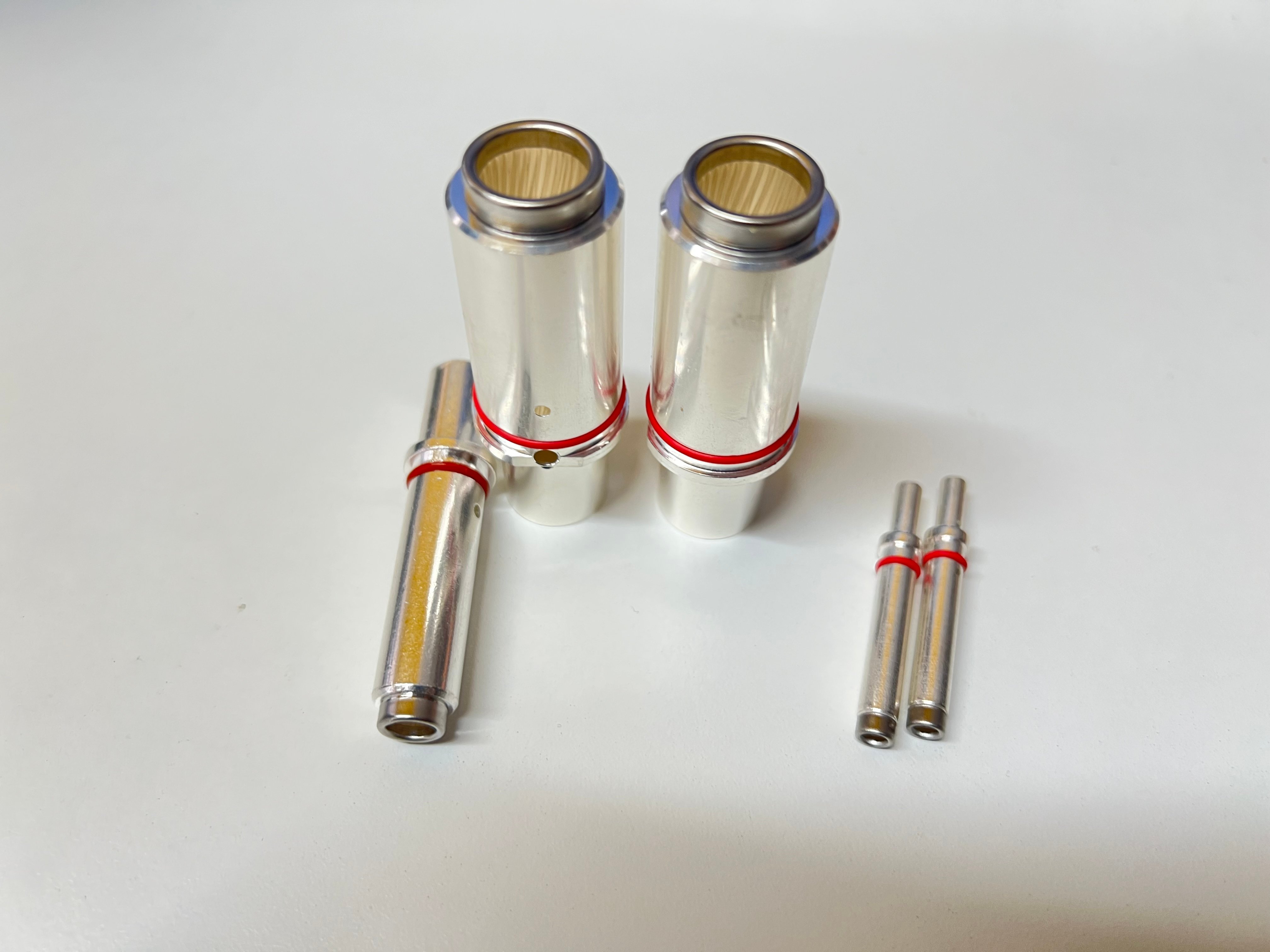
Medical device startups operate in one of the most heavily regulated industries globally, where quality failures can result in patient harm, regulatory sanctions, and catastrophic reputational damage. Selecting the right CNC machined parts supplier is not simply a procurement decision—it is a foundational business choice that determines whether your company can scale safely, meet regulatory timelines, and ultimately bring life-saving products to market. The stakes are far too high to partner with a CNC machined parts supplier lacking aerospace-level certifications and quality systems.

Aerospace certification standards such as AS9100 represent the highest bar for precision manufacturing and traceability. When you partner with an aerospace-certified CNC machined parts supplier, you gain access to the most rigorous documentation, process controls, and quality assurance protocols in manufacturing. These systems do not exist because aerospace customers demand perfection out of vanity—they exist because failure in aerospace applications kills people. Medical device manufacturers face identical stakes, making aerospace certification a non-negotiable requirement rather than a nice-to-have advantage.
Regulatory Compliance and Quality System Alignment
Meeting FDA and International Standards
The U.S. Food and Drug Administration requires medical device manufacturers to demonstrate complete traceability, documented process validation, and rigorous quality oversight across the entire supply chain. Your CNC machined parts supplier must not only meet these standards but integrate seamlessly with your quality management system. An aerospace-certified CNC machined parts supplier already operates under ISO 9001, AS9100, and often additional aerospace quality system standards that exceed FDA expectations. This alignment eliminates costly integration work and certification delays.
FDA audits frequently focus on supplier qualification and ongoing monitoring. Regulators examine whether your CNC machined parts supplier maintains documented processes, conducts first-article inspections, and maintains traceability records spanning years. An aerospace-certified CNC machined parts supplier has already built these systems to satisfy equally demanding aerospace OEMs, meaning your regulatory audit path becomes substantially simpler. You inherit proven quality infrastructure rather than negotiating system changes with an unprepared vendor.
Documentation and Traceability Requirements
Medical device regulations demand complete material certs, process documentation, dimensional inspection records, and heat-treat verification for every single component. A truly compliant CNC machined parts supplier maintains digital traceability systems linking each part to its material batch, machining parameters, inspection data, and sign-off records. Aerospace certification obligates a CNC machined parts supplier to maintain these records at this level automatically, whereas conventional manufacturers often treat documentation as overhead rather than core business practice.
When your startup faces a product recall or FDA field action, your CNC machined parts supplier must retrieve detailed production records within days. Aerospace-certified suppliers maintain these systems as standard procedure, not as special accommodation. This capability becomes invaluable when regulators demand retrospective quality evidence or when you must trace a quality issue back to its root cause across thousands of shipped devices.
Precision, Repeatability, and Risk Mitigation
Process Capability and Consistency
Medical device components often require tolerances of plus-or-minus 0.001 inches or tighter, with dimensional consistency that cannot drift across production runs. An aerospace-certified CNC machined parts supplier maintains process capability studies, control charts, and ongoing statistical process control that ensures every part meets specification without exception. This level of consistency prevents device malfunction, regulatory failure, and field repairs that destroy user confidence.
Your CNC machined parts supplier selection directly impacts your product's clinical performance. Dimensional variation in a critical component can affect biocompatibility, sterility maintenance, or mechanical reliability. Aerospace standards require a CNC machined parts supplier to validate every process change, maintain equipment maintenance logs, and conduct periodic capability re-verification. Conventional suppliers often skip these steps, creating hidden risk that emerges only after products reach patients.
Supply Chain Resilience
Medical device manufacturers operate under strict inventory and lead-time constraints, yet cannot accept quality shortcuts under time pressure. An aerospace-certified CNC machined parts supplier maintains the infrastructure, trained staff, and documented processes that enable rapid scaling without sacrificing quality. When your startup suddenly needs to increase production due to clinical success or market demand, your CNC machined parts supplier can expand capacity while maintaining the same rigorous standards that satisfied regulators during your initial approval.
Conversely, when an unqualified CNC machined parts supplier attempts to accelerate production, quality systems break down. Inspections get skipped, documentation gets incomplete, and dimensional creep occurs. By the time these failures surface, your startup may face regulatory warning letters, product recalls, or loss of market credibility. Aerospace certification ensures your CNC machined parts supplier cannot make this trade-off without triggering internal compliance alerts.
Long-Term Partnership Value and Competitive Advantage
Design Support and Engineering Collaboration
Leading aerospace-certified CNC machined parts supplier partners often provide Design for Manufacturing (DFM) guidance, tolerance optimization, and material selection consulting. A truly experienced CNC machined parts supplier can advise on feature complexity, surface finish requirements, and cost-efficient geometries that your startup's engineering team may not yet understand. This collaboration improves your final product while reducing manufacturing costs and lead times.
An unprepared CNC machined parts supplier simply manufactures to your prints without feedback, creating missed opportunities for optimization. Aerospace-certified suppliers have worked with thousands of complex assemblies and understand material behavior, tooling limitations, and manufacturing constraints at a depth that conventional suppliers cannot match. Your CNC machined parts supplier becomes a strategic extension of your engineering capability rather than a transactional vendor.
Growth and Exit Readiness
As your medical device startup scales toward acquisition or IPO, due diligence teams scrutinize your supply chain risks intensely. Investors and acquiring companies demand assurance that your CNC machined parts supplier cannot become a bottleneck, quality risk, or regulatory liability. An aerospace-certified CNC machined parts supplier passes this scrutiny automatically, while an under-qualified supplier becomes a liability that reduces your valuation or stalls transaction completion.
Aerospace certification also signals to potential acquirers that your manufacturing infrastructure is robust and enterprise-grade. This perception accelerates due diligence timelines and increases perceived company value. Conversely, relying on a non-certified CNC machined parts supplier introduces unnecessary risk perception that acquirers view as a red flag requiring remediation before closing. Your CNC machined parts supplier choice therefore affects not only product quality but also your eventual exit valuation.
FAQ
What specific certifications must a CNC machined parts supplier hold?
An aerospace-certified CNC machined parts supplier should hold AS9100 certification (aerospace quality management), ISO 9001 certification (quality management systems), and often ISO 13485 (medical device manufacturing) or equivalent. Some specialized CNC machined parts supplier partners may also maintain TS16949 automotive certification or other industry-specific standards. Always verify that your CNC machined parts supplier's certifications remain current and have been maintained through recent third-party audits.
Can a non-certified CNC machined parts supplier meet FDA requirements?
Technically a non-certified CNC machined parts supplier can supply components that meet FDA specifications if you invest heavily in oversight and qualification. However, this approach multiplies your regulatory risk, extends your time to market, and creates ongoing supply chain vulnerability. A certified CNC machined parts supplier reduces your burden substantially by providing pre-built quality systems that already satisfy regulatory expectations. For a startup with limited quality resources, partnering with an aerospace-certified CNC machined parts supplier is far more practical than attempting to qualify and oversee an unprepared vendor.
How do I evaluate and qualify a CNC machined parts supplier?
Start by requesting certification documentation, quality system manuals, and references from other medical device clients your potential CNC machined parts supplier serves. Conduct a formal on-site audit examining your CNC machined parts supplier's equipment maintenance records, process documentation, and laboratory capabilities. Request a sample first-article inspection report to verify that your CNC machined parts supplier can execute detailed inspection protocols. Finally, run a small pilot order through your CNC machined parts supplier and validate that their documentation, delivery timeline, and quality meet your expectations before committing to volume production.