
 EN
EN
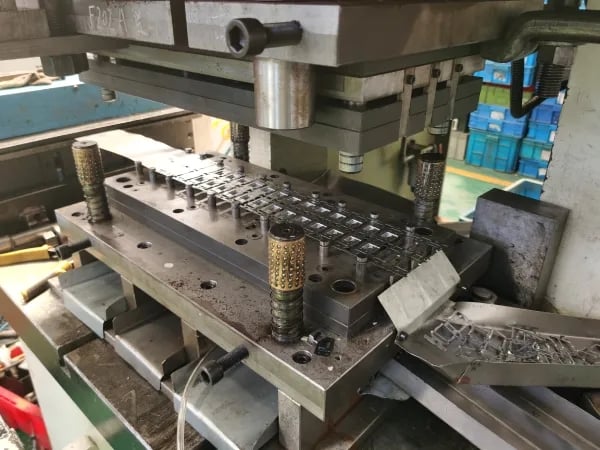
The manufacturing landscape for sheet metal parts is evolving rapidly. For decades, traditional stamping dominated high-volume production of sheet metal parts, offering speed and consistency at scale. Today, laser cutting has emerged as a precise, flexible complement — and the most forward-thinking manufacturers are no longer choosing between the two. They are integrating both technologies to produce sheet metal parts that meet modern demands for complexity, speed, and quality.
This hybrid approach is not a trend born from novelty. It is a direct response to the growing complexity of product designs, the shrinking of production batch sizes, and the pressure on manufacturers to reduce lead times. When laser cutting and stamping work together on the same line, the result is a more capable, more responsive production system for sheet metal parts across industries ranging from automotive to electronics to industrial equipment.
How Laser Cutting and Stamping Each Serve Sheet Metal Parts
The Strengths of Traditional Stamping
Traditional stamping has long been the backbone of high-volume sheet metal parts production. A stamping press uses dies to cut, bend, and form sheet metal parts in a single stroke, making it extraordinarily fast when producing thousands of identical pieces. The tooling investment is significant, but the per-part cost drops sharply as volumes increase, making stamping the right choice for sheet metal parts with stable, high-demand designs. Consistency is another major advantage — stamped sheet metal parts maintain extremely tight tolerances across very large production runs.
However, stamping is less suited to sheet metal parts that require frequent design changes or low-volume production. Creating a new die for every design iteration adds cost and lead time that modern markets can rarely absorb. This is where laser cutting changes the equation for sheet metal parts production.
The Precision of Laser Cutting for Sheet Metal Parts
Laser cutting offers manufacturers a tool-free way to produce sheet metal parts with exceptional precision. By directing a focused laser beam across a programmed path, operators can cut intricate geometries into sheet metal parts without physical dies. Design changes are made in software, meaning new sheet metal parts variants can be produced within hours rather than weeks. For low-to-mid volume runs, prototypes, and sheet metal parts with complex features like fine cutouts or irregular contours, laser cutting delivers accuracy and flexibility that stamping alone cannot match.
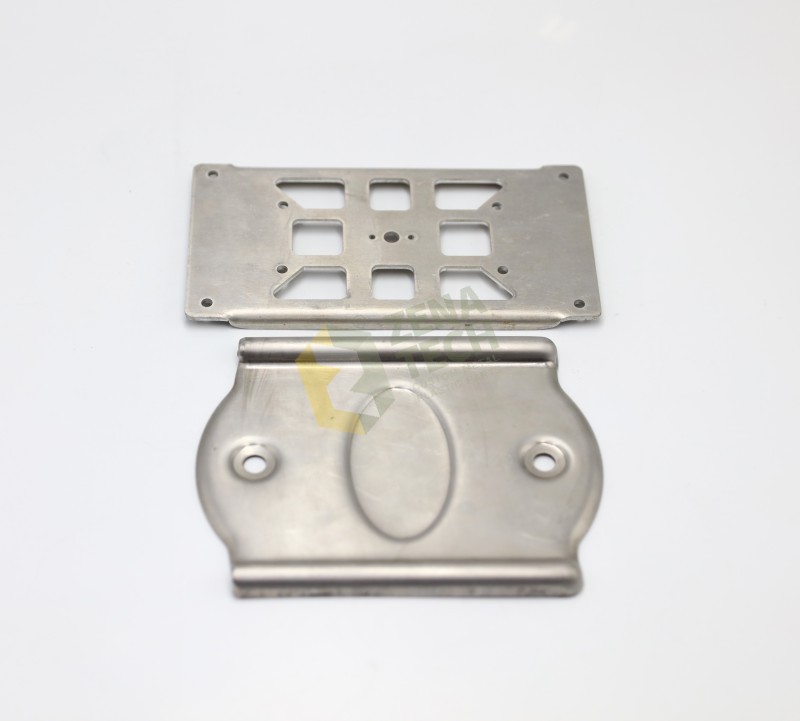
Integrating Both Processes for Superior Sheet Metal Parts
Where Integration Creates the Most Value
The true power of hybrid manufacturing comes from assigning each process to the tasks it handles best within the same production workflow for sheet metal parts. Laser cutting is used to produce blanks, cut precision features, or create low-volume variants of sheet metal parts. Stamping then handles the high-volume forming operations — bending, flanging, embossing — where speed and repeatability are critical for sheet metal parts quality. This division of labor allows manufacturers to avoid the tooling costs of pure stamping while maintaining the throughput benefits for the portions of sheet metal parts production where stamping excels.
Integration also simplifies prototyping. Engineers can laser-cut early-stage sheet metal parts without committing to expensive stamping dies. Once the design is validated, progressive dies are built for the forming stages, and the laser cutting step is retained where flexibility remains important. This staged approach reduces the total development cost for new sheet metal parts programs significantly.
Process Flow and Practical Considerations
In an integrated line, sheet metal parts typically begin as flat-cut profiles produced by laser. Material is fed from coil or sheet stock, and the laser cutter profiles each part to precise dimensions. These laser-cut sheet metal parts then move into a stamping press for forming operations. The coordination between the two processes requires careful attention to part positioning and tolerance stack-up, ensuring that sheet metal parts arrive at the press stage in the correct orientation and dimension for reliable die engagement. Modern manufacturers use fixturing systems and in-line inspection to keep sheet metal parts quality consistent across both process stages.
The Business Case for Hybrid Sheet Metal Parts Production
Cost and Lead Time Advantages
Manufacturers who have adopted integrated laser-stamping workflows report clear advantages in cost management for sheet metal parts. Tooling investment is reduced because laser cutting eliminates the need for blanking dies on sheet metal parts with complex outlines. Total lead time for new sheet metal parts programs is shorter because laser-cut prototypes accelerate design validation. For production runs that span multiple variants of the same sheet metal parts family, laser cutting handles the variant-specific features while stamping drives throughput on shared forming steps. The net effect is a more competitive cost structure across a wider range of sheet metal parts volumes.
Quality and Design Freedom for Sheet Metal Parts
Beyond cost, the integrated approach gives designers significantly more freedom when developing sheet metal parts. Features that would be difficult or expensive to stamp — such as fine perforations, internal cutouts, or intricate edge profiles — are handled by the laser stage without adding die complexity. Sheet metal parts can carry tighter feature tolerances in the laser-cut zones while still benefiting from the dimensional stability of stamped forms. This combination lifts the overall quality ceiling for sheet metal parts and allows engineers to pursue more ambitious designs without manufacturing compromise.
FAQ
Can laser cutting fully replace stamping for sheet metal parts in high-volume production?
Laser cutting cannot fully replace stamping for high-volume sheet metal parts. At very large volumes, stamping remains significantly faster and more cost-efficient for forming operations. Laser cutting is best used alongside stamping, handling precision cuts and flexible features while stamping drives volume throughput for sheet metal parts.
What materials are suitable for integrated laser-stamping of sheet metal parts?
Most common sheet metal materials work well in integrated production of sheet metal parts, including mild steel, stainless steel, aluminum, and copper alloys. Material selection depends on thickness, forming requirements, and the end-use environment of the sheet metal parts. Thicker materials may require higher-power laser systems and heavier-duty stamping tooling.
How does the integration affect the overall lead time for new sheet metal parts?
Integrating laser cutting into sheet metal parts production typically shortens lead times for new programs. Since laser cutting requires no physical tooling, initial sheet metal parts prototypes can be produced quickly. Stamping dies are only commissioned for forming operations once the design is confirmed, which reduces the risk of costly tooling rework and compresses the total timeline for bringing new sheet metal parts to production.