
 EN
EN
Custom AI Server Precision Springs
Zhengna Technology manufactures made-to-drawing precision springs for AI server hardware when the buyer can define the mechanism, force condition, working travel, interfaces, environment, and approval method. The manufacturing decision is based on the drawing and functional requirement, not on a generic server label.
Quote decisions begin with the drawing, not a catalog label. Send the spring drawing, load point, working height or angle, expected travel, material requirement, quantities, and inspection expectations for an engineering review before quotation.
Send an AI server spring RFQ to Zhengna Technology
Where a Custom Spring May Fit in AI Server Hardware
A small spring can control a mechanical function that the larger assembly depends on. In server and rack hardware, buyer drawings may call for retention force, controlled release, reset movement, positioning, contact force, latch return, preload, or compact motion within a service mechanism. These are application examples, not a promise that one spring design fits every server.
Public AI infrastructure documentation shows why mechanical decisions are receiving more scrutiny: dense AI systems combine heavier compute modules, thermal hardware, power delivery, service access, and rack-scale integration. For example, NVIDIA's public rack-scale AI factory reference architecture describes integrated compute, networking, power, and liquid-cooling components. This context does not create an endorsement or compatibility claim for Zhengna Technology. It explains why buyers should specify the spring's real mechanism and validation boundary.
| Possible function | What the buyer must define | Typical sourcing risk |
|---|---|---|
| Retention or preload | Installed height, load at height, interfaces, permitted deflection | The spring fits but does not hold the intended force after assembly. |
| Latch return or reset | Direction, travel, angle, return position, available envelope | The mechanism returns slowly, over-travels, or binds against adjacent parts. |
| Positioning or controlled movement | Working range, guidance, mating geometry, force curve | Shape is correct but load variation changes movement or assembly feel. |
| Contact force | Contact position, force window, surface requirement, electrical responsibility | Mechanical load is not linked to a defined system-level contact validation. |
Spring Types Reviewed From Buyer Drawings
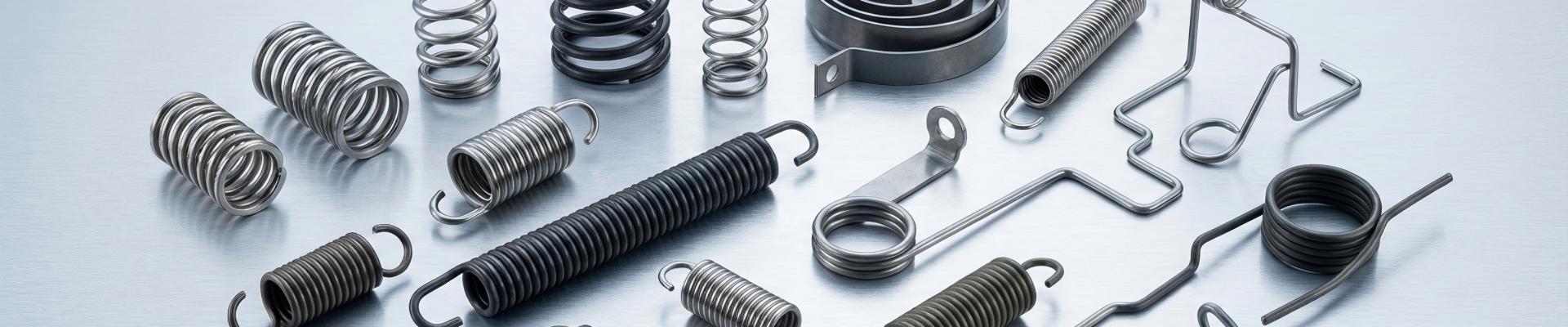
Depending on the force direction and available space, Zhengna Technology can review compression springs, torsion springs, extension springs, and custom wire forms. Selection starts with the mechanism. A compression spring needs a defined loaded height and guidance condition; a torsion spring needs leg geometry, working angle, and torque direction; an extension spring needs end configuration, installed length, and load condition; a wire form needs clear datums and interface geometry.
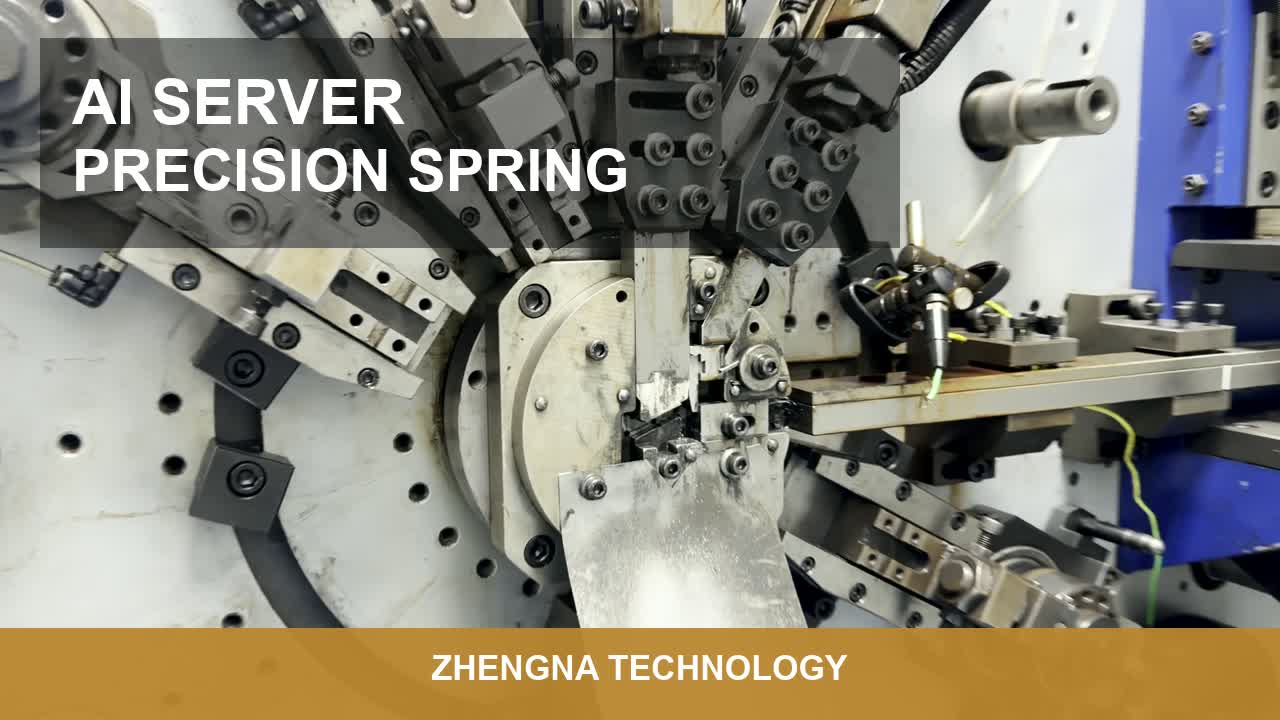
The spring shown in the workshop video is evidence of a real manufacturing process. It should not be interpreted as proof that all four types, every wire size, every material, or every AI server application have already been approved.
RFQ Information That Prevents a Weak Quote
A dimensioned sample photo can start a conversation, but it cannot define material condition or spring performance. A useful RFQ links geometry to force and use conditions.
| RFQ input | Preferred detail | Why it changes the quote |
|---|---|---|
| Drawing and revision | 2D drawing, 3D file if available, revision code, marked critical features | Prevents quotation and sampling against mixed or obsolete geometry. |
| Function | Compression, torque, extension, return, retention, positioning, or other mechanism | Connects the shape to the force direction and working condition. |
| Load condition | Force at a defined height, torque at a defined angle, or load over a working range | Allows inspection to test the intended function instead of appearance alone. |
| Envelope and travel | Free space, installed position, maximum travel, solid-height or over-travel limits | Exposes interference, buckling, coil bind, and permanent-set risk. |
| Material and environment | Specified grade, temperature, corrosion exposure, cleanliness, contact restrictions | Material and finish cannot be selected responsibly from application name alone. |
| Volumes | Prototype quantity, pilot quantity, order quantity, estimated annual demand | Affects forming setup, inspection planning, packaging, and production route. |
| Approval evidence | Dimensional report, load records, material record, finish evidence, packaging approval | Defines what must be produced before sample or lot release. |
Engineering Review Before Manufacturing
Spring geometry is interconnected. Wire diameter, mean coil diameter, active coil count, free length, end style, leg position, and working travel all influence load and stress. Changing one dimension to solve an assembly problem can alter the force curve or manufacturing stability.
- Compression springs: review outside or inside diameter, wire diameter, free length, solid height, active coils, end condition, loaded heights, guidance, and buckling risk.
- Torsion springs: review body diameter, coil count, leg geometry, free angle, working angle, torque direction, mandrel or support condition, and adjacent-part clearance.
- Extension springs: review body dimensions, initial tension when specified, hook or loop geometry, installed length, maximum extension, and end-interface stress.
- Wire forms: review datums, bend sequence, bend radii, terminal geometry, orientation, and inspection setup.
Zhengna Technology may discuss music wire, carbon spring steel, stainless spring wire, and other material options already represented in its general custom spring manufacturing capability. The final grade, condition, coating, and heat-treatment route must be confirmed against the buyer drawing and operating environment. This page does not assign a universal material.
Manufacturing and Approval Route
- Drawing and revision review: confirm the current files, application function, critical dimensions, load condition, and open technical questions.
- Manufacturing definition: agree the wire or material requirement, forming geometry, end or leg condition, stress-relief or heat-treatment need, surface requirement, and packaging constraints.
- Setup and first-piece control: form the spring, check the agreed dimensions and load point, and adjust the process against the approved requirement rather than a visual target.
- Sample validation: provide the samples and agreed records for buyer fit, function, assembly, and system testing.
- Pilot and production control: retain the approved revision and inspection basis, monitor defined characteristics, separate nonconforming parts, and protect the spring during handling and shipment.
Stress relief, heat treatment, surface treatment, force testing, cycle testing, and documentation are applied only when the project requires them and the exact route has been agreed. Their mention here does not mean every spring receives the same operations.
Inspection Should Match the Failure Mode
| Inspection area | Examples of project-specific evidence | Boundary |
|---|---|---|
| Wire and coil geometry | Wire diameter, body diameter, free length, coil count, leg or hook dimensions | Measurement points and tolerances come from the approved drawing. |
| Functional load | Force at agreed height, torque at agreed angle, or load across defined travel | Instrument, method, sampling, and acceptance window must be agreed. |
| Material and finish | Material record, specified finish confirmation, appearance or cleanliness check | Evidence depends on the contractual document requirement. |
| Durability | Cycle or relaxation test using an agreed fixture and operating range | Performed only when the buyer defines the method and acceptance criteria. |
| Packaging | Part separation, anti-tangling method, deformation protection, label and revision check | Packaging must reflect spring geometry and the buyer's handling route. |
For the broader inspection workflow, see Zhengna Technology quality control. The exact report package is defined for each RFQ; this page does not promise a fixed report or certification set.
Common Failure Risks to Resolve Before Purchase Order
- Correct shape, wrong force: dimensions can look acceptable while load at the working position is outside the functional window.
- Over-travel or coil bind: assembly movement reaches an unsafe condition and creates permanent deformation.
- Relaxation or set: the spring loses force because material, stress, temperature, or working range was not validated.
- Buckling or side load: a compression spring lacks guidance or is loaded outside its intended axis.
- Hook, leg, or interface damage: local geometry carries stress or interferes with the mating part.
- Tangling and deformation: bulk packaging changes geometry before the spring reaches assembly.
- Mixed revisions: samples, drawings, inspection records, and production lots do not share the same revision identity.
- Unassigned system responsibility: a component inspection result is mistaken for finished-server safety, electrical, thermal, or regulatory approval.
The related AI server precision spring supplier audit guide gives procurement teams a separate checklist for evaluating supplier evidence. This product page focuses on what Zhengna Technology needs to review and manufacture a buyer-defined part.
First-Party Workshop Video
The video below shows Zhengna Technology spring-forming equipment manufacturing a precision spring for AI server hardware. It is useful process evidence. It is not a substitute for a drawing, approved sample, load record, project audit, or compatibility test.
Claim and Approval Boundaries
This page does not establish a fixed tolerance, spring load, cycle life, material grade, coating, temperature range, corrosion performance, cleanliness class, certification, MOQ, lead time, annual capacity, or compatibility with a named AI server platform. Those decisions require the current buyer drawing, application conditions, manufacturing review, approved samples, and project-specific records.
Component conformity also does not establish finished-server compliance. The responsible party defined by the buyer contract must approve system-level mechanical, electrical, thermal, safety, and regulatory requirements.
Frequently Asked Questions
What information is needed to quote a custom AI server precision spring?
Send the current 2D drawing or dimensioned specification, drawing revision, spring function, target load at a defined height or angle, working travel, material or environmental requirements, prototype quantity, production quantity, and the inspection records you expect. A sample alone is not enough when its material and load condition are unknown.
Can Zhengna Technology copy a spring from a physical sample?
A sample can support dimensional review, but it does not reveal the complete material condition, original load requirement, stress history, or accepted tolerance. For a production decision, pair the sample with a drawing, force requirement, application description, and approval method.
Which spring types may be reviewed for AI server hardware?
Zhengna Technology can review made-to-drawing compression springs, torsion springs, extension springs, and formed wire parts. The correct type depends on the mechanism, available envelope, force direction, travel, interfaces, and assembly method. The workshop video on this page documents one manufacturing process and does not prove every spring type or project requirement.
How is spring force verified?
The drawing or agreed specification should define the load test point, such as force at a stated compressed height or torque at a stated angle. The inspection method, sampling frequency, instrument, tolerance, and report format are then confirmed for the project. Visual similarity is not a substitute for a defined force check.
Can cycle life or material performance be guaranteed from this product page?
No. Cycle life, relaxation, corrosion resistance, temperature performance, coating behavior, and system reliability depend on the approved design, material, manufacturing route, operating range, test method, and actual assembly. These values require project-specific review and validation.
Does the term AI server mean compatibility with a named server brand?
No. AI server describes the intended hardware application discussed with the buyer. It is not a claim of compatibility with NVIDIA or any server, rack, cooling, or electronics brand. Compatibility and finished-system compliance remain subject to the buyer drawing, validation, and responsible-party approval.
Request a Drawing Review
Send the current drawing revision, function, load condition, working travel, material or environment requirement, prototype quantity, production volume, and expected inspection evidence. Zhengna Technology will review the information before confirming manufacturability, quotation assumptions, sample route, and open risks.
Contact Zhengna Technology about custom AI server precision springs
