
 EN
EN
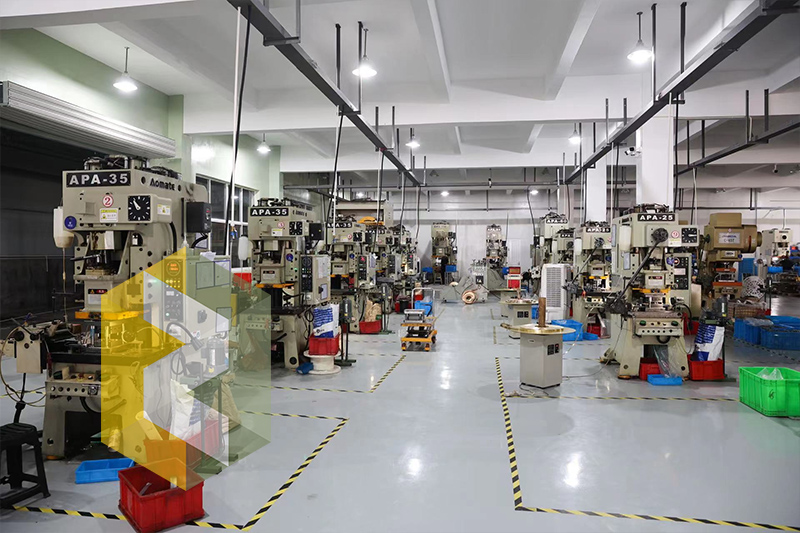
Heavy-duty machinery operates under extreme conditions that demand exceptional structural reliability from every component. The performance and safety of equipment used in construction, mining, agriculture, and industrial manufacturing depend critically on the integrity of precision stamping parts that form their foundational mechanical structures. These components must withstand enormous loads, repetitive stress cycles, vibration, temperature fluctuations, and corrosive environments while maintaining dimensional accuracy and functional performance over extended service lives. Understanding the factors that govern structural integrity in precision stamping parts is essential for engineers, procurement professionals, and manufacturers who specify, design, or supply components for heavy-duty applications.

The structural integrity of precision stamping parts in heavy-duty machinery encompasses multiple interdependent factors including material selection, forming process control, geometric design, surface treatment, and quality assurance protocols. Unlike components in light-duty applications, heavy-duty precision stamping parts must achieve a delicate balance between strength, toughness, fatigue resistance, and manufacturing feasibility. Failures in structural integrity can lead to catastrophic equipment breakdowns, safety incidents, costly downtime, and expensive warranty claims. This article examines the critical elements that determine structural integrity in heavy-duty precision stamping parts, providing insights into material science, manufacturing processes, design considerations, and validation methods that ensure reliable performance in demanding operational environments.
Material Properties and Their Impact on Structural Performance
High-Strength Steel Grades for Load-Bearing Applications
The foundation of structural integrity in precision stamping parts begins with material selection. Heavy-duty machinery applications typically require advanced high-strength steel (AHSS) grades that deliver superior tensile strength, yield strength, and impact resistance compared to conventional mild steels. Materials such as dual-phase steels, transformation-induced plasticity steels, and martensitic steels provide the mechanical properties necessary to withstand the severe loading conditions encountered in construction equipment, agricultural machinery, and industrial vehicles. These steel grades achieve strength levels ranging from 500 MPa to over 1500 MPa while maintaining sufficient ductility to absorb impact energy without brittle fracture.
The selection of specific steel grades for precision stamping parts must consider the operational stress profile of the application. Components subjected to static loads benefit from high yield strength materials that resist permanent deformation, while parts experiencing dynamic loads require materials with excellent fatigue strength and crack propagation resistance. The microstructural characteristics of the steel, including grain size, phase distribution, and inclusion content, significantly influence structural integrity. Fine-grained microstructures enhance both strength and toughness through grain boundary strengthening mechanisms, while controlled inclusion morphology prevents stress concentration sites that could initiate fatigue cracks during service.
Metallurgical Factors Affecting Durability
Beyond basic strength specifications, the metallurgical condition of steel used in precision stamping parts critically affects long-term structural integrity. The carbon content, alloying elements such as manganese, silicon, chromium, and molybdenum, and the thermomechanical processing history all influence material behavior under operational stresses. Higher carbon content increases strength but reduces weldability and formability, creating challenges in stamping complex geometries. Microalloying additions of elements like niobium, vanadium, and titanium enable precipitation strengthening and grain refinement, improving the strength-to-weight ratio without compromising ductility.
The anisotropic properties resulting from rolling processes during steel production create directional variations in mechanical properties that must be considered during the design and fabrication of precision stamping parts. The orientation of the rolling direction relative to principal stress directions in the stamped component affects crack resistance and deformation behavior. Engineers must account for this material directionality when designing parts that will experience multi-axial loading conditions. Additionally, the through-thickness properties of the steel, particularly in thicker gauge materials, influence how stamped parts perform under bending and impact loads common in heavy-duty machinery applications.
Material Certification and Traceability Requirements
Ensuring structural integrity requires rigorous material certification and traceability systems throughout the supply chain. Each batch of steel used for precision stamping parts in critical heavy-duty applications should be accompanied by mill test certificates documenting chemical composition, mechanical properties, and processing parameters. These certifications provide verification that materials meet specified standards such as ASTM, SAE, or DIN requirements. Traceability systems linking finished components back to specific material lots enable root cause analysis if field failures occur and support quality improvement initiatives.
Advanced manufacturers implement incoming material inspection protocols that include destructive and non-destructive testing to verify supplier certifications. Tensile testing, hardness measurements, and metallographic examination of sample coupons ensure that material properties align with design assumptions. Spectroscopic analysis confirms chemical composition, while ultrasonic or magnetic particle inspection can detect internal defects or surface discontinuities in raw materials before stamping operations begin. This verification step prevents defective materials from entering production, protecting the structural integrity of finished precision stamping parts.
Stamping Process Control and Forming Integrity
Die Design Optimization for Structural Performance
The precision stamping process itself exerts profound influence on the structural integrity of finished parts. Die design determines how material flows during forming operations, affecting strain distribution, work hardening patterns, springback behavior, and residual stress states in the component. Poorly designed tooling can create localized thinning, stress concentrations, or microstructural damage that compromise load-bearing capacity even when adequate raw materials are used. Progressive die systems for complex precision stamping parts must be engineered to minimize excessive localized deformation while achieving required geometric features.
Critical aspects of die design include blank holder force optimization, draw bead configuration, die radius selection, and clearance control between punch and die elements. Excessive blank holder force increases material strain and can cause tearing or excessive thinning in critical load paths, while insufficient force allows wrinkling that creates geometric irregularities and stress risers. Die radii must balance formability requirements with strength considerations, as sharper radii increase bending strain and reduce section thickness in bend regions. Computer-aided engineering tools including finite element analysis enable die designers to simulate material flow and predict potential forming defects before manufacturing tooling.
Strain Hardening and Residual Stress Management
During the stamping process, plastic deformation induces work hardening that increases the strength of precision stamping parts beyond the properties of the original sheet material. This strain hardening effect can be beneficial, enhancing load-carrying capacity in formed regions, but excessive strain levels can exhaust material ductility and create susceptibility to brittle fracture. The forming severity, characterized by parameters such as punch travel, draw depth, and bend angle, determines the magnitude of strain hardening and must be controlled to maintain adequate residual ductility for service conditions.
Residual stresses generated during forming operations represent another critical factor affecting structural integrity. Tensile residual stresses near the surface can reduce fatigue life by lowering the effective stress amplitude required for crack initiation and propagation. Compressive residual stresses, conversely, can improve fatigue resistance by offsetting applied tensile stresses during operation. The residual stress state in precision stamping parts results from elastic-plastic deformation gradients during forming and springback after tool release. Heat treatment processes such as stress relieving or controlled cooling can modify residual stress distributions to optimize structural performance.
Quality Monitoring Throughout Production
Maintaining consistent structural integrity across production volumes requires comprehensive process monitoring and control systems. Statistical process control applied to critical stamping parameters such as press tonnage, die closing speed, and blank positioning ensures process stability and reduces part-to-part variation. In-line measurement systems using coordinate measuring machines, optical scanning, or laser profiling verify dimensional conformance and detect forming defects before parts proceed to subsequent operations or assembly.
Advanced manufacturers implement real-time monitoring of press performance, die condition, and material properties to detect process deviations that could compromise precision stamping parts integrity. Force-displacement signatures captured during each stamping cycle provide insights into material behavior and forming progression, enabling early detection of abnormal conditions such as material property variations, lubrication inadequacies, or die wear. Automated vision systems inspect formed parts for surface defects, cracks, or dimensional anomalies that could indicate structural weaknesses. This multi-layered quality assurance approach ensures that only parts meeting stringent structural integrity requirements reach customers.
Geometric Design Principles for Heavy-Duty Applications
Load Path Optimization and Stress Distribution
The geometric configuration of precision stamping parts fundamentally determines how operational loads distribute through the component structure. Effective design creates continuous, efficient load paths that minimize stress concentrations and avoid abrupt section changes that create high local stresses. In heavy-duty machinery, where components frequently experience multi-axial loading from combined bending, torsion, and axial forces, geometric design must account for these complex stress states rather than optimizing for single load cases.
Features such as reinforcement ribs, embossed patterns, and formed flanges enhance structural stiffness and strength without proportional weight increases. The orientation, depth, and spacing of these features influence both local and global structural behavior. Finite element analysis enables engineers to evaluate alternative geometric configurations and identify designs that achieve required performance with minimal material usage. Topology optimization algorithms can generate organic structural layouts that efficiently channel forces through precision stamping parts, though manufacturing constraints from the stamping process limit the complexity of achievable geometries.
Fatigue-Resistant Feature Design
Heavy-duty machinery subjects precision stamping parts to millions of loading cycles over their service lives, making fatigue resistance a primary structural integrity concern. Geometric features that create stress concentrations, such as holes, notches, radii transitions, and welded attachments, become potential sites for fatigue crack initiation. Design guidelines for fatigue-critical parts specify minimum radii, gradual section transitions, and stress-relief features that reduce stress concentration factors and extend fatigue life.
The surface condition at geometric features significantly affects fatigue performance. Sharp corners or tool marks from stamping operations create microscopic stress risers that accelerate crack initiation. Specifying generous radii at bend lines and hole edges, avoiding sudden thickness changes, and requiring smooth surface finishes in high-stress regions all contribute to enhanced fatigue resistance. Some applications benefit from post-stamping operations such as hole cold expansion or shot peening that introduce beneficial compressive residual stresses in critical areas, significantly improving fatigue life without geometric modifications.
Tolerance Specifications and Structural Implications
Dimensional tolerances for precision stamping parts must balance manufacturing feasibility with functional requirements, including structural performance. Excessively tight tolerances increase manufacturing cost and rejection rates without necessarily improving structural integrity, while overly loose tolerances can create assembly problems, misalignment issues, or unintended load paths that compromise durability. Critical dimensions affecting load distribution, such as hole positions for bolted connections or mating surfaces for structural joints, warrant tighter tolerance control than non-critical features.
Geometric dimensioning and tolerancing principles provide a framework for specifying part geometry in ways that communicate functional requirements to manufacturers. For precision stamping parts in heavy-duty applications, position tolerances for mounting holes ensure proper load transfer to adjacent components, while flatness tolerances on contact surfaces prevent uneven pressure distribution that could cause premature wear or fatigue. Profile tolerances control the overall shape of formed features, ensuring consistent structural behavior across production quantities. Thoughtful tolerance allocation optimizes the cost-performance balance while maintaining structural integrity.
Surface Protection and Environmental Resistance
Corrosion Protection Systems for Longevity
Structural integrity in heavy-duty machinery precision stamping parts extends beyond mechanical strength to include long-term durability in challenging environmental conditions. Exposure to moisture, chemicals, road salt, fertilizers, and temperature extremes accelerates corrosion that degrades material thickness and creates stress concentration sites. Comprehensive corrosion protection systems preserve structural integrity throughout the design service life of components. Electrocoating, also known as e-coating or electrophoretic coating, provides uniform organic barrier protection that penetrates recessed areas and complex geometries that are difficult to coat with conventional spray methods.
The e-coating process involves immersing precision stamping parts in a water-based paint solution and applying electrical current to deposit a uniform coating layer on all exposed metal surfaces. This electrochemical deposition ensures consistent coating thickness on interior corners, edges, and hidden surfaces where corrosion often initiates. Following deposition, the coating is cured at elevated temperature to cross-link the polymer and develop full barrier properties. E-coated precision stamping parts demonstrate superior corrosion resistance compared to uncoated or conventionally painted components, with salt spray test performance often exceeding 1000 hours before significant rust formation.
Surface Preparation and Coating Adhesion
The effectiveness of protective coatings in preserving structural integrity depends critically on surface preparation before coating application. Stamping lubricants, drawing compounds, rust preventatives, and shop contaminants must be completely removed to ensure proper coating adhesion. Multi-stage cleaning processes incorporating alkaline cleaning, rinsing, and conversion coating pretreatment create a chemically receptive surface that bonds strongly with applied coatings. Inadequate surface preparation leads to coating delamination that exposes the base metal to corrosive attack, potentially causing pitting corrosion that acts as fatigue crack initiation sites.
Conversion coatings, such as iron phosphate or zinc phosphate treatments, serve dual functions of enhancing coating adhesion and providing temporary corrosion protection during handling before final coating application. These crystalline conversion layers create a micro-roughened surface profile that mechanically keys the subsequent coating while offering sacrificial corrosion protection if the organic coating is damaged. The combination of proper surface preparation, conversion coating, and high-quality e-coating creates a robust corrosion protection system that maintains the structural integrity of precision stamping parts in corrosive environments common to heavy-duty machinery applications.
Impact of Coating Processes on Base Metal Properties
Coating application processes, particularly those involving elevated temperatures, can affect the mechanical properties of the base metal in precision stamping parts. E-coating cure cycles typically expose parts to temperatures in the range of 160 to 200 degrees Celsius for 20 to 30 minutes. For most steel grades used in heavy-duty applications, these thermal exposures have minimal impact on strength or ductility. However, very high-strength martensitic steels or precipitation-hardened alloys may experience tempering or over-aging effects that reduce hardness and strength if cure temperatures are not properly controlled.
Hydrogen embrittlement represents another concern when high-strength precision stamping parts undergo electroplating or other processes involving hydrogen generation at the metal surface. Atomic hydrogen can diffuse into the steel lattice and reduce ductility, creating susceptibility to delayed brittle fracture under sustained loads. E-coating processes generally pose lower hydrogen embrittlement risk compared to electroplating because they do not involve high current densities or acidic electrolytes. Nevertheless, high-strength parts exceeding 1000 MPa tensile strength warrant consideration of hydrogen embrittlement prevention measures such as baking treatments following any process that might introduce hydrogen.
Validation and Testing Protocols
Mechanical Testing for Performance Verification
Ensuring structural integrity in precision stamping parts requires comprehensive testing programs that validate design assumptions and verify manufacturing quality. Mechanical testing includes both coupon-level material characterization and full-component performance evaluation. Tensile testing of samples extracted from stamped parts measures actual material properties after forming, including yield strength, ultimate tensile strength, elongation, and work hardening characteristics. These results confirm that stamping operations have not degraded material properties below minimum acceptable levels and provide data for finite element model validation.
Component-level testing subjects precision stamping parts to loading conditions representative of service environments. Static load testing applies forces or moments that simulate maximum operating loads and verifies that parts withstand design loads without permanent deformation or fracture. Fatigue testing cycles components through representative load spectra for quantities of cycles equivalent to or exceeding expected service life. Accelerated testing at elevated stress amplitudes can reduce testing time while providing data on fatigue strength and damage accumulation rates. Impact testing evaluates energy absorption capacity and fracture resistance under dynamic loading conditions common in heavy-duty machinery.
Non-Destructive Inspection Techniques
Non-destructive testing methods enable evaluation of structural integrity without damaging parts, making them valuable for both production quality control and in-service inspection. Magnetic particle inspection detects surface and near-surface cracks or discontinuities in ferromagnetic precision stamping parts by applying magnetic fields and ferromagnetic particles that accumulate at defect locations. This technique effectively identifies fatigue cracks, grinding cracks, or material separations that could compromise structural performance.
Ultrasonic inspection employs high-frequency sound waves to detect internal defects, measure material thickness, and characterize microstructural features in precision stamping parts. Ultrasonic testing can identify laminations, inclusions, or voids within the material that might not be visible on the surface but could propagate into cracks under service loads. Eddy current testing provides another non-destructive method for detecting surface cracks, measuring coating thickness, and sorting materials based on electrical conductivity. The selection of appropriate non-destructive testing methods depends on part geometry, material properties, and the types of defects most likely to affect structural integrity in specific applications.
Finite Element Analysis for Design Validation
Computational modeling through finite element analysis has become an indispensable tool for predicting structural integrity in precision stamping parts before physical prototypes are manufactured. FEA models simulate stress distributions, deformation patterns, fatigue life, and failure modes under various loading scenarios. These analyses identify potential structural weaknesses, optimize material distribution, and evaluate design modifications efficiently. Accurate FEA results depend on realistic material models, appropriate element formulations, and boundary conditions that faithfully represent actual operating conditions.
For heavy-duty machinery applications, FEA models must account for geometric nonlinearity from large deformations, material nonlinearity from plastic yielding, and contact nonlinearity from changing boundary conditions during loading. Multi-body dynamics simulations can generate realistic load histories that serve as inputs to structural FEA models, capturing the actual forces and moments experienced by precision stamping parts during equipment operation. Fatigue life prediction using techniques such as stress-life or strain-life approaches enables estimation of durability and identification of locations requiring design strengthening or material upgrades.
FAQ
What makes precision stamping parts suitable for heavy-duty machinery applications?
Precision stamping parts offer an optimal combination of high strength-to-weight ratio, dimensional accuracy, production efficiency, and cost-effectiveness that makes them well-suited for heavy-duty machinery. The cold working during stamping operations increases material strength through strain hardening, while modern high-strength steel grades provide exceptional load-carrying capacity. The precision stamping process achieves tight dimensional tolerances required for proper fit and function in complex assemblies, and the ability to form complex three-dimensional shapes enables integration of multiple functions into single components. When properly designed, manufactured, and protected with appropriate surface treatments, precision stamping parts deliver reliable structural performance in demanding applications including construction equipment, agricultural machinery, and industrial vehicles.
How does e-coating improve the structural integrity of stamped components?
Electrophoretic coating protects precision stamping parts from corrosion that would otherwise degrade structural integrity over time. Corrosion reduces effective material thickness, creates stress concentration sites through pitting, and introduces surface irregularities that accelerate fatigue crack initiation. The uniform coating coverage achieved through e-coating provides comprehensive barrier protection including edges, corners, and recessed areas where conventional painting methods often leave gaps. By preventing corrosive attack, e-coating preserves the original strength and load-carrying capacity of stamped components throughout their service life. Additionally, the relatively low cure temperatures used in e-coating processes do not adversely affect the mechanical properties of most steel grades used in heavy-duty applications, maintaining the structural performance engineered into the design.
What factors determine the fatigue life of precision stamping parts in heavy equipment?
Fatigue life depends on the interaction of multiple factors including material properties, stress amplitude, mean stress, stress concentration factors, surface condition, residual stresses, and environmental influences. Higher strength materials generally offer improved fatigue resistance, though the relationship is not strictly proportional. The magnitude and frequency of cyclic stress variations directly affect crack initiation and propagation rates. Geometric features creating stress concentrations such as holes, notches, and sharp radii significantly reduce fatigue life by creating localized high stresses. Surface condition influences fatigue performance because cracks typically initiate at surface irregularities; smooth, compressively stressed surfaces resist crack formation. Corrosive environments accelerate fatigue damage through corrosion fatigue mechanisms. Optimizing these factors through appropriate material selection, geometric design, surface finishing, and protective coating systems maximizes fatigue life in heavy-duty precision stamping parts.
How can manufacturers verify the structural integrity of stamped parts during production?
Manufacturers implement multi-tiered quality assurance systems combining material verification, process monitoring, dimensional inspection, and functional testing to ensure structural integrity. Incoming material inspection confirms that steel properties meet specifications through certification review and sample testing. Statistical process control of stamping parameters maintains consistent forming conditions that produce uniform part properties. Coordinate measurement and optical scanning verify dimensional conformance to design tolerances. Non-destructive testing techniques including magnetic particle inspection identify surface defects that could compromise structural performance. Periodic mechanical testing of production samples validates load-carrying capacity and fatigue resistance. This comprehensive approach detects potential integrity issues before parts reach customers, ensuring that precision stamping parts meet the demanding requirements of heavy-duty machinery applications.
Table of Contents
- Material Properties and Their Impact on Structural Performance
- Stamping Process Control and Forming Integrity
- Geometric Design Principles for Heavy-Duty Applications
- Surface Protection and Environmental Resistance
- Validation and Testing Protocols
-
FAQ
- What makes precision stamping parts suitable for heavy-duty machinery applications?
- How does e-coating improve the structural integrity of stamped components?
- What factors determine the fatigue life of precision stamping parts in heavy equipment?
- How can manufacturers verify the structural integrity of stamped parts during production?