
 EN
EN
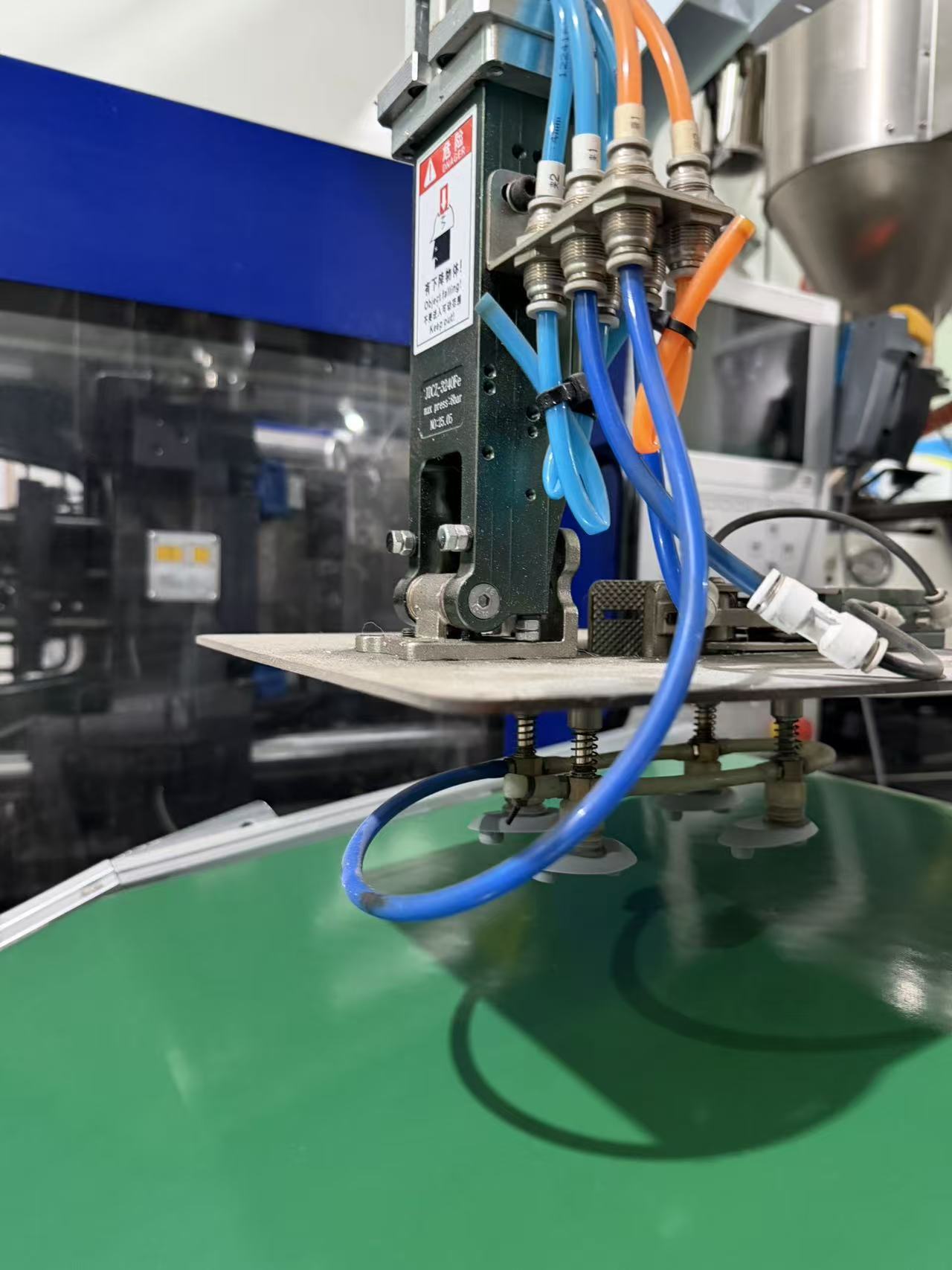
The rapidly evolving landscape of high-tech robotics manufacturing demands unprecedented levels of accuracy, reliability, and performance from every component. As robots become increasingly sophisticated and are deployed in critical applications ranging from surgical procedures to autonomous vehicle systems, the manufacturing processes that create their essential components must meet extraordinary standards. This evolution has positioned precision CNC machining services as a cornerstone technology in the robotics industry, enabling manufacturers to achieve the tight tolerances and complex geometries required for advanced robotic systems.

The integration of precision CNC machining services into robotics manufacturing represents a critical technological partnership that directly influences robot performance, longevity, and operational effectiveness. Modern robotic systems require components that can withstand millions of operational cycles while maintaining dimensional stability and functional precision. The role of precision CNC machining services extends far beyond simple part production, encompassing the creation of intricate mechanical assemblies, sensor housings, actuator components, and structural elements that form the foundation of contemporary robotic systems.
Critical Component Manufacturing Requirements in Robotics
Dimensional Accuracy and Tolerance Management
High-tech robotics manufacturing places extraordinary demands on dimensional accuracy that conventional manufacturing methods simply cannot meet. Precision CNC machining services deliver the micron-level tolerances essential for robotic components, particularly in applications where multiple parts must interface seamlessly. Robot joints, for instance, require bearing surfaces machined to tolerances often within ±0.0001 inches to ensure smooth operation and eliminate backlash that could compromise positioning accuracy.
The cumulative effect of dimensional variations across multiple components can severely impact robot performance, making the role of precision CNC machining services crucial in maintaining system-wide accuracy. Advanced CNC systems equipped with in-process measurement capabilities can monitor and adjust machining parameters in real-time, ensuring that each component meets the stringent requirements of robotics applications. This level of precision is particularly critical in medical robotics, where even microscopic deviations can affect surgical outcomes.
Temperature stability during machining operations represents another critical factor in achieving the dimensional accuracy required for robotics components. Precision CNC machining services employ climate-controlled environments and thermal compensation systems to maintain consistent part dimensions throughout the manufacturing process. This attention to thermal management ensures that components maintain their specified dimensions across varying operational temperatures.
Surface Finish and Functional Performance
The surface quality achieved through precision CNC machining services directly impacts the functional performance and longevity of robotic components. Moving parts within robotic systems require surfaces with specific roughness characteristics to minimize friction, reduce wear, and ensure consistent operation over millions of cycles. Advanced CNC machining techniques can achieve surface finishes ranging from mirror-like polish to precisely controlled texture patterns that optimize tribological performance.
Precision CNC machining services utilize specialized tooling and cutting strategies to produce surfaces that meet the demanding requirements of high-speed robotic applications. The ability to control surface micro-geometry through machining parameters enables manufacturers to optimize component performance for specific applications, whether requiring minimal friction for high-speed movements or controlled surface texture for enhanced grip in robotic end effectors.
Advanced surface treatments and coatings can be applied to CNC-machined components to further enhance their performance in robotic applications. The precise surface preparation achieved through precision CNC machining services provides an ideal foundation for these specialized treatments, ensuring optimal adhesion and performance of protective or functional coatings used in robotics manufacturing.
Advanced Material Processing for Robotics Applications
Exotic Alloy Machining Capabilities
Modern robotics applications often require components manufactured from advanced materials that offer superior strength-to-weight ratios, corrosion resistance, and specialized properties. Precision CNC machining services have evolved to handle exotic alloys including titanium, Inconel, and advanced aluminum alloys that provide the performance characteristics essential for high-tech robotics. These materials present unique machining challenges that require specialized tooling, cutting parameters, and process control.
The ability to machine titanium components with precision has become increasingly important in aerospace and medical robotics applications where weight reduction and biocompatibility are critical factors. Precision CNC machining services employ advanced cutting tools and optimized machining strategies to handle the work-hardening tendencies and poor thermal conductivity of titanium while maintaining the tight tolerances required for robotic assemblies.
Carbon fiber reinforced plastics and other composite materials are increasingly used in robotics manufacturing to achieve optimal weight distribution and structural properties. Precision CNC machining services have developed specialized techniques for machining these materials without causing delamination or fiber pullout that could compromise component integrity. The precise control offered by CNC systems enables the creation of complex composite components with embedded features and optimized fiber orientations.
Multi-Material Component Integration
Contemporary robotic systems often require components that integrate multiple materials to achieve optimal performance characteristics. Precision CNC machining services enable the creation of hybrid components that combine metallic structures with polymer elements, ceramic inserts, or embedded sensors. This capability is particularly valuable in creating custom actuator housings, sensor mounts, and interface components that require diverse material properties within a single assembly.
The precision achievable through advanced CNC machining allows for the creation of components with integrated features that eliminate the need for secondary assembly operations. This approach reduces potential points of failure, improves system reliability, and enables more compact robotic designs. Complex internal passages, integrated cooling channels, and embedded sensor cavities can be machined directly into components during the initial manufacturing process.
Quality control for multi-material components requires sophisticated inspection techniques that can verify dimensional accuracy across different material interfaces. Precision CNC machining services employ coordinate measuring machines, optical inspection systems, and specialized gauging to ensure that complex components meet all specified requirements before integration into robotic assemblies.
Process Innovation and Manufacturing Efficiency
High-Speed Machining Technologies
The demands of modern robotics manufacturing have driven significant innovations in CNC machining technologies, particularly in the area of high-speed machining. Precision CNC machining services now employ spindle speeds exceeding 40,000 RPM and feed rates that enable rapid material removal while maintaining the surface quality and dimensional accuracy required for robotic components. These advances have dramatically reduced manufacturing cycle times while improving part quality.
Advanced tool path strategies and adaptive machining algorithms enable precision CNC machining services to optimize cutting conditions in real-time based on material properties and geometric complexity. This intelligent approach to machining ensures consistent quality across complex robotic components while minimizing tool wear and maximizing productivity. The integration of artificial intelligence and machine learning algorithms promises even greater advances in machining efficiency and quality control.
High-speed machining capabilities have enabled the economical production of complex robotic components that were previously prohibitively expensive to manufacture. The ability to machine intricate geometries with minimal setup time and reduced tool changes has made precision CNC machining services increasingly attractive for both prototype development and production manufacturing in robotics applications.
Automation and Process Integration
Modern precision CNC machining services have embraced automation technologies that mirror the sophistication found in the robotic systems they support. Automated part loading and unloading systems, integrated quality inspection, and real-time process monitoring have transformed CNC machining into a highly efficient and reliable manufacturing process. These automation advances are particularly important for robotics manufacturing, where component consistency and traceability are critical requirements.
The integration of robotic material handling systems within CNC machining cells has enabled continuous operation and improved part quality through reduced human handling. These automated systems can maintain the clean room conditions often required for high-tech robotics components while ensuring consistent part orientation and setup repeatability. The synergy between robotics technology and precision CNC machining services continues to drive improvements in manufacturing efficiency and quality.
Digital manufacturing platforms now connect precision CNC machining services directly to robotics design and development processes, enabling rapid iteration and optimization of component designs. This integration supports the accelerated development cycles typical of the robotics industry while ensuring that manufacturability considerations are incorporated early in the design process.
Quality Assurance and Performance Validation
Advanced Inspection and Metrology
The critical nature of robotic applications demands comprehensive quality assurance programs that go beyond traditional manufacturing inspection methods. Precision CNC machining services employ coordinate measuring machines, optical comparators, and laser scanning systems to verify that every dimension meets specified tolerances. The complexity of modern robotic components often requires three-dimensional inspection techniques that can validate form, fit, and function across complex geometries.
Statistical process control methods enable precision CNC machining services to monitor manufacturing trends and identify potential quality issues before they impact production. This proactive approach to quality management is essential in robotics manufacturing, where component failures can have significant consequences for system performance and safety. Real-time data collection and analysis support continuous improvement efforts that enhance both quality and efficiency.
Material certification and traceability requirements in robotics applications often exceed those found in other industries, particularly for medical and aerospace applications. Precision CNC machining services maintain detailed records of material origins, processing parameters, and inspection results to support the comprehensive documentation required for critical robotics components. This traceability extends throughout the entire manufacturing process and supports failure analysis and continuous improvement efforts.
Performance Testing and Validation
Beyond dimensional verification, robotics components often require functional testing to validate performance under operational conditions. Precision CNC machining services increasingly offer specialized testing capabilities that simulate the stresses, temperatures, and cyclic loading conditions encountered in robotic applications. This testing approach helps identify potential performance issues before components are integrated into complete robotic systems.
Fatigue testing and accelerated life testing capabilities enable precision CNC machining services to validate component longevity and reliability. These testing programs are particularly important for robotic components that must operate continuously for extended periods without maintenance. The data generated through these testing programs supports design optimization and process improvement efforts that enhance component performance.
Collaborative testing programs between precision CNC machining services and robotics manufacturers have led to improved component designs and manufacturing processes. This partnership approach ensures that machining processes are optimized for the specific requirements of robotic applications while supporting the rapid development cycles typical of the robotics industry.
Future Trends and Technological Evolution
Industry 4.0 Integration
The convergence of precision CNC machining services with Industry 4.0 technologies is creating new opportunities for optimization and efficiency in robotics manufacturing. Internet of Things sensors and connectivity enable real-time monitoring of machining processes, predictive maintenance of equipment, and optimization of cutting parameters based on accumulated performance data. This digital transformation is particularly relevant for robotics manufacturing, where precision and consistency are paramount.
Artificial intelligence and machine learning algorithms are being integrated into precision CNC machining services to optimize tool paths, predict tool wear, and adjust cutting parameters automatically. These intelligent systems can adapt to variations in material properties and geometric complexity, ensuring consistent quality across diverse robotic components. The continuous learning capabilities of these systems promise ongoing improvements in efficiency and quality.
Digital twin technology enables precision CNC machining services to simulate and optimize manufacturing processes before actual production begins. This capability is particularly valuable for complex robotic components where machining errors could be costly and time-consuming to correct. Virtual validation of machining processes supports rapid prototyping and design iteration cycles that are essential in robotics development.
Emerging Manufacturing Technologies
Hybrid manufacturing systems that combine CNC machining with additive manufacturing technologies are expanding the capabilities of precision CNC machining services. These systems can create components with internal features and complex geometries that would be impossible to achieve through machining alone. The ability to add material selectively while maintaining the precision and surface quality of CNC machining opens new possibilities for robotic component design.
Advanced cutting tool technologies, including ceramic and diamond-coated tools, are enabling precision CNC machining services to handle increasingly difficult materials while maintaining the tight tolerances required for robotics applications. These tool advances support the use of exotic materials and enable higher cutting speeds and feed rates, improving both quality and productivity in robotics manufacturing.
Micro-machining capabilities are becoming increasingly important as robotic systems become more compact and sophisticated. Precision CNC machining services are developing specialized equipment and techniques for creating extremely small components with tolerances measured in micrometers. This capability is particularly important for medical robotics and precision positioning systems where miniaturization is a key requirement.
FAQ
What tolerances can precision CNC machining services achieve for robotics components?
Precision CNC machining services can routinely achieve tolerances of ±0.0001 inches (±2.5 micrometers) for robotics components, with some specialized operations capable of even tighter tolerances. The achievable tolerance depends on factors including material type, component geometry, and environmental conditions. For robotics applications, these tight tolerances are essential for ensuring proper fit and function of moving parts, eliminating backlash in joint assemblies, and maintaining positioning accuracy throughout the robot's operational life.
How do precision CNC machining services ensure quality consistency for high-volume robotics production?
Quality consistency in high-volume robotics production is maintained through statistical process control, automated inspection systems, and rigorous process standardization. Precision CNC machining services employ coordinate measuring machines for dimensional verification, implement real-time process monitoring to detect variations, and maintain detailed traceability records for every component. Advanced CNC systems with automated tool compensation and in-process measurement capabilities ensure that quality remains consistent throughout extended production runs.
What materials commonly used in robotics can precision CNC machining services process effectively?
Precision CNC machining services can effectively process a wide range of materials used in robotics manufacturing, including aluminum alloys, stainless steel, titanium, Inconel, carbon fiber composites, and engineering plastics such as PEEK and Delrin. Each material requires specific machining strategies, cutting tools, and process parameters to achieve optimal results. The choice of material depends on the specific requirements of the robotic application, including weight constraints, strength requirements, corrosion resistance, and operational environment.
How do precision CNC machining services support rapid prototyping in robotics development?
Precision CNC machining services support rapid prototyping through fast setup times, flexible programming capabilities, and the ability to machine directly from CAD models without specialized tooling. Modern CNC systems can quickly transition between different part configurations, enabling efficient production of small quantities for prototyping and testing. This capability is crucial for robotics development, where design iterations are common and time-to-market pressures require rapid validation of component designs and manufacturing processes.
Table of Contents
- Critical Component Manufacturing Requirements in Robotics
- Advanced Material Processing for Robotics Applications
- Process Innovation and Manufacturing Efficiency
- Quality Assurance and Performance Validation
- Future Trends and Technological Evolution
-
FAQ
- What tolerances can precision CNC machining services achieve for robotics components?
- How do precision CNC machining services ensure quality consistency for high-volume robotics production?
- What materials commonly used in robotics can precision CNC machining services process effectively?
- How do precision CNC machining services support rapid prototyping in robotics development?