
 EN
EN
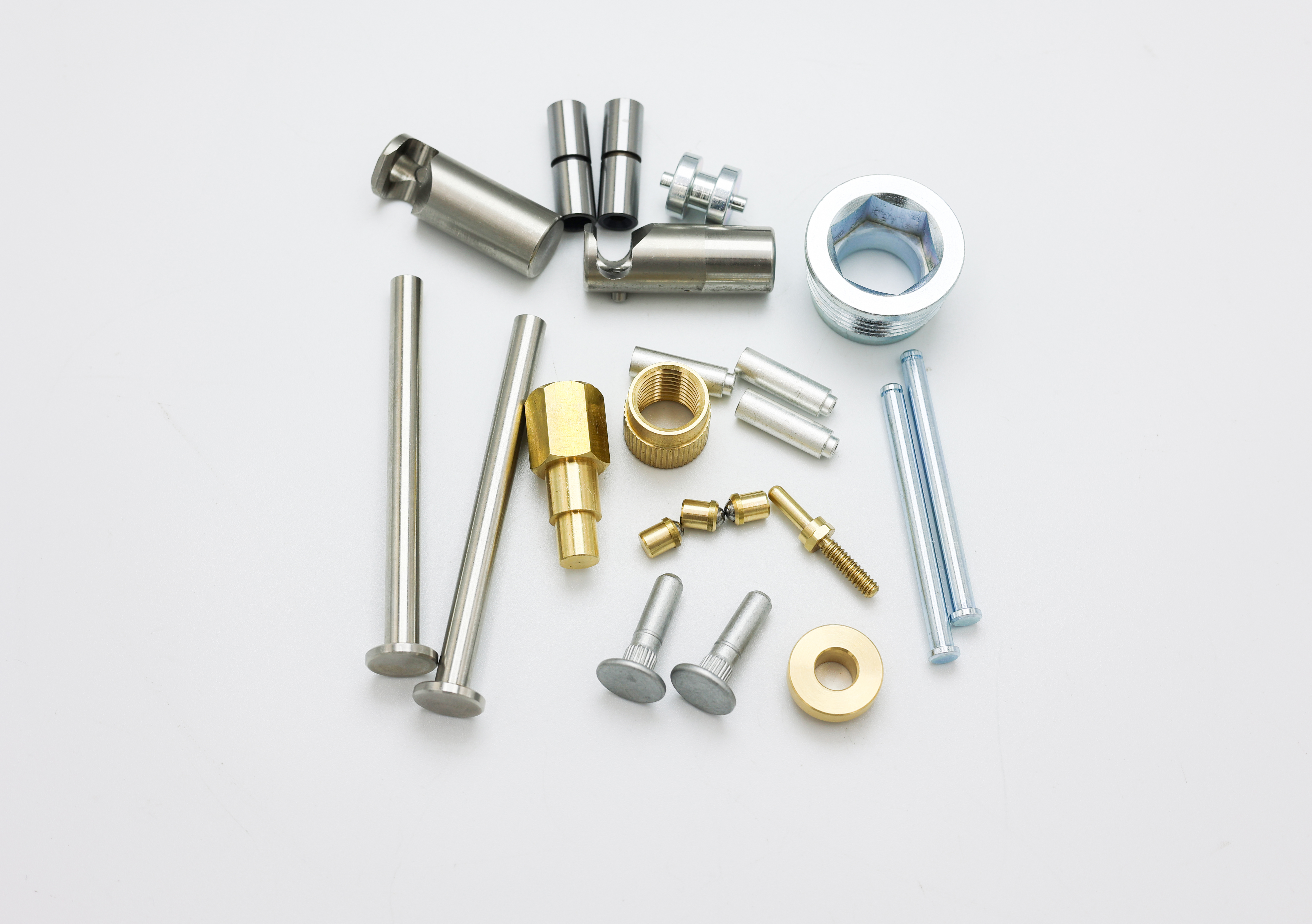
Custom metal stamping has emerged as a cornerstone manufacturing process for industries requiring both geometric complexity and dimensional consistency across high-volume production runs. This advanced forming technique transforms flat metal sheets into intricate three-dimensional components through precision dies and controlled deformation, enabling manufacturers to produce parts with tolerances measured in thousandths of an inch while maintaining identical specifications across millions of units. The process combines mechanical force, engineered tooling, and material science to achieve what manual fabrication or alternative methods cannot: the simultaneous delivery of complex geometries and extreme repeatability that modern industries demand for assembly automation, functional reliability, and cost-effective scalability.

Understanding how custom metal stamping achieves this dual capability requires examining the engineering principles, tooling design strategies, and process control mechanisms that distinguish it from other metal forming methods. Unlike machining that removes material or welding that joins separate pieces, stamping reshapes metal through plastic deformation within precision dies, creating parts where every feature is formed simultaneously in a single stroke or coordinated sequence. This fundamental characteristic enables the process to replicate complex shapes with consistency that approaches statistical perfection, making it indispensable for automotive components, electronics enclosures, medical device parts, and aerospace brackets where both form complexity and dimensional uniformity directly impact product performance and manufacturing efficiency.
The Engineering Foundation of Complex Shape Formation
Material Flow Control Through Die Geometry
The ability of custom metal stamping to produce complex shapes begins with engineered die cavities that control metal flow during deformation. When the punch descends into the die, it applies localized pressure that exceeds the material's yield strength, causing permanent deformation along predetermined paths. Die designers calculate material draw ratios, bend radii, and forming angles to guide metal into intricate contours without tearing, wrinkling, or springback that would compromise shape accuracy. This controlled deformation allows custom metal stamping to create features like hemispherical domes, multi-plane bends, integrated mounting tabs, and complex perimeter profiles that would require multiple operations in alternative processes.
Advanced die geometry incorporates radius transitions, draw beads, and pressure distribution zones that manage material thickness during forming. Sharp corners receive generous radii to prevent stress concentrations, while deep draws utilize blank holder pressure to control material feed rates. Progressive die designs break complex shapes into sequential forming stages, with each station performing specific operations that gradually transform flat blanks into finished geometries. This staged approach enables custom metal stamping to achieve part complexity that single-operation processes cannot match, forming components with depth-to-diameter ratios exceeding conventional limits while maintaining wall thickness uniformity essential for structural integrity.
Multi-Axis Forming Capabilities
Complex shapes often require deformation along multiple axes simultaneously, a capability inherent to properly designed stamping dies. Unlike bending operations limited to single-plane angles, custom metal stamping can form compound curves, offset features, and intersecting geometries in one press stroke. The die halves create three-dimensional cavities that shape material in X, Y, and Z directions concurrently, producing parts with sculptured surfaces, variable cross-sections, and integrated functional features that eliminate secondary assembly operations. This multi-axis forming capability makes custom metal stamping particularly valuable for components requiring aerodynamic profiles, ergonomic contours, or space-efficient packaging geometries.
The process accommodates asymmetric shapes through balanced die design that distributes forming forces evenly despite irregular part geometry. Engineers calculate tonnage requirements for each forming zone, ensuring adequate pressure reaches all areas while preventing localized overloading that could crack material or damage tooling. Sophisticated dies incorporate cam-actuated slides, spring-loaded forming pins, and angular approach surfaces that enable undercuts, side features, and reverse-angle bends impossible with simple vertical press motion. These mechanical innovations expand the geometric vocabulary of custom metal stamping beyond basic cups and brackets to include complex housings, structural brackets with multiple attachment planes, and hybrid components combining stamped features with integrated fastening elements.
Precision Tolerances in Three-Dimensional Space
Achieving complex shapes means nothing without dimensional accuracy, and custom metal stamping maintains tight tolerances across all formed features simultaneously. Typical stamping operations hold general tolerances of plus-minus 0.005 inches, with precision applications achieving plus-minus 0.001 inches or tighter through controlled die clearances and material selection. This accuracy extends to hole locations, edge distances, bend angles, and surface flatness, ensuring that complex geometries mate properly with adjacent components in assemblies. The simultaneous forming of all features in a single stroke eliminates cumulative tolerance buildup that plagues sequential machining operations, making custom metal stamping ideal for parts requiring precise spatial relationships between multiple geometric elements.
Temperature control, lubricant application, and material pre-conditioning further enhance dimensional accuracy in complex shapes. Stamping facilities maintain consistent ambient temperatures to prevent thermal expansion in dies, while specialized lubricants reduce friction variations that could alter material flow patterns. Material suppliers provide metal coils with certified thickness tolerances and mechanical properties, ensuring that incoming stock behaves predictably during forming. These process controls combine with precision ground dies to deliver parts where every dimension falls within specification, regardless of geometric complexity. For custom metal stamping applications requiring extreme accuracy, secondary coining operations apply additional tonnage to densify material and eliminate springback, achieving flatness tolerances under 0.001 inches across complex formed surfaces.
The Mechanism Behind Extreme Repeatability
Die Rigidity and Alignment Precision
Extreme repeatability in custom metal stamping stems fundamentally from tooling rigidity that maintains exact geometric relationships through millions of cycles. Stamping dies are constructed from hardened tool steels, often heat-treated to 58-62 Rockwell C hardness, providing wear resistance and dimensional stability under repeated high-pressure impacts. Die sets incorporate precision guide pins, bushings, and heel blocks that constrain punch-to-die alignment within 0.0002 inches, ensuring that forming surfaces meet at identical positions for every stroke. This mechanical precision eliminates the human variability present in manual forming operations, creating a deterministic process where identical inputs consistently produce identical outputs.
Press bolster plates and die shoes provide rigid mounting platforms that prevent deflection during forming cycles. Large stamping operations utilize press beds machined flat within 0.001 inches across their entire surface, distributing tonnage evenly and preventing die canting that would alter part geometry. Sophisticated progressive dies employ lifter mechanisms and spring-loaded strippers that return to exact positions after each stroke, maintaining consistent strip advancement and carrier geometry. These mechanical systems work in concert to create a forming environment where dimensional variations measure in microns rather than thousandths of inches, enabling custom metal stamping to achieve repeatability that satisfies statistical process control requirements for six-sigma manufacturing quality levels.
Process Parameter Standardization
Repeatability requires more than rigid tooling; it demands precise control of every process variable affecting metal deformation. Modern custom metal stamping operations monitor press tonnage, stroke depth, cycle speed, and dwell time through programmable controllers that maintain parameters within narrow windows. Press tonnage sensors detect load variations indicating die wear or material inconsistencies, triggering adjustments before dimensional drift occurs. Stroke position encoders ensure the ram reaches identical bottom-dead-center positions for every cycle, preventing incomplete forming that would alter part dimensions. These electronic controls eliminate the operator judgment calls that introduce variation in manual processes, creating a closed-loop system where deviations from target parameters trigger immediate corrections.
Material handling automation further enhances repeatability by eliminating manual positioning errors. Servo feeders advance coil stock with accuracy exceeding plus-minus 0.0005 inches per feed increment, ensuring consistent blank size and feature spacing in progressive dies. Vision systems verify strip position before each stroke, halting the press if misalignment exceeds tolerance thresholds. Robotic part transfer systems remove finished components with repeatable grip points and placement accuracy, preventing damage that manual handling might introduce. This integration of mechanical precision and electronic monitoring creates a manufacturing environment where custom metal stamping produces statistically identical parts across production runs spanning months or years, with dimensional variation often smaller than measurement system resolution.
Statistical Process Control Implementation
Extreme repeatability becomes quantifiable through statistical process control methodologies that track dimensional variation over time. Custom metal stamping facilities implement coordinate measuring machine inspections at regular intervals, recording critical dimensions from sample parts and plotting results on control charts. Process capability studies calculate Cpk values that demonstrate whether observed variation falls within specification limits with adequate margin, with values above 1.33 indicating processes under statistical control. These metrics provide objective evidence of repeatability, showing that custom metal stamping maintains dimensional consistency across thousands or millions of cycles with variation that follows predictable normal distributions rather than random drift patterns.
Advanced stamping operations employ in-die sensors that measure part dimensions during production without interrupting cycles. Laser micrometers verify hole diameters, ultrasonic thickness gauges monitor wall sections, and optical comparators check profile conformance in real-time. Data from these sensors feeds back to press controllers, enabling dynamic adjustments that compensate for tool wear or material property variations before they produce out-of-specification parts. This closed-loop quality control transforms custom metal stamping from a passive forming process into an adaptive manufacturing system that self-corrects to maintain extreme repeatability despite gradual changes in tooling condition or environmental factors. The result is production capability that delivers parts with standard deviations measured in ten-thousandths of an inch, meeting the demanding requirements of industries where component interchangeability and assembly automation depend on near-perfect dimensional consistency.
Progressive Die Technology for Geometric Complexity
Sequential Forming Station Design
Progressive dies represent the pinnacle of custom metal stamping technology for complex shapes, breaking intricate geometries into logical forming sequences distributed across multiple stations. Each station performs specific operations such as piercing, notching, forming, bending, or coining, with the metal strip advancing through precisely indexed increments between press strokes. This sequential approach allows custom metal stamping to achieve part complexity far beyond single-stage operations, creating components with dozens of features, multiple bend planes, and intricate cutout patterns that emerge fully formed from the final station. Engineers design progressive dies by reverse-engineering finished part geometry into discrete forming steps, calculating material flow requirements and intermediate blank shapes that gradually transform into final configurations.
Station sequencing follows principles that manage material stress and prevent distortion. Piercing operations typically occur early in the sequence before forming operations, as holes provide stress relief and material flow initiation points. Bending stations progress from largest radii to smallest, allowing material to work-harden gradually rather than fracturing under excessive single-stage deformation. Complex draws utilize multiple forming stations that incrementally deepen cavities while controlling wall thinning through blank holder pressure and draw bead geometry. This staged approach enables custom metal stamping to produce parts with depth-to-diameter ratios exceeding 2:1, feature densities surpassing fifty elements per square inch, and geometric accuracy that remains consistent despite the complexity of intermediate forming stages.
Carrier Strip Design for Positional Accuracy
The carrier strip connecting parts during progressive die advancement serves as the accuracy foundation for complex shapes. Engineers design carrier geometry with sufficient width and strength to withstand feeding forces without stretching or distorting, maintaining precise spacing between parts throughout the forming sequence. Pilot holes punched in early stations engage with precision ground pilot pins in subsequent stations, providing positive location that corrects any accumulated feed error before each forming operation. This self-correcting mechanism ensures that features formed in different stations align perfectly in the finished part, enabling custom metal stamping to maintain positional tolerances under plus-minus 0.002 inches even in components with features formed ten or more stations apart.
Carrier width calculations balance competing requirements for rigidity and material economy. Narrow carriers conserve material but risk buckling under feed tension, while oversized carriers waste stock and increase tooling complexity. Optimal designs incorporate reinforcing bridges, strategically placed pilot locations, and controlled weak points that facilitate final part separation without inducing distortion. Some progressive dies utilize full carrier strips that remain attached until final blanking, providing maximum rigidity during forming, while others employ partial carriers that minimize scrap percentage. These design decisions directly impact the repeatability of complex shapes, as carrier stability determines whether parts maintain consistent orientation and position throughout multi-station forming sequences that define custom metal stamping's capability for geometric intricacy.
Tool Steel Selection for Wear Resistance
Extreme repeatability across millions of cycles demands tool steels engineered to resist wear, galling, and deformation under cyclic loading. Progressive dies typically employ D2 tool steel for punches and die inserts, providing hardness around 60 Rockwell C with excellent abrasion resistance. High-wear areas such as piercing punches receive surface treatments including titanium nitride coating, chromium plating, or physical vapor deposition that extend tool life by factors of five to ten. Critical forming surfaces utilize A2 or S7 tool steels that combine hardness with toughness, preventing chipping under impact loads while maintaining dimensional stability. These metallurgical choices ensure that custom metal stamping dies produce dimensionally identical parts from the first stroke to the millionth, with tool wear progression measured in microns rather than thousandths of inches.
Die maintenance schedules track punch sharpness, die clearance growth, and forming surface degradation through periodic inspection and measurement. Facilities replace worn components proactively based on cycle counts or measured dimensional drift, preventing gradual quality deterioration. Some operations maintain backup die sets that rotate into production while primary tooling undergoes refurbishment, ensuring continuous production capability without compromising repeatability. Advanced custom metal stamping shops employ coordinate grinding centers that restore worn die surfaces to original geometry within 0.0001-inch accuracy, effectively resetting tool condition and extending economic die life. This combination of premium tool materials, protective coatings, and precision maintenance practices enables progressive dies to deliver the extreme repeatability that complex shapes require for modern manufacturing applications demanding statistical process control and long-term dimensional consistency.
Material Science Contributions to Process Consistency
Mechanical Property Specifications
Material consistency provides the foundation for repeatable forming in custom metal stamping operations producing complex shapes. Metal suppliers certify coils with guaranteed ranges for tensile strength, yield strength, elongation percentage, and grain structure that directly influence formability and springback behavior. Stamping facilities specify materials with tight property tolerances, often requesting mill certifications demonstrating standard deviations below five percent for critical mechanical characteristics. This material consistency ensures that forming forces, draw depths, and bend angles remain constant across production lots, eliminating process adjustments that would introduce dimensional variation and compromise the repeatability advantage of custom metal stamping.
Common materials for complex stamped parts include low-carbon steel grades offering excellent ductility for deep draws, stainless steel alloys providing corrosion resistance with adequate formability, and aluminum alloys combining light weight with good strength-to-weight ratios. Each material family exhibits characteristic forming behavior that engineers account for during die design. Low-carbon steels typically show minimal springback in bending operations, while high-strength steels require overbending compensation. Stainless steels work-harden rapidly during forming, necessitating generous bend radii and intermediate annealing for extreme draws. Aluminum alloys exhibit directional properties related to rolling direction, requiring careful blank orientation to prevent cracking. Understanding these material-specific behaviors allows custom metal stamping operations to select appropriate grades and processing parameters that maximize both geometric complexity and dimensional repeatability for specific application requirements.
Surface Condition and Lubrication Effects
Surface characteristics of incoming material significantly impact forming consistency in custom metal stamping operations. Mill finish quality, surface roughness, and coating thickness variations alter friction coefficients between metal and die surfaces, affecting material flow patterns and final part dimensions. Premium stamping applications specify materials with controlled surface roughness, typically 32 microinches Ra or smoother, ensuring consistent lubricant film thickness and uniform friction behavior. Pre-coated materials receive inspection for coating weight uniformity, as variations exceeding ten percent can produce noticeable differences in draw depth and wall thickness distribution across production runs.
Forming lubricants provide the interface control necessary for repeatable complex shape formation. Stamping oils, dry film lubricants, and synthetic compounds reduce metal-to-die friction while providing boundary layer protection that prevents galling and scoring. Lubricant application systems deliver controlled volumes at specific locations, ensuring consistent coverage without excess that would contaminate finished parts or create hydroplaning effects during forming. Some custom metal stamping operations employ die temperature control systems that maintain forming surfaces within narrow temperature ranges, preventing viscosity changes in lubricants that would alter friction behavior. This attention to surface engineering and lubrication management eliminates a major source of process variation, enabling repeatable production of complex shapes with consistent material flow characteristics regardless of ambient conditions or production duration.
Grain Structure Orientation Control
Metal crystallographic structure influences formability and determines whether complex shapes can be stamped without cracking or excessive thinning. Rolling processes during metal production create elongated grain structures with directional properties, exhibiting different strengths and elongation values parallel versus perpendicular to rolling direction. Custom metal stamping operations account for this anisotropy by orienting blanks so that maximum elongation directions align with areas requiring greatest stretch during forming. Critical applications specify materials with equiaxed grain structures achieved through controlled annealing, minimizing directional property variations that could compromise repeatability when blank orientation varies slightly between production runs.
Grain size specifications further refine material behavior during complex forming operations. Fine-grained materials provide higher yield strength and better surface finish after forming, while coarse-grained structures offer superior deep drawing capability through enhanced ductility. ASTM grain size numbers between 7 and 9 typically provide optimal balance for custom metal stamping applications requiring both strength and formability. Material certificates documenting grain size measurements give stamping facilities confidence that incoming coils will behave consistently during production, enabling process parameters optimized during initial setup to remain valid throughout entire production runs spanning multiple material lots. This microstructural consistency represents another layer of control that contributes to the extreme repeatability characterizing professionally executed custom metal stamping operations producing geometrically complex components.
Quality Systems Enabling Long-Term Consistency
First Article Inspection Protocols
Establishing repeatability begins with comprehensive first article inspection that validates die performance and process capability before production quantities commence. Custom metal stamping facilities inspect initial parts using coordinate measuring machines that capture hundreds of dimensional data points, comparing results against CAD models and engineering specifications. First article reports document every critical dimension, surface finish measurement, material hardness, and functional characteristic, creating baseline references for ongoing production monitoring. This thorough initial validation confirms that complex shapes meet all requirements and that process parameters produce parts within statistical control limits, providing confidence that subsequent production will maintain these characteristics through proper process management.
Inspection plans identify critical-to-quality characteristics requiring continuous monitoring versus secondary features suitable for reduced inspection frequency. Complex stamped parts might designate twenty critical dimensions requiring measurement every hour, fifty important dimensions checked per shift, and hundreds of general dimensions verified daily. This risk-based approach focuses quality resources on features most affecting part function and assembly fit, while maintaining overall process surveillance. Custom metal stamping operations document inspection frequencies, measurement methods, and acceptance criteria in control plans that guide production personnel and provide audit trails demonstrating process control. These structured quality systems transform repeatability from an abstract goal into measurable performance that stakeholders can verify through objective data collected systematically throughout production lifecycles.
Continuous Process Monitoring
Modern custom metal stamping facilities employ sensors and data acquisition systems that track process variables in real-time, detecting drift before dimensional variations exceed tolerance limits. Press tonnage monitors display load curves for each stroke, with pattern recognition algorithms identifying anomalies indicating die wear, material property changes, or lubrication issues. Acoustic emission sensors detect punch breakthrough timing and intensity, providing early warning of cutting edge dulling that would gradually alter hole diameters and edge quality. Vibration analysis systems monitor press bearing condition and structural integrity, preventing mechanical deterioration that could compromise alignment precision essential for repeatability in complex shapes.
Data historians collect process parameters from programmable controllers, creating permanent records correlating production conditions with measured part dimensions. Statistical software analyzes trends, calculating control chart statistics that quantify process stability and capability. When measurements approach control limits, automated alerts notify personnel to investigate and correct developing problems before out-of-specification parts occur. This predictive quality approach enables custom metal stamping operations to maintain extreme repeatability across extended production runs by addressing root causes of variation proactively rather than reacting to defects after they occur. The continuous feedback loop between process monitoring and corrective action creates manufacturing environments where complex shapes emerge with consistency that rivals the precision of machined components at production rates and costs that machining cannot match.
Preventive Maintenance Scheduling
Sustained repeatability demands systematic maintenance that preserves die condition and press performance throughout production lifecycles. Custom metal stamping facilities implement preventive maintenance schedules based on cycle counts, production hours, or calendar intervals, performing inspections and service activities before wear progresses to levels affecting part quality. Die maintenance includes punch sharpening, clearance verification, spring replacement, and guided component inspection, with detailed records tracking component condition and replacement history. Press maintenance encompasses lubrication system service, hydraulic seal replacement, alignment verification, and tonnage calibration, ensuring that forming equipment maintains the mechanical precision essential for repeatable production of complex shapes.
Predictive maintenance technologies enhance traditional scheduled approaches by monitoring actual equipment condition rather than relying solely on time-based intervals. Thermographic imaging detects abnormal bearing temperatures indicating developing failures, while ultrasonic thickness measurements track punch wear progression. Oil analysis programs identify hydraulic system contamination or component degradation before failures occur. These condition-based strategies optimize maintenance timing, performing interventions when truly needed rather than prematurely replacing serviceable components or delaying necessary repairs. The result is maximum equipment availability combined with consistent performance characteristics that enable custom metal stamping operations to deliver extreme repeatability across production campaigns measured in years rather than months, providing customers with supply chain stability and dimensional consistency that support just-in-time manufacturing strategies and automated assembly processes requiring precise component interchangeability.
FAQ
What geometric complexity limits exist for custom metal stamping processes?
Custom metal stamping can produce remarkably complex shapes, but practical limits exist based on material properties, press tonnage, and die manufacturing capabilities. Draw depth typically cannot exceed 2.5 times the component diameter without intermediate annealing operations or progressive forming stages. Minimum bend radii must equal or exceed material thickness for soft materials, with high-strength alloys requiring radii of three times thickness or greater to prevent cracking. Feature density is constrained by punch strength requirements, with very small piercings requiring adequate spacing to prevent punch deflection or breakage. Complex undercuts or reverse-angle features may require side-action mechanisms that increase tooling cost and cycle time. Despite these constraints, custom metal stamping accommodates far greater geometric complexity than most alternative forming methods, particularly when progressive dies distribute forming operations across multiple stations that gradually transform simple blanks into intricate finished components.
How does custom metal stamping repeatability compare to CNC machining accuracy?
Custom metal stamping achieves repeatability rivaling or exceeding CNC machining for many applications, though the comparison depends on specific geometric requirements and tolerance zones. Stamping excels at maintaining consistent relationships between multiple features formed simultaneously, as all elements are created in fixed die cavities with mechanical positioning accuracy. Typical stamping general tolerances of plus-minus 0.005 inches compare favorably with standard machining tolerances, while precision stamping operations achieve plus-minus 0.001 inches or tighter. However, machining offers advantages for extremely tight single-dimension tolerances, complex three-dimensional contours requiring multi-axis tool paths, and features like threaded holes impossible to stamp. For high-volume production of parts with multiple features requiring consistent spatial relationships, custom metal stamping often delivers superior repeatability at dramatically lower per-piece costs, as dimensional accuracy depends on mechanically fixed die geometry rather than servo positioning systems subject to cumulative error across multiple tool movements.
What production volumes justify investment in custom metal stamping tooling?
Economic justification for custom metal stamping tooling depends on part complexity, material costs, and alternative process comparisons rather than absolute volume thresholds. Simple single-stage dies might achieve cost parity with alternative methods at quantities as low as 5,000 to 10,000 pieces, while complex progressive dies serving high-mix production may require 50,000 to 100,000 pieces for full amortization. The calculation considers tooling investment typically ranging from $5,000 for basic dies to $150,000 or more for sophisticated progressive tools, compared against per-piece cost advantages of $0.50 to $5.00 versus machining or fabrication alternatives. Custom metal stamping becomes increasingly attractive as production volumes grow, since the fixed tooling cost distributes across more parts while variable costs remain relatively constant. Additionally, the extreme repeatability and minimal secondary operations required for stamped parts often justify tooling investment at lower volumes than pure cost-per-piece analysis suggests, particularly when assembly automation, inventory reduction, or quality consistency provide value beyond direct manufacturing cost savings.
Can custom metal stamping maintain repeatability across different material lots?
Custom metal stamping operations maintain excellent repeatability across material lots when proper controls govern incoming material specifications and process parameters receive appropriate adjustments. Reputable metal suppliers provide coils with certified mechanical properties falling within narrow tolerance bands, ensuring consistent forming behavior between lots. Stamping facilities perform first-piece inspections when changing material lots, verifying that dimensions remain within specification and adjusting press settings if necessary to compensate for property variations within certified ranges. Advanced operations employ adaptive control systems that monitor forming forces and automatically adjust stroke depth or blank holder pressure to maintain target dimensions despite minor material variations. Some facilities qualify multiple approved suppliers for critical materials, conducting correlation studies demonstrating that process parameters established with one supplier's material produce acceptable parts from alternative sources. These quality system elements enable custom metal stamping to deliver extreme repeatability not just within single production runs, but across multiple material lots spanning months or years of ongoing production, providing supply chain flexibility without compromising the dimensional consistency that makes stamping valuable for high-volume manufacturing applications.
Table of Contents
- The Engineering Foundation of Complex Shape Formation
- The Mechanism Behind Extreme Repeatability
- Progressive Die Technology for Geometric Complexity
- Material Science Contributions to Process Consistency
- Quality Systems Enabling Long-Term Consistency
-
FAQ
- What geometric complexity limits exist for custom metal stamping processes?
- How does custom metal stamping repeatability compare to CNC machining accuracy?
- What production volumes justify investment in custom metal stamping tooling?
- Can custom metal stamping maintain repeatability across different material lots?