
 EN
EN
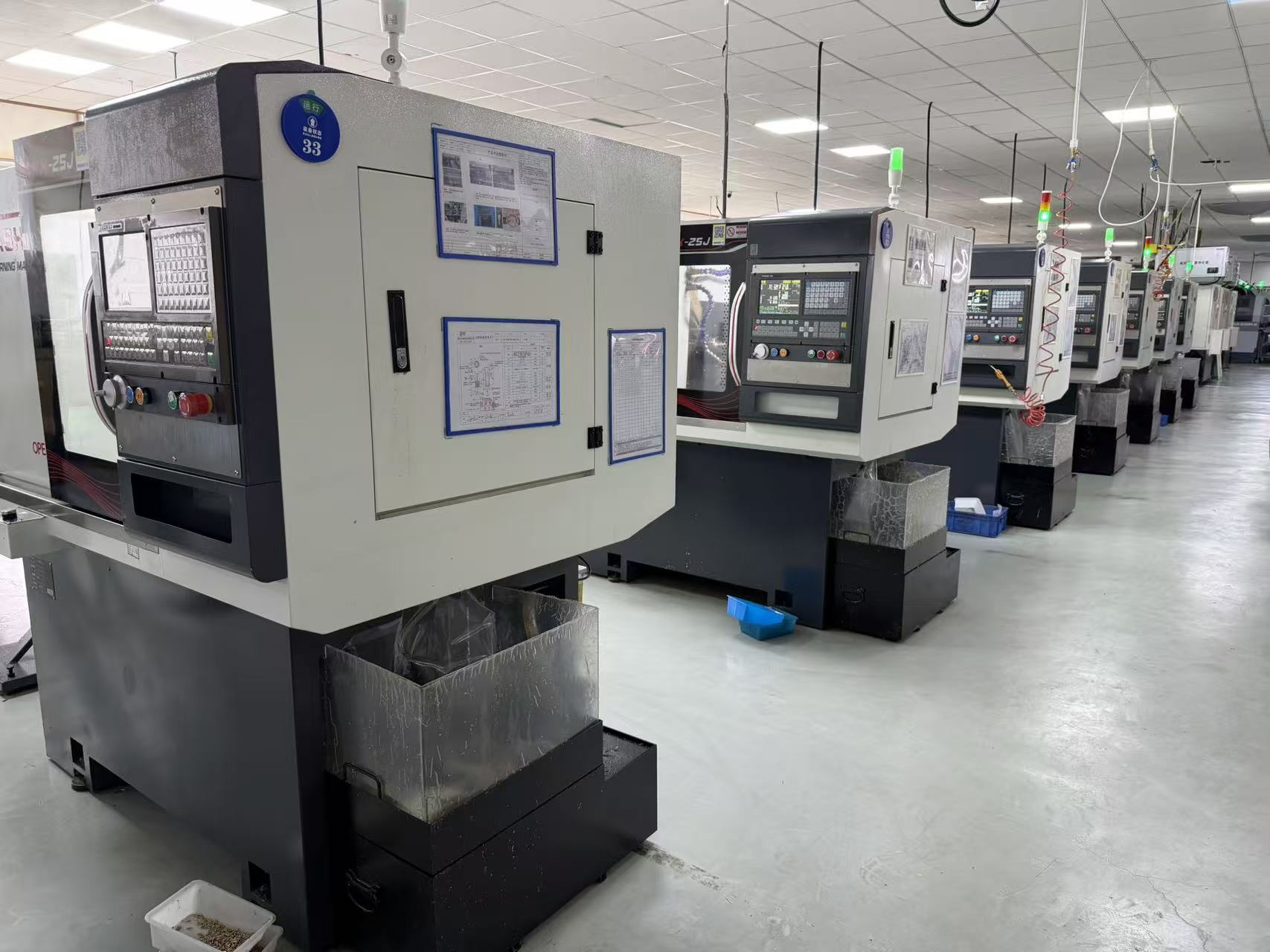
The aerospace industry stands at a pivotal moment as 2026 approaches, with unprecedented technological demands reshaping manufacturing requirements across every sector. At the heart of this transformation lies a fundamental truth: precision CNC machining services have emerged as the indispensable foundation upon which next-generation aerospace innovations depend. These advanced manufacturing capabilities are not merely supporting aerospace development—they are actively enabling breakthrough technologies that seemed impossible just a decade ago.

The convergence of artificial intelligence, advanced materials science, and space exploration initiatives has created manufacturing challenges that demand tolerances measured in micrometers and surface finishes that approach molecular perfection. Precision CNC machining services deliver these exacting standards while maintaining the scalability and reliability that modern aerospace programs require. As we examine the forces driving 2026 aerospace innovation, the central role of precision manufacturing becomes increasingly clear in enabling everything from hypersonic flight systems to next-generation satellite constellations.
Revolutionary Material Requirements Driving Aerospace Manufacturing Evolution
Advanced Composite Integration Challenges
The aerospace sector's adoption of advanced composite materials has fundamentally altered manufacturing requirements, creating demand for precision CNC machining services capable of handling materials that behave dramatically differently from traditional aluminum and steel. Carbon fiber reinforced polymers, ceramic matrix composites, and metal matrix composites require machining approaches that account for their anisotropic properties and tendency toward delamination during conventional processing. Modern precision CNC machining services have evolved specialized tooling strategies and cutting parameters specifically designed to preserve the structural integrity of these advanced materials while achieving the dimensional accuracy aerospace applications demand.
The challenge extends beyond simple material removal to encompass thermal management during machining operations. Advanced composites exhibit poor thermal conductivity compared to metals, meaning heat generated during cutting operations can accumulate and cause matrix degradation or fiber pullout. Precision CNC machining services address this through sophisticated cooling strategies, including cryogenic cooling systems and minimum quantity lubrication techniques that maintain material properties while achieving surface finishes critical for aerodynamic performance.
Furthermore, the integration of smart composites containing embedded sensors and actuators requires precision CNC machining services to work around delicate electronic components while maintaining exact geometric relationships. This capability becomes essential for aerospace innovations like morphing wing structures and adaptive control surfaces that represent key technological advances expected to mature by 2026.
Superalloy Processing Capabilities
Next-generation aerospace engines operate at temperatures and pressures that push conventional materials to their limits, driving demand for superalloy components that can only be produced through advanced precision CNC machining services. Nickel-based superalloys like Inconel 718, Hastelloy X, and newer powder metallurgy alloys exhibit work hardening characteristics that can destroy cutting tools and compromise surface integrity if not properly managed. The precision required for turbine blade cooling passages, combustor fuel injection systems, and heat exchanger geometries demands machining capabilities that can maintain dimensional accuracy while managing the extreme cutting forces these materials generate.
The economic implications are substantial—superalloy raw materials can cost thousands of dollars per kilogram, making scrap rates a critical business concern. Precision CNC machining services have developed predictive machining strategies that use real-time monitoring of cutting forces, vibration signatures, and acoustic emissions to prevent tool failure and maintain part quality throughout extended production runs. These capabilities become increasingly important as aerospace manufacturers pursue more efficient engine designs with tighter component tolerances.
Additionally, the additive manufacturing revolution in aerospace has created hybrid manufacturing workflows where precision CNC machining services provide finish machining for additively manufactured superalloy components. This approach combines the geometric freedom of 3D printing with the dimensional accuracy and surface quality achievable only through precision machining, enabling complex internal geometries that support advanced cooling strategies and weight optimization in 2026 aerospace designs.
Tolerancing Demands That Define Next-Generation Aerospace Systems
Micro-Scale Precision Requirements
The aerospace innovations emerging for 2026 operate within tolerance bands that challenge the fundamental limits of mechanical manufacturing. Satellite attitude control systems require gyroscope components with bearing races machined to tolerances of ±0.25 micrometers, while advanced fuel injection systems demand nozzle geometries accurate to within single-digit micrometer specifications. Precision CNC machining services meeting these requirements employ environmental controls that maintain temperature stability within ±0.1°C and vibration isolation systems that eliminate disturbances measurable in nanometers.
The measurement and verification of such precise geometries requires integration between precision CNC machining services and coordinate measuring machines operating in thermally controlled environments. Statistical process control becomes critical, with capability studies demonstrating process variation well within the specified tolerance ranges. These precision requirements extend beyond simple dimensional accuracy to encompass form tolerances like roundness, cylindricity, and surface texture parameters that directly impact performance in aerospace applications.
Modern precision CNC machining services achieve these tolerances through machine tools featuring hydrostatic spindle bearings, linear motor drives, and error compensation systems that account for thermal growth, gravitational deflection, and machine wear patterns. The investment in such equipment reflects the aerospace industry's recognition that precision manufacturing capabilities directly enable performance improvements in fuel efficiency, mission reliability, and operational capability.
Surface Integrity and Fatigue Performance
Aerospace components operate under cyclic loading conditions that can generate millions of stress cycles over their service life, making surface integrity a critical parameter that precision CNC machining services must carefully control. The subsurface microstructure changes induced by machining operations directly influence fatigue crack initiation and propagation behavior, particularly in high-stress applications like turbine blade attachment points and landing gear components.
Precision CNC machining services have developed sophisticated understanding of how cutting parameters influence residual stress states, work hardening depths, and microstructural changes in aerospace materials. Optimized cutting conditions can actually improve fatigue performance by introducing beneficial compressive residual stresses, while poor machining practices can reduce component life by orders of magnitude. This knowledge becomes increasingly important as aerospace designs pursue weight reduction through thinner sections and higher operating stresses.
The validation of surface integrity requires precision CNC machining services to employ advanced characterization techniques including X-ray diffraction for residual stress measurement, electron backscatter diffraction for microstructural analysis, and atomic force microscopy for surface topography assessment. These capabilities ensure that machined components will meet the demanding fatigue requirements of aerospace applications while supporting the lightweighting initiatives that define 2026 aerospace innovation.
Geometric Complexity Enabling Breakthrough Aerospace Technologies
Multi-Axis Manufacturing Capabilities
The geometric sophistication of 2026 aerospace innovations requires precision CNC machining services capable of simultaneous multi-axis interpolation to achieve complex surface forms impossible with conventional three-axis approaches. Advanced propeller designs feature twisted geometries that optimize efficiency across varying flight conditions, while next-generation heat exchangers employ serpentine passage geometries that maximize heat transfer within constrained envelope requirements. These applications demand precision CNC machining services with five-axis and six-axis capabilities operating under advanced CAM software that can optimize tool paths for both accuracy and surface quality.
The challenge extends beyond simple geometric capability to encompass collision avoidance and accessibility analysis for complex aerospace assemblies. Precision CNC machining services must demonstrate their ability to machine intricate internal features while maintaining clearances for cutting tools and workholding fixtures. This becomes particularly critical for aerospace components like integrated engine cases where internal passages must be machined after external features are complete.
Modern precision CNC machining services employ advanced simulation software that verifies tool paths before production begins, preventing costly collisions and ensuring that complex geometries can be achieved without compromising dimensional accuracy. The integration of adaptive machining strategies allows these systems to adjust cutting parameters in real-time as tool engagement conditions change throughout complex three-dimensional tool paths.
Integrated System Manufacturing
The trend toward system integration in aerospace design creates demand for precision CNC machining services capable of producing components that incorporate multiple functions within single machined assemblies. Advanced flight control actuators integrate mechanical, hydraulic, and electrical interfaces within monolithic housings that require precision CNC machining services to maintain exact geometric relationships across diverse feature types. Similarly, next-generation avionics enclosures must provide electromagnetic shielding, thermal management, and mechanical protection while maintaining precise dimensional control for connector interfaces and cooling system integration.
This integration approach reduces part count and assembly complexity while improving system reliability, but it places extraordinary demands on precision CNC machining services to coordinate multiple manufacturing operations while maintaining overall dimensional accuracy. The economic benefits are substantial—integrated designs can reduce assembly time by 60-80% while improving performance through eliminated tolerance stack-ups and interface variations.
Precision CNC machining services supporting integrated system manufacturing must demonstrate comprehensive process planning capabilities that sequence operations to minimize cumulative error while maintaining access for all required machining operations. This often requires custom fixturing solutions and specialized workholding strategies developed specifically for individual aerospace applications.
Quality Systems and Verification Protocols
Real-Time Process Monitoring
The critical nature of aerospace applications demands that precision CNC machining services implement comprehensive monitoring systems that detect process variations before they can compromise part quality. Advanced sensor networks monitor cutting forces, spindle power consumption, vibration signatures, and acoustic emissions to identify tool wear, chatter conditions, and other process disturbances that could affect dimensional accuracy or surface integrity. These monitoring capabilities become essential for aerospace components where failure consequences are catastrophic and replacement costs are measured in millions of dollars.
Machine learning algorithms analyze historical process data to develop predictive models that can forecast tool life, optimize cutting parameters, and schedule maintenance activities to minimize disruption to aerospace production schedules. Precision CNC machining services employing these technologies report significant improvements in first-pass yield rates and reductions in inspection time requirements, both critical factors in meeting aggressive aerospace delivery schedules.
The integration of in-process measurement capabilities allows precision CNC machining services to verify critical dimensions during machining operations, enabling immediate corrective action when process variations are detected. This approach proves particularly valuable for aerospace components with complex internal geometries where post-machining inspection may be difficult or impossible.
Traceability and Documentation Requirements
Aerospace quality systems require precision CNC machining services to maintain complete traceability for all materials, processes, and personnel involved in component production. Digital manufacturing records capture cutting parameters, tool usage history, inspection results, and environmental conditions for every manufacturing operation, creating an audit trail that supports both quality assurance and failure analysis activities. This documentation becomes critical when aerospace components must demonstrate compliance with evolving certification requirements and safety standards.
The complexity of aerospace supply chains requires precision CNC machining services to integrate their quality systems with customer databases and regulatory reporting requirements. Blockchain technologies are emerging as solutions for maintaining tamper-proof records while enabling secure information sharing among aerospace stakeholders. These capabilities support the transparency and accountability that aerospace programs require while protecting proprietary manufacturing information.
Furthermore, precision CNC machining services must demonstrate statistical process control capabilities that provide objective evidence of manufacturing capability and stability. Control charts, capability studies, and measurement system analysis become essential tools for aerospace suppliers seeking to maintain approved supplier status with major aerospace manufacturers pursuing 2026 innovation targets.
Economic and Competitive Factors
Cost Efficiency Through Advanced Manufacturing
The aerospace industry's pursuit of cost reduction creates strong economic incentives for precision CNC machining services that can minimize material waste while maximizing production efficiency. Advanced nesting algorithms optimize raw material utilization, while near-net-shape machining strategies reduce the volume of material that must be removed during finishing operations. These approaches prove particularly valuable when working with expensive aerospace materials where raw material costs can represent 40-60% of total component cost.
Precision CNC machining services achieve cost efficiency through automation strategies that reduce labor content while maintaining quality standards. Lights-out manufacturing capabilities enable continuous production during off-shift periods, while automated part loading and tool changing systems minimize manual intervention requirements. The economic benefits compound over high-volume aerospace programs where small per-unit cost reductions translate to significant overall savings.
The integration of digital manufacturing technologies enables precision CNC machining services to optimize production schedules based on real-time demand signals from aerospace customers. Advanced planning systems coordinate material procurement, capacity allocation, and delivery schedules to minimize inventory carrying costs while maintaining responsive delivery performance essential for aerospace program success.
Competitive Positioning for 2026 Market Leadership
Aerospace manufacturers investing in 2026 innovation programs seek precision CNC machining services partners capable of scaling production volumes while maintaining quality standards as new technologies transition from development to full-rate production. The ability to demonstrate manufacturing readiness levels and provide risk mitigation strategies becomes a key competitive differentiator for precision CNC machining services competing for next-generation aerospace contracts.
Strategic investments in advanced machine tools, measurement systems, and quality infrastructure position precision CNC machining services to capture market share as aerospace innovation accelerates. The lead times for capital equipment acquisition mean that suppliers must anticipate future capability requirements and make investment decisions years before customer demand materializes. This forward-looking approach requires precision CNC machining services to maintain close relationships with aerospace technology developers and participate in early-stage development programs.
The global nature of aerospace supply chains creates opportunities for precision CNC machining services to establish international partnerships and joint ventures that support worldwide aerospace manufacturing requirements. These strategic relationships enable market expansion while providing risk mitigation through diversified customer bases and geographic distribution of manufacturing capabilities.
FAQ
What specific tolerances do precision CNC machining services achieve for aerospace applications?
Modern precision CNC machining services routinely achieve dimensional tolerances of ±2.5 micrometers for critical aerospace components, with specialized applications reaching ±0.25 micrometers for satellite gyroscope components and precision bearing races. Surface finish requirements typically range from 0.1 to 0.4 micrometers Ra, depending on application requirements for aerodynamic performance and fatigue resistance.
How do precision CNC machining services handle the challenging materials used in 2026 aerospace innovations?
Precision CNC machining services employ specialized tooling strategies, cryogenic cooling systems, and real-time process monitoring to successfully machine advanced materials including carbon fiber composites, ceramic matrix composites, and next-generation superalloys. These approaches maintain material integrity while achieving the dimensional accuracy and surface quality required for aerospace applications operating under extreme conditions.
What role do precision CNC machining services play in aerospace cost reduction initiatives?
Precision CNC machining services contribute to aerospace cost reduction through optimized material utilization, near-net-shape manufacturing strategies, and automated production capabilities that minimize labor content. Advanced nesting algorithms and lights-out manufacturing enable significant cost savings while maintaining the quality standards essential for aerospace applications, particularly important given the high cost of aerospace materials.
How do precision CNC machining services ensure quality and traceability for aerospace components?
Precision CNC machining services maintain comprehensive digital records covering all materials, processes, and personnel involved in component production, supported by real-time process monitoring and statistical process control systems. These quality systems provide complete traceability while enabling predictive maintenance and immediate corrective action when process variations are detected, essential for meeting aerospace certification requirements.
Table of Contents
- Revolutionary Material Requirements Driving Aerospace Manufacturing Evolution
- Tolerancing Demands That Define Next-Generation Aerospace Systems
- Geometric Complexity Enabling Breakthrough Aerospace Technologies
- Quality Systems and Verification Protocols
- Economic and Competitive Factors
-
FAQ
- What specific tolerances do precision CNC machining services achieve for aerospace applications?
- How do precision CNC machining services handle the challenging materials used in 2026 aerospace innovations?
- What role do precision CNC machining services play in aerospace cost reduction initiatives?
- How do precision CNC machining services ensure quality and traceability for aerospace components?