
 EN
EN
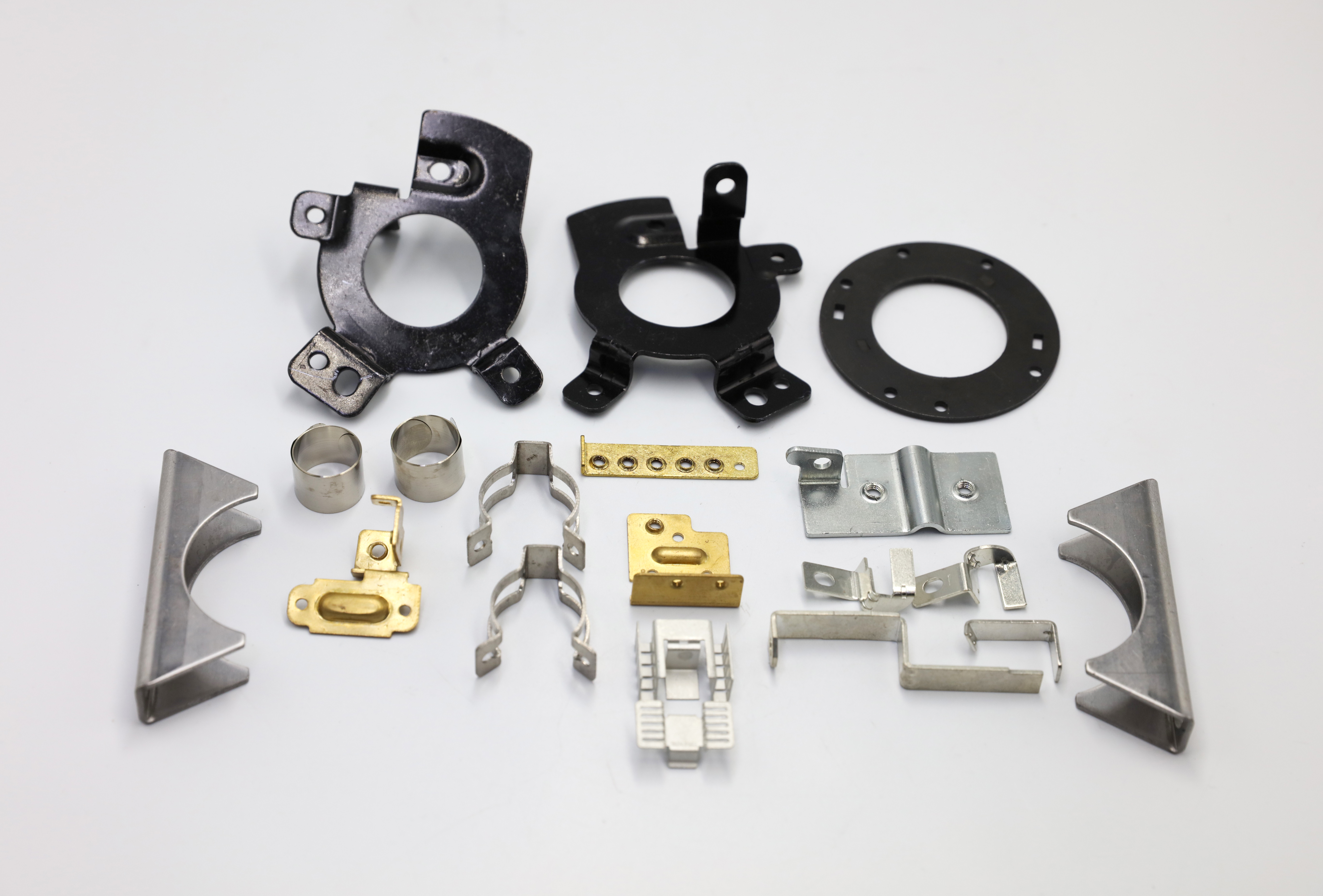
The manufacturing landscape has undergone a remarkable transformation over the past decades, with CNC machining parts at the forefront of precision engineering excellence. What began as basic computer-controlled cutting operations has evolved into a sophisticated technology capable of delivering unprecedented accuracy, fundamentally reshaping how industries approach complex component manufacturing. This evolution represents not just technological advancement, but a paradigm shift in what manufacturers can achieve when precision becomes paramount.

The journey toward micron-level tolerances in CNC machining parts represents one of manufacturing's most significant achievements, enabling industries from aerospace to medical devices to push the boundaries of what was previously considered impossible. Modern CNC systems now routinely achieve tolerances within 1-2 microns, a level of precision that has unlocked new applications and transformed product design possibilities. Understanding this evolution provides crucial insights for manufacturers seeking to leverage the full potential of contemporary CNC machining capabilities.
Historical Foundation of Precision CNC Machining
Early CNC Development and Initial Precision Capabilities
The foundation of modern CNC machining parts precision traces back to the 1940s and 1950s when numerical control systems first emerged in manufacturing environments. Early CNC machines operated with tolerances measured in hundredths of an inch, representing a significant improvement over manual machining but falling far short of today's micron-level capabilities. These pioneering systems established the fundamental principles of computer-controlled manufacturing that would eventually enable the precision revolution.
During the 1960s and 1970s, CNC machining parts began incorporating more sophisticated control systems and improved mechanical components, gradually reducing tolerance capabilities from thousandths to ten-thousandths of an inch. This period marked the beginning of serious precision manufacturing, as industries like aerospace and defense recognized the potential for creating components with consistently repeatable accuracy. The development of better servo motors, linear encoders, and control algorithms laid the groundwork for future precision breakthroughs.
Technological Breakthroughs in Machine Design
The 1980s brought revolutionary changes in machine tool design that directly impacted CNC machining parts precision capabilities. Advanced spindle technologies, including ceramic and hybrid bearing systems, dramatically reduced vibration and thermal distortion during machining operations. These improvements, combined with more rigid machine structures and better isolation from external vibrations, enabled manufacturers to consistently achieve sub-micron positioning accuracy.
Temperature control systems emerged as another critical factor in precision CNC machining parts production during this era. Manufacturers recognized that thermal expansion and contraction could easily overwhelm tolerance requirements at the micron level, leading to the development of sophisticated climate-controlled manufacturing environments and machine-mounted cooling systems. These thermal management solutions became essential prerequisites for achieving and maintaining extreme precision levels.
Advanced Control Systems and Measurement Technology
Modern CNC Controller Capabilities
Contemporary CNC machining parts benefit from control systems that operate at processing speeds unimaginable just decades ago, with multi-core processors capable of executing millions of calculations per second. Modern controllers incorporate advanced algorithms for path planning, vibration damping, and real-time error correction, enabling them to maintain micron-level accuracy even during complex multi-axis operations. These systems continuously monitor and adjust for variables like tool wear, thermal expansion, and mechanical deflection.
The integration of artificial intelligence and machine learning into CNC control systems has further enhanced precision capabilities for CNC machining parts. These intelligent systems can predict and compensate for various error sources before they impact part quality, learning from historical data to optimize cutting parameters and toolpaths for maximum accuracy. This predictive approach to precision management represents a fundamental shift from reactive to proactive quality control.
In-Process Measurement and Feedback Systems
Modern CNC machining parts production relies heavily on sophisticated measurement systems that provide real-time feedback during the manufacturing process. Laser interferometry, capacitive sensors, and optical measurement systems enable continuous monitoring of part dimensions and surface characteristics, allowing for immediate adjustments when deviations are detected. These systems operate with resolution capabilities measured in nanometers, far exceeding the precision requirements for micron-level tolerances.
The development of on-machine probing systems has revolutionized how manufacturers approach precision verification for CNC machining parts. These systems can measure part geometry between machining operations, automatically adjusting subsequent operations to compensate for any detected variations. This closed-loop approach to precision manufacturing ensures that each part meets specification requirements before leaving the machine, dramatically reducing scrap rates and improving overall quality consistency.
Material Science and Tooling Innovations
Advanced Cutting Tool Technologies
The evolution of cutting tools has played a crucial role in enabling micron-level precision for CNC machining parts. Modern carbide formulations, ceramic cutting tools, and diamond-coated implements provide the edge stability and wear resistance necessary for maintaining precise cutting geometry throughout extended machining operations. These advanced materials maintain their cutting edge characteristics far longer than traditional tools, ensuring consistent part dimensions across large production runs.
Ultra-precision grinding and polishing techniques for cutting tools have achieved surface finishes measured in angstroms, directly translating to improved surface quality on CNC machining parts. The development of specialized coatings and edge preparation methods has further enhanced tool performance, reducing cutting forces and heat generation that could otherwise compromise dimensional accuracy. These tool innovations represent a critical enabler for achieving and maintaining micron-level tolerances.
Workholding and Fixturing Advancements
Precision workholding systems have evolved to become essential components in the production of high-accuracy CNC machining parts. Modern fixtures incorporate hydraulic clamping, magnetic holding systems, and vacuum workholding technologies that provide secure part retention without introducing distortion or stress. These systems maintain consistent clamping forces and eliminate the dimensional variations associated with traditional mechanical clamping methods.
The development of modular fixturing systems has enabled manufacturers to quickly and accurately position CNC machining parts for multi-sided machining operations while maintaining micron-level registration between setups. These systems incorporate precision ground surfaces, hardened steel construction, and repeatable locating features that ensure consistent part positioning across multiple operations. The ability to maintain positional accuracy between operations has become crucial for achieving overall part tolerances at the micron level.
Industry Applications and Quality Assurance
Critical Applications Demanding Extreme Precision
The aerospace industry has been a primary driver in the evolution of precision CNC machining parts, with applications requiring tolerances that directly impact flight safety and performance. Turbine engine components, flight control actuators, and navigation system housings demand micron-level precision to ensure proper fit, function, and reliability under extreme operating conditions. These applications have pushed manufacturers to continuously improve their precision capabilities and quality control processes.
Medical device manufacturing has emerged as another critical application area for ultra-precision CNC machining parts, particularly in implantable devices and surgical instruments. Components like artificial joint surfaces, pacemaker housings, and microsurgical tools require tolerances that directly affect patient outcomes and device longevity. The biocompatibility requirements in medical applications have also driven innovations in surface finishing and contamination control during CNC machining operations.
Quality Control and Validation Methods
Modern quality control for precision CNC machining parts relies on coordinate measuring machines capable of measuring dimensions with sub-micron accuracy and repeatability. These systems use sophisticated software algorithms to compensate for environmental factors, machine errors, and measurement uncertainty, providing traceable dimensional verification for critical components. The integration of statistical process control methods enables manufacturers to monitor trends and predict potential quality issues before they impact production.
Environmental controls have become essential for maintaining measurement accuracy when validating micron-level tolerances in CNC machining parts. Temperature-controlled measurement rooms, vibration isolation systems, and humidity control ensure that dimensional measurements remain stable and repeatable. These controlled environments enable manufacturers to achieve measurement uncertainties that are significantly smaller than the tolerances being verified, providing confidence in part quality and dimensional integrity.
Future Trends and Technological Convergence
Emerging Technologies in Precision Manufacturing
The future of precision CNC machining parts manufacturing is being shaped by the convergence of multiple advanced technologies, including additive manufacturing, nanotechnology, and quantum sensors. Hybrid manufacturing systems that combine subtractive and additive processes are enabling the creation of complex geometries with internal features that were previously impossible to machine. These systems maintain the precision advantages of CNC machining while expanding design possibilities for innovative part geometries.
Quantum sensing technology is beginning to influence precision measurement and control systems for CNC machining parts, offering the potential for measurement capabilities that exceed current limits by orders of magnitude. These quantum-enhanced systems could enable real-time monitoring and control of machining processes at the atomic level, opening new possibilities for precision manufacturing that currently exist only in research laboratories.
Industry Integration and Smart Manufacturing
The integration of CNC machining parts production into broader Industry 4.0 initiatives is creating new opportunities for precision optimization through data analytics and machine learning. Connected manufacturing systems can share performance data, optimize cutting parameters across multiple machines, and predict maintenance requirements before they impact part quality. This level of integration is enabling manufacturers to achieve consistent micron-level precision across entire production networks.
Digital twin technology is revolutionizing how manufacturers approach precision CNC machining parts production by creating virtual models that accurately predict real-world machining outcomes. These digital replicas enable manufacturers to optimize processes, predict tool wear, and validate new designs before committing to physical production. The continuous feedback loop between digital twins and actual machining operations is driving further improvements in precision and efficiency.
FAQ
What factors limit the achievement of even tighter tolerances in CNC machining parts?
The primary limitations for achieving tighter tolerances in CNC machining parts include thermal effects from cutting heat and ambient temperature changes, mechanical deflection of both the machine structure and workpiece under cutting forces, vibration from internal and external sources, and fundamental material properties like grain structure and residual stresses. Additionally, measurement uncertainty becomes a significant factor as tolerances approach the limits of available measuring equipment capabilities.
How do manufacturers maintain micron-level consistency across large production runs?
Manufacturers maintain micron-level consistency in CNC machining parts through comprehensive process control systems that include real-time monitoring of cutting conditions, predictive maintenance programs for critical machine components, statistical process control to identify trends before they impact quality, and environmental controls to minimize thermal variations. Tool wear compensation algorithms and automated measurement systems provide continuous feedback to ensure dimensional stability throughout production runs.
What role does machine calibration play in achieving extreme precision?
Machine calibration is fundamental to achieving extreme precision in CNC machining parts, involving regular verification and adjustment of positioning accuracy, spindle runout, geometric relationships between axes, and thermal compensation parameters. Advanced calibration procedures use laser interferometry and other precision measurement tools to map and correct systematic errors throughout the machine's working envelope. Many modern CNC systems perform automated calibration routines to maintain accuracy between scheduled maintenance intervals.
Are there economic considerations that limit the adoption of micron-level precision?
Economic factors significantly influence the adoption of micron-level precision for CNC machining parts, including the substantial capital investment required for ultra-precision machinery and measurement equipment, increased cycle times due to more conservative cutting parameters, higher tooling costs for specialized precision cutting tools, and the need for controlled manufacturing environments. These costs must be justified by applications where the precision directly adds value, such as aerospace, medical devices, or high-performance automotive components.
Table of Contents
- Historical Foundation of Precision CNC Machining
- Advanced Control Systems and Measurement Technology
- Material Science and Tooling Innovations
- Industry Applications and Quality Assurance
- Future Trends and Technological Convergence
-
FAQ
- What factors limit the achievement of even tighter tolerances in CNC machining parts?
- How do manufacturers maintain micron-level consistency across large production runs?
- What role does machine calibration play in achieving extreme precision?
- Are there economic considerations that limit the adoption of micron-level precision?