
 EN

Terminali di cablaggio a due fori: separare i requisiti del conduttore e del montaggio
A two-hole tongue can match the mounting pattern while the barrel still fails to match the intended conductor. A useful RFQ defines both interfaces and says whether the supplier is quoting a loose terminal or a completed wire connection. A photograph cannot settle either question.
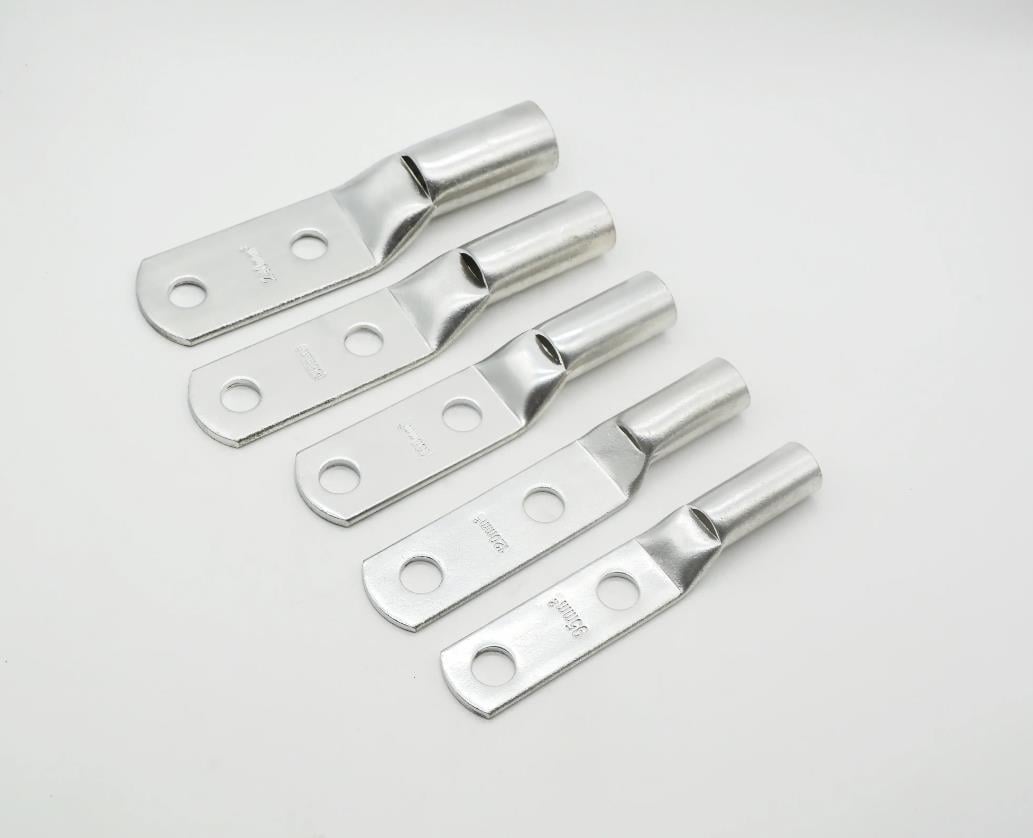
The electrical-terminal product family includes the broader contact-sourcing context. The approved photograph below shows five tin-plated brass forms with cylindrical barrels and flattened tongues with two round holes. That visible geometry is the starting point for this drawing review, not a wire-size chart or an electrical approval.
Start at the mounting surface
Monstrare diametros foraminum duorum, distantiam centrorum eorum, et locum relativum ad cannam. Identificare superficiem quae ad partem coniungendam appositur. Includere spissitudinem linguae, curvaturam vel deviationem, accessum ad vincula, et spatium circa cannulam et conductorem intrantem. Paternus ordo bullarum solus non statuit pressionem contactus, momentum adstringendi, aut capacitatem currentis.
Si lingua habet planitatem regulatam, finitionem contactus, aut conditionem marginis, ponere hanc requisitionem in schemate cum methodo acceptationis eius. Nominare hardware coniungens vel specificatio coniunctionis ubi regitur installatio. Non eligere momentum adstringendi aut dispositionem lavacri ex imagine producti non dimensionata.
Tunc definire coniunctionem ex parte conductoris
Provide the conductor material, cross-sectional area or AWG, strand construction, insulation dimensions and intended termination method. Define barrel internal diameter and usable length from the approved design. Outside diameter alone is not a conductor-range specification, and a visible product marking is not a released purchase requirement.
If crimp termination is specified, identify the qualified terminal, wire and tooling combination and the governing application instructions. Acceptance may require dimensional checks, a defined pull test, section review or other project-specific evidence. The required methods and limits must be agreed; they are not test results for the pictured parts. Soldering or another connection method needs its own approved process definition rather than an assumed interchangeable acceptance plan.
Agree where the supplier's responsibility ends
| Quoted supply state | Information to agree | What it does not establish |
|---|---|---|
| Loose terminal | Geometria controlata, grado e condizione del rame, specifica della stagnatura, dimensioni rilevanti, evidenza della superficie e dell’imballaggio | Valutazione elettrica convalidata di una connessione a filo o di un sistema finito |
| Conduttore terminato, solo se incluso nell’ordine | Definizione del filo, processo di terminazione, attrezzature, limiti di accettazione, campionamento, registrazioni e parte responsabile | Approvazione per un conduttore, carico o installazione non specificati |
| Giunto installato | Superficie di accoppiamento, componenti meccanici, procedura di serraggio e responsabilità della convalida dell’assemblaggio | Prova ottenuta da un rapporto dimensionale di componente sfuso |
Per la revisione del rivestimento, specificare il sistema di stagnatura, le aree controllate, lo spessore e le evidenze richieste. Non trasferire lo spessore del placcato né la frequenza delle ispezioni da un altro ordine di contatti per batteria o terminali per PCB. Tenere separati i dati relativi al materiale/rivestimento, l’accettazione dei componenti sfusi e la convalida della connessione assemblata.
Usare criteri di accettazione specifici per l’applicazione, non numeri generici di crimpatura
TE Connectivity's crimp quality guidance treats terminal, wire and tooling selection as a combination and gives precedence to the applicable product specification. Its illustrated geometries and numerical examples belong to its named products; they are not acceptance limits or approvals for Zhengna Technology's terminal family.
Before quotation, resolve three questions: which document controls each interface, what condition the supplier will deliver, and which party will validate the completed connection. Send the part revision, mating drawing, conductor details, material/finish requirements, quantities and required records through Contactus Technologiae Zhengna . The form accepts text; agree the drawing-review method separately. The custom stamping parts page provides broader sourcing context, not confirmation of the manufacturing route for every terminal.